




On May 4, 1940, Dorothy L. Sayers opened an address to leaders of an adult discipleship program for the Church of England with these fiery words:
It is worse than useless for Christians to talk about the importance of Christian morality, unless they are prepared to take their stand upon the fundamentals of Christian theology. It is a lie to say that dogma does not matter; it matters enormously. It is fatal to let people suppose that Christianity is only a mode of feeling; it is vitally necessary to insist that it is first and foremost a rational explanation of the universe. It is hopeless to offer Christianity as a vaguely idealistic aspiration of a simple and consoling kind; it is, on the contrary, a hard, tough, exacting, and complex doctrine, steeped in a drastic and uncompromising realism.
The main problem, she argued, was that “not one person in a hundred has the faintest notion what the Church teaches about God or man or society or the person of Jesus Christ.”
Her lecture was a call to action for those who love theology. Her sharp rhetoric and keen observations led to the talk’s publication as Creed or Chaos? (a standalone pamphlet) and in several anthologies.
This year, 2025, marks the 1,700th anniversary of the Council of Nicaea, when hundreds of bishops gathered from around the Roman Empire to hammer out thoroughly biblical answers to the challenges of doctrinal heresy that threatened the church’s well-being. The result of that council in AD 325 and the subsequent council in AD 381 was what we now call the Nicene Creed, which is a foundational articulation of the Christian faith.
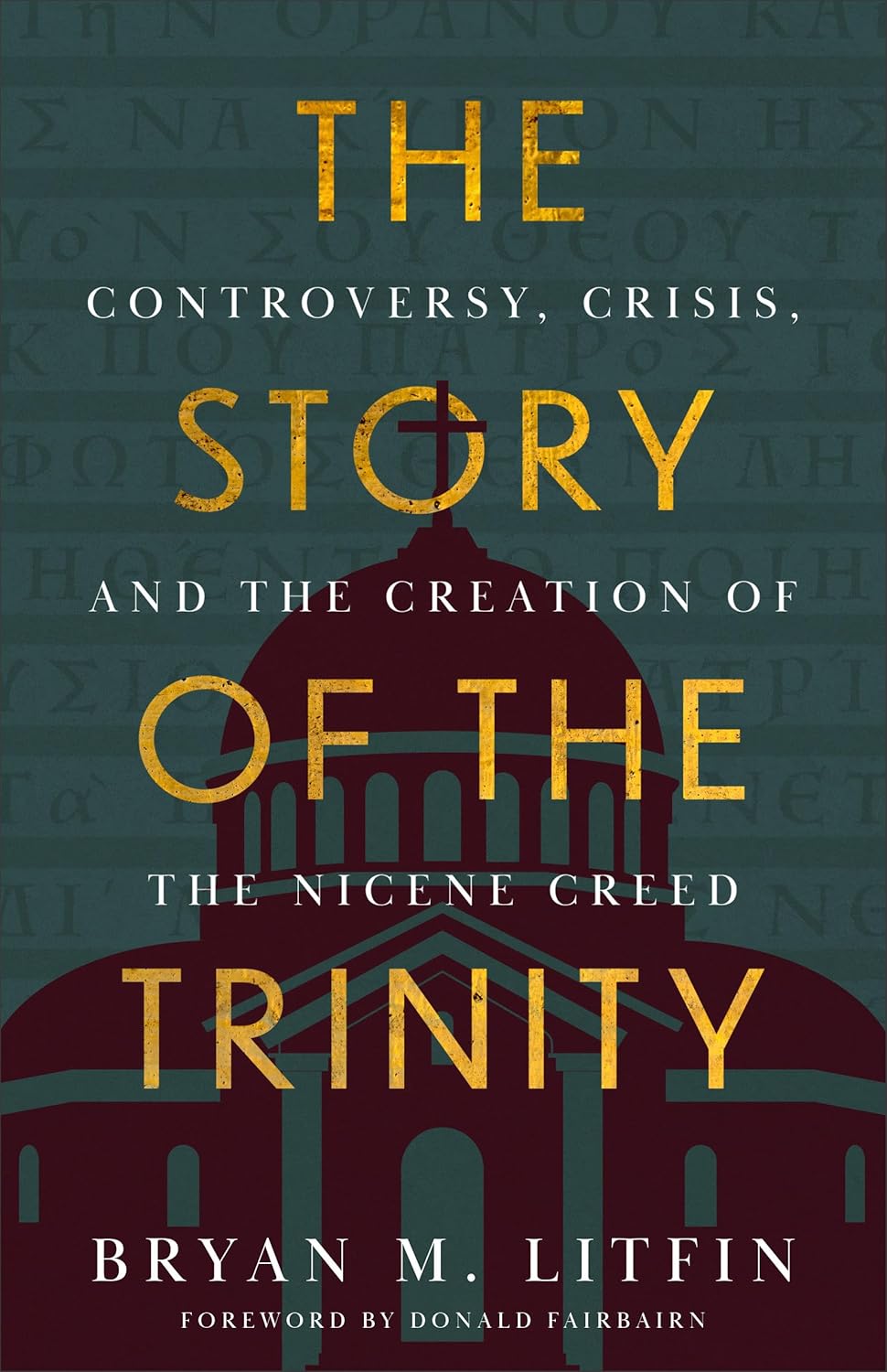
The Story of the Trinity: Controversy, Crisis, and the Creation of the Nicene Creed
Bryan M. Litfin
The Story of the Trinity: Controversy, Crisis, and the Creation of the Nicene Creed
Bryan M. Litfin
Christians believe in the Father, Son, and Holy Spirit. One God in three persons. Yet many would be hard-pressed to explain why they believe this, or even where it might be found in Scripture. In engaging, accessible prose, The Story of the Trinity relates the settings, characters, and conflicts that led to the Council of Nicaea and the creation of the Nicene Creed, a simple yet beautiful statement of faith that expresses core Christian beliefs that continue to be affirmed worldwide.
Though Scripture alone is the supreme authority for our faith and practice, the Nicene Creed provides a faithful summary of the biblical contents on the doctrines it addresses. False religions often borrow Christian terminology but provide their own dictionary. The Nicene Creed anchors Christian terms to the specific definitions that distinguish the doctrines of the Latter-day Saints and Jehovah’s Witnesses from the historical Christian faith.
It’s fitting that in recent years a number of books have drawn evangelicals back to the creeds. I’ve highlighted six volumes that I hope serve readers well.
1. Bryan M. Litfin, The Story of the Trinity: Controversy, Crisis, and the Creation of the Nicene Creed (Baker, 2025) (Amazon | TGC Store)
This brief history of the Nicene Creed is historically accurate, theologically attuned, and downright interesting. This volume will point Christians unfamiliar with the creed’s background and contents toward what is an amazing story. Even casual readers will likely find this theologically rich narrative hard to put down. Writing a historical narrative that’s both edifying and entertaining is a real feat.
2. Kevin DeYoung, The Nicene Creed: What You Need to Know About the Most Important Creed Ever Written (Crossway, 2025) (Amazon | TGC Store)
DeYoung’s little volume would be a helpful resource for a small group walking through the Nicene Creed. In fewer than 100 pages, readers get a clear doctrinal explanation with sufficient historical context to understand the contours of the Trinitarian debate. People looking for a concise introduction to Nicene orthodoxy will be well served by this volume.
3. Coleman M. Ford and Shawn Wilhite, Nicaea for Today: Why an Ancient Creed (Still) Matters (B&H Academic, 2025) (Amazon)
Nicaea for Today sets the context for the first ecumenical council. Through careful analysis of the creed’s contents (with reference to both the 325 and 381 versions), Ford and Wilhite explain why precise theological language matters. This volume would serve pastors and Sunday school teachers well as they work to teach doctrine accurately.
Though Scripture alone is the supreme authority for our faith and practice, the Nicene Creed provides a faithful summary of its contents.
The authors previously teamed up for their 2024 TGC book award winner, Ancient Wisdom for the Care of Souls, which provides pastoral wisdom from the church fathers. Nicaea for Today is another solid collaboration. It’s more academic than Litfin’s historical narrative and more in-depth than DeYoung’s helpful survey, but it’s still readable and pastorally oriented.
4. Mark Gilbert and Leonardo De Chirico, eds., The Nicene Creed: The Nature of Christian Unity and the Meaning of Gospel Words (Matthias Media, 2024) (Amazon)
As the fruit of two of the church’s seven ecumenical councils, the Nicene Creed offers language that Protestants share with Roman Catholics and (mostly) with Eastern Orthodox believers. Yet the meaning of words matters a great deal.
This multiauthored volume explains the plain theological meaning of the Nicene Creed but also highlights the way Roman Catholics and evangelicals will have different understandings of the creed’s language. Most obvious is what the term “catholic” means, with evangelicals rejecting the idea that this refers to the hierarchy headquartered in Rome. But there are other important points of Mariology, eschatology, and soteriology where understandings of these shared terms dramatically diverge.
5. Phillip Cary, The Nicene Creed: An Introduction (Lexham, 2023) (Amazon)
This short volume is a phrase-by-phrase commentary on the Nicene Creed. There’s little discussion of the drama at Nicaea. Readers looking for a laser-focused introduction to the creed’s theological content will appreciate Cary’s theological depth, terminological clarity, and concision. This readable volume could serve as a tool for immersing new believers in the theological vocabulary of the Christian faith.
6. Chad Van Dixhoorn, ed., Creeds, Confessions, and Catechisms: A Reader’s Edition (Crossway, 2022) (Amazon | TGC Store)
This handy reference has become my standard source for some of the most common confessions and creeds. (I keep my copy of William Lumpkin’s Baptist Confessions of Faith nearby, too, since I’m Baptist.) If you’re looking for a way to compare the Nicene Creed to the many statements that have come afterward, Dixhoorn’s beautifully typeset volume is the book for you. It’s a helpful reminder of the consistent historical transmission of the central tenets of the faith once delivered to all the saints (Jude 1:3).