When we think about the loss of shared moral narrative, it’s little wonder our culture has lost its sense of virtue and purpose. The fairy tales that used to shape our imaginations have been largely drowned out by digital noise and their villains turned into heroes who are just expressing themselves.
What we’re seeing is the fulfillment of C. S. Lewis’s warning about “men without chests.” The moral decline Lewis predicted has only accelerated because of individual absorption in the solipsistic universe of the smartphone, as Jonathan Haidt highlights in The Anxious Generation.
It’s telling that in Haidt’s efforts to help children become resilient adults, he points to habits and structures that in many ways approximate ancient wisdom. That approach is helpful, but it’s limited because it lacks an objective reference point or historical grounding. Rather than trying to recreate a moral framework for modernity, we’d be better served by recovering the classical virtues.
That’s what Alan Noble, associate professor of English at Oklahoma Baptist University, does in To Live Well: Practical Wisdom for Moving Through Chaotic Times. According to Noble, “Modern society has conditioned us to be full of ‘morality’—albeit shifting and ambiguous morality—but lacking in any virtues because it denies that we have a telos.” The culture has lost touch with the belief in an objective purpose for life, which leaves us “anxiously striving to do the right thing but never sure what the right thing is” (7). He argues that the seven classical virtues can help.
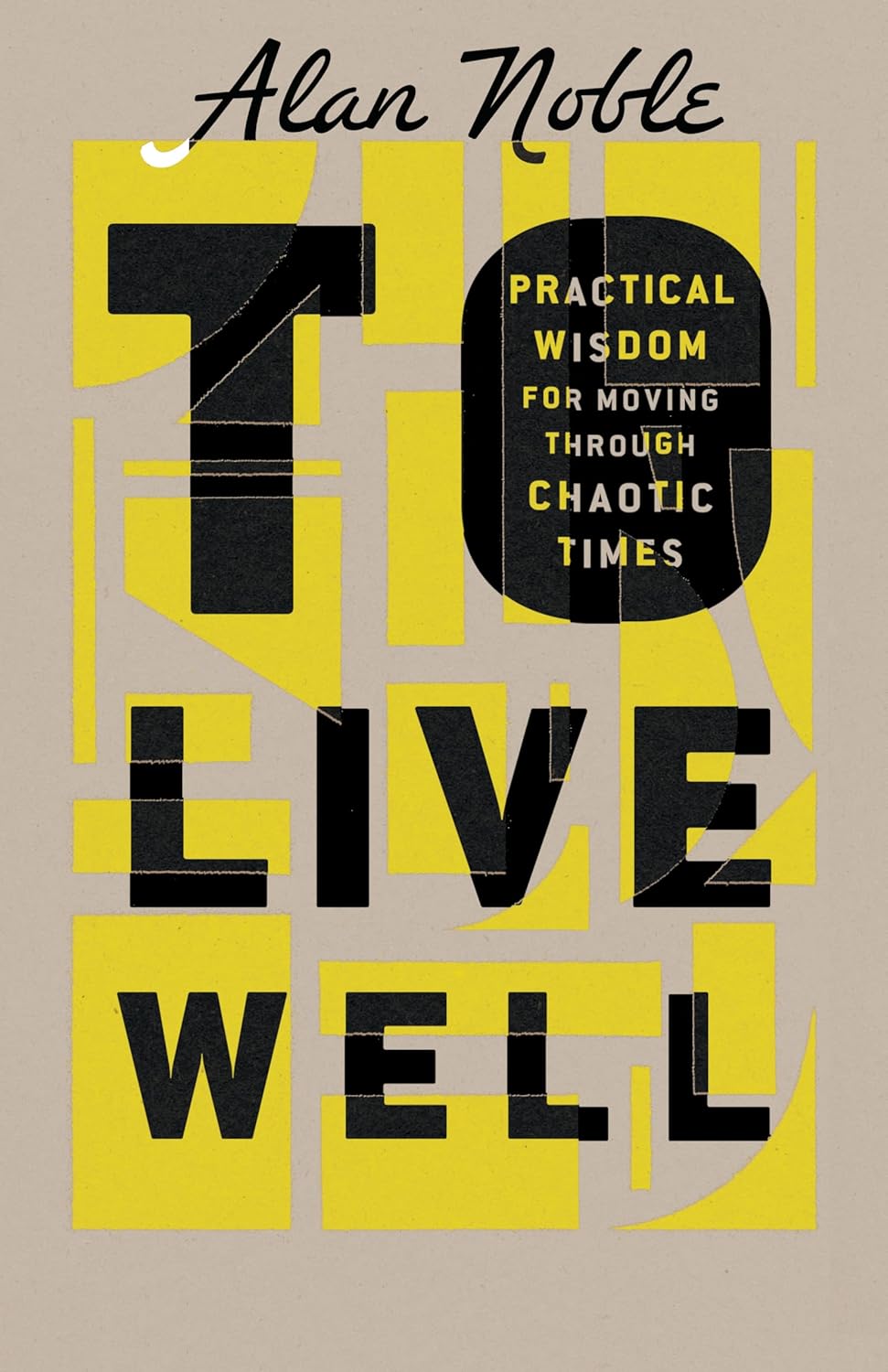
To Live Well: Practical Wisdom for Moving Through Chaotic Times
Alan Noble
To Live Well: Practical Wisdom for Moving Through Chaotic Times
Alan Noble
Our lives are shaped by contradictions. Competing voices tell us who to be, what to want, and how to live. The result? A fragmented moral imagination. We’re handed a thousand broken messages and left to cobble together something resembling a life. But instead of clarity, we get exhaustion. Instead of wisdom, we get anxiety. In To Live Well, Alan Noble shows you how you can not only endure but flourish in life.
Virtue Deficit
The easy route in cultural critique is to rail against the lack of virtue in society. Yet the truth is that as technology has progressed, we’ve gradually eroded the elements of life that used to help everyone develop virtue.
For example, Noble notes that it’s hard to develop fortitude in our world because “nearly every social force is oriented toward reducing our suffering and removing barriers to our goals at all costs” (65). Technology extends our reach and removes resistance, making life easier—but sometimes too easy. As a result, our wills atrophy just like a muscle when it goes unused. Like astronauts stuck in space without gravity, we need to find new ways of exercising our virtues to remain strong.
As technology has progressed, we’ve gradually eroded the elements of life that used to help everyone develop virtue.
On the other hand, our culture has made exercising the virtues we have much more difficult. The massive array of information and options available makes exercising prudence an incredible weight. “Every major life decision is an existential decision,” Noble argues. “The burden of your existence has been placed on your shoulders by society” (16). What we choose defines who we are, and we have so many variables to choose from that it’s impossible to be sure we get it right.
Additionally, because our culture values comfort and control, “there is a moral weight to fulfilling our every desire” (84). Thus, temperance is despised because “in a society that demands you consume . . . you deserve what your eyes desire, and your addictions are just quirky forms of self-care” (85). In many ways, Noble’s arguments in To Live Well pick up where his earlier book You Are Not Your Own left off. He continually reminds readers that we belong to God and are joyfully restrained by the good things God gives us.
Ancient Solutions
It’s not enough to simply say we need to live virtuously. Our information-saturated culture makes defining the virtues difficult. For example, Ryan Holiday’s books on Stoic virtues use classical terms but with distinctly modern meanings. We need to look to more objective definitions for virtue, especially those rooted in Scripture.
Virtues are “cultivated habits that align us with the God who created us to be” (7). It’s not enough for us to pick a couple of virtues from the shelf and emphasize them in isolation from other inputs. The virtues work together to align a person toward the good life as God created it. As Noble observes, “Fortitude requires us to suffer for the sake of the good, but first we have to know what that good is” (69). We need biblical definitions of justice and prudence to help direct our fortitude.
Our information-saturated culture makes defining the virtues difficult.
We’re not left to figure out these virtues by ourselves. Noble traces the ancient roots of virtue by looking back at how previous generations have defined it. For example, he writes that “[Josef] Pieper, drawing from Aquinas, who draws from Aristotle, says that justice ‘is the notion that each man is to be given what is his due’” (46). This formula reminds readers that when we see clearly, it’s only because we stand on the shoulders of giants.
Yet virtue requires we also ask questions about those who help us to see. Many proponents of virtue don’t live up to their prescriptions. For example, Pieper, Noble’s primary conversation partner throughout the book, “failed to live up to the highest standards of justice and fortitude when the Nazis came to power in his home country” (8). The norming source for virtue isn’t human examples or scholarship; it’s divine revelation.
Lived Virtue
While Noble points back in time toward ancient virtues, he shows that the virtues are the way forward. Fortitude, in ancient culture, may have meant riding headlong into battle, placing a weary hand on the plow day after day, or even being martyred for your faith. Now, dying to self every day means that sometimes, “the act of rising out of bed and going to your family and friends . . . is a sacrifice of love” (74). As technology makes what was once difficult easy, it now takes courage to get out of bed and live with a real purpose.
In our technique-driven culture, it’s tempting to see virtue as a “Rule of Life” from which true Christian living flows. Noble reverses that strategy, showing that pursuing the true, good, and beautiful in life grows from a believer’s identity in Christ and place within a Christian community. Virtue isn’t a means of attaining or maintaining our status with God; it’s the fruit of the Spirit built on God’s gracious adoption of us when we were vicious sinners.
We live in chaotic times. People are looking for formation, habits, and techniques that can bring order from the mess. Noble’s approach to Christian virtue gives a better aim and holistic approach than the various forms of renovated Stoicism and modern monasticism on offer from the culture. To Live Well is a theologically robust and immensely practical guide for a virtuous Christian life in a turbulent world.