It’s an odd thing when ancient concepts can be said to be trending in modern culture, but this seems to be the case today with terms like “gospel-centered” and “discipleship.” Thus, if you pick up a book titled Gospel-Centered Discipleship, there might be a temptation to write it off as timely marketing.
This, however, would be a grave error.
From start to finish, Jonathan Dodson’s first full-length book is about the gospel and discipleship—refreshingly so. Dodson, lead pastor of Austin City Life in Austin, Texas and directional leader for GospelCenteredDiscipleship.com, lays his own life bare as an open book so that readers will surely learn from his mistakes and be challenged by his victories.
In a world of overflowing discipleship resources, what does Gospel-Centered Discipleship offer? Honestly, a little bit of everything.
Three Highlights
First and foremost, as the title suggests, Dodson does a marvelous job of re-centering the discipleship conversation on the gospel. The fact that a book needed to be written on this topic confirms that evangelicals have placed other, less worthy objects in the center of our discipleship relationships. From my perspective, Dodson is correct. If we can re-center on Christ—not just on his model of discipleship, but actually loving and savoring the person of Christ—there will be a bright future ahead for God-glorifying, Christ-exalting, Spirit-empowered discipleship.
Dodson’s threefold focus on affections, promises and warnings, and repentance is a helpful roadmap with which we may begin this monumental journey. Our affections allow us to delight in God in a way that leads to obedience, God’s promises and warnings help us fight sin and live lives of obedience, and repentance is a way of life for when we inevitably fail to be motivated by the gospel. These three emphases form a “circle of gospel motivations” that surrounds us with grace and leads us to Christlikeness (86).
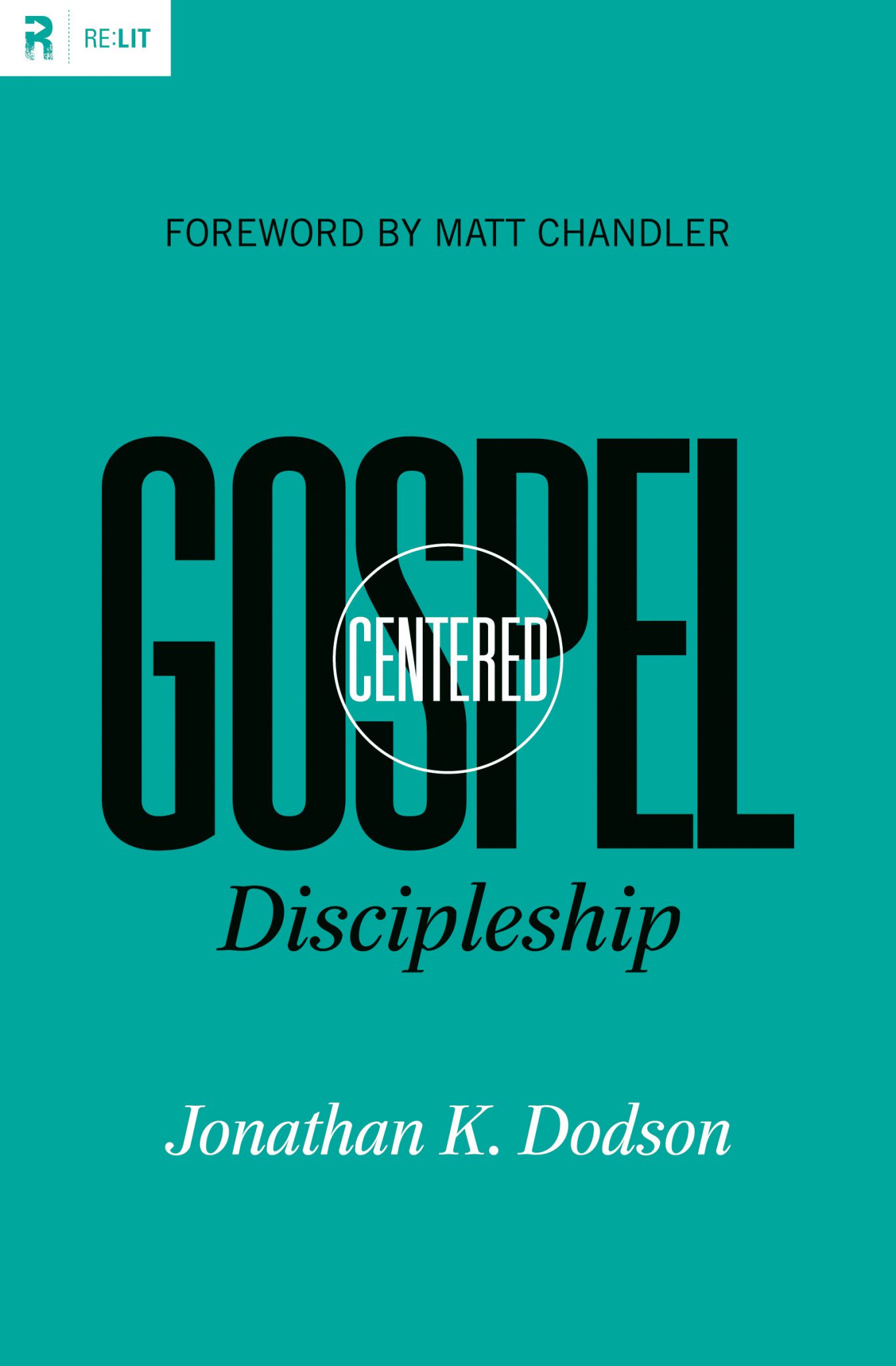
Gospel-Centered Discipleship
Jonathan Dodson
Everyone’s idea of discipleship is different. Some people emphasize evangelism―sharing their faith. Still others promote a hierarchical system for spiritual growth, a way for older Christians to pass on best practices to younger believers. Yet, both ideas are incomplete. Real discipleship is so much more. Avoiding extremes and evaluating motives, Jonathan Dodson insists on a way of following Jesus that re-centers discipleship on the gospel. This book helps us understand and experience the fullness of discipleship as God intended.
Second, Dodson carefully navigates extremes that have dominated the landscape of discipleship in recent years. The gospel motivation discussed above is a corrective lens in light of competing, improper motives for discipleship. He dissolves several of these tensions, including the “Great Commission as evangelism vs. discipleship” debate and the “piety/vertical discipleship vs. mission/horizontal discipleship” debate.
However, perhaps his most helpful endeavor in this regard is his discussion on religions performance and spiritual license. After a chapter on “how to fight,” he contends:
The problem is that many of us don’t fight, or we fight for the wrong things. To be frank, some Christians fight like cowards, backing out of the fight of faith. Others fight like bullies, beating up themselves or others. Everyone tends toward one direction or the other (63).
The cowards maintain a veneer of godliness founded in spiritual license. Dodson calls this “confessional booth accountability,” where confession is “divorced from repentance, reducing holiness to half-hearted morality” (66). The bullies, on the other hand, operate from an impetus of legalistic performance, which he calls “religious accountability.” Dodson speaks from experience here and recounts how he once “placed too much faith in accountability and not enough faith in the gospel,” including the unfortunately too-common practice of putting money in a jar for committing certain sins. He reflects, “Somehow, this practice was supposed to motivate holy living, but instead, it fostered a religious legalism that undercut a more biblical approach to fighting sin” (65). Over against these abuses, Dodson offers a helpful glimpse of true confession and true gospel motivation.
A third highlight of the book is the convicting honesty and vulnerability with which Dodson writes. This isn’t just a helpful way to write a book; it’s a model for discipleship itself. He recounts the story of getting kicked out of Bible college, confesses moral failure, and comes clean about finding his identity in impressing others rather than in the gospel.
“My motivation for discipleship,” Dodson admits, “was a mixture of genuine love for God and lust for praise,” and the product was disciples “who could share their faith but not their failures” (16). This book shows that a lack of honesty isn’t a personality issue of personal preference; it’s actually a gospel problem.
Two Minor Contentions
Dodson has provided such a thorough treatment of gospel-centered discipleship that I dare not protest too much or critique for the sake of critiquing. The following comments, then, are only minor points of contention.
First, there could have been more credence given to the usefulness and validity of discipleship-as-mentorship. Perhaps it is his overall careful approach to discipleship that makes this omission stick out all the more. Dodson explains how he’s come to learn that “find[ing] Christians who are younger in the faith to demonstrate how to be older in the faith” is “incomplete” discipleship. “Discipleship is not,” he explains, “a hierarchical system for spiritual growth, a way for professional Christians to pass on their best practices to novice Christians” (15).
While this is certainly true and helpful, I wonder if the Titus 2 baby has been tossed out with the hierarchical bathwater. Peers helping their friends fight sin is indeed a great thing, but what of older, more experienced believers pouring decades of gospel-centered, sin-fighting wisdom into younger Christians as we see in the New Testament and early church? An endorsement of this model, and examples of it, is largely missing from the book.
The professional-to-novice model made Dodson feel like he was following Jesus alone, as if he was at the top of a staircase peering down on those below instead of circled up in the living room with his fellow disciples. “As a result,” Dodson explains, “disciple became more of a verb than a noun, less an identity and more of an activity” (16).
This is a needed corrective, but disciple (noun and a verb) will involve spiritual parenting at some point. Regardless, the Bible is less concerned with the structure of mentoring relationships than with the attitude within those relationships. One suggestion would be to avoid using the words hierarchy or professional at all since they tend to strike such a negative chord in our anti-authority, anti-submission culture.
Second, while Dodson’s chapter on the essential role of the Holy Spirit is another highlight, it is curiously framed in the beginning as a discussion on the miraculous gifts of the Spirit. He leads off by castigating evangelical culprits who have downplayed the Spirit. He writes, “Those who have taken a cessationist or ‘open but cautious’ position toward spiritual gifts of healing, tongues, and prophecy have carried their caution to an extreme” (87). Dodson then suggests that they have put barriers around the Spirit, divided the Spirit from the Son, and bastardized the Spirit. Over against these extreme positions, we must “teeter over the edge of caution, and plunge down the cliff of the Spirit” (87).
Fair enough. But the chapter neither argues for the place of miraculous gifts of the Spirit in discipleship nor argues for anything against which someone in his “extreme” camps would take issue. Rather, the remaining discussion is about relying on and communing with the Spirit. Many “open but cautious” folks will give a resounding “Amen!” to the entire chapter while scratching their heads as to why they were harassed in the introduction to it. In other words, they will be quite comfortable “plunging down the cliff of the Spirit” in the way that Dodson has outlined while remaining open-but-cautious to miraculous gifts of the Spirit.
Brilliance and Burden
These minor contentions do not in any way imply a diminished value; Gospel-Centered Discipleship delivers on its title.
In sum, the brilliance of this book is the burden of this book: the gospel. Therefore, it will, in a sense, confuse all the discipleship-junkies and anyone else who is merely interested in the next title in this publishing category. Put another way, many will make the purchase because of an interest in discipleship, but they will quickly become confused as to whether it is a book on discipleship or a book on the gospel. Very well; I think that’s the point.