




During this Easter season, New Testament scholar and skeptic Bart Ehrman has been making headlines again. He just released his latest book, Love Thy Stranger: How the Teachings of Jesus Transformed the Moral Conscience of the West. Last week, New York Times columnist Ross Douthat interviewed Ehrman on his podcast about his book and why he doesn’t believe in God.
Sarah Eekhoff Zylstra sat down with New Testament scholar Michael J. Kruger, one of Ehrman’s former students, to talk about Ehrman’s arguments. Kruger has found that, unlike Ehrman, the study of biblical manuscripts has strengthened his faith.
In This Episode
00:01 – Bart Ehrman’s background and teachings
01:29 – Michael Kruger’s formative experience with Bart Ehrman
03:14 – Ehrman’s evangelism of atheism
04:31 – The revolutionary nature of Jesus’s teachings
07:59 – Ehrman’s positive take on Christian ethics
09:35 – Ehrman’s critique of Christian consistency
20:39 – The problem of evil and Ehrman’s atheism
27:36 – Ehrman’s doubts about the Gospels
46:40 – Ehrman’s impossible standards
49:52 – Michael Kruger’s personal faith journey
Resources Mentioned:
- Surviving Religion 101 by Michael J. Kruger
- Dominion by Tom Holland
- Review of Jesus Interrupted
SIGN UP for one of our newsletters to stay informed about TGC’s latest resources.
Help The Gospel Coalition renew and unify the contemporary church in the ancient gospel: Give today.
Don’t miss an episode of The Gospel Coalition Podcast:
Transcript
The following is an uncorrected transcript generated by a transcription service. Before quoting in print, please check the corresponding audio for accuracy.
Sarah Zylstra
During this Easter season, New Testament scholar and atheist Bart Ehrman has been making headlines again. He just released his latest book, Love thy stranger, how the teachings of Jesus transformed the moral conscience of the West. Last week, New York Times columnist Ross Douthat interviewed Ehrman on his podcast, and he asked him about his book and why he didn’t believe in God. So I’m gonna give you a little bit of backstory here. Ehrman grew up in an Episcopalian home and had a born again experience when he was in high school, and from there, he studied the scriptures intensely, attending Moody Bible College and Wheaton College, before he did some master’s degrees and a PhD at Princeton Theological Seminary. Along the way, he moved into mainline Protestantism. So he started with evangelicalism, kind of more fundamentalist, moved into mainline Protestantism, and then slowly stopped believing in the virgin birth, Jesus, miracles and the physical resurrection. Around 30 years ago, Ehrman deconstructed completely, and these days, he writes and teaches on why the New Testament is riddled with errors, why God cannot exist, and why, despite all that, Jesus had some pretty good teachings. I’m Sarah Zylstra, and I am here to talk with Mike Kruger about that. Mike is also a New Testament scholar who teaches at reformed Theological Seminary, his research has focused on the transmission of the New Testament text and the development of the New Testament canon, and one reason he does that is because long ago, he was sitting in a freshman class at the University of North Carolina, and Bart Ehrman was his professor. Mike, can you tell us that story?
Mike Kruger
Yeah, thanks, Sarah, great to be with you. Excited for this conversation. Yeah, that story was a very formative story for me growing up, and I mentioned it in my book surviving religion 101. It’s actually not a story I’m sure that was unique to me. Hundreds and hundreds of students have taken Bart’s classes over the years, but maybe it’s unique to me in the sense that not all of them have gone on to become biblical scholars themselves in the exact same field of course Bart Ehrman teaches and so yeah, years ago, I showed up at the University of North Carolina in Chapel Hill as a freshman, and my background is I grew up in a Christian home and was a committed believer and wanted to do my best to live out a Christian life at UNC, and I thought I was pretty ready as I could measure such things. I’d grown up in a youth group that seems solid, and people give me good advice about how to survive in college. And then my freshman year, I need to fill a religion credit, because in the days of back down in Chapel Hill, you had to have a certain amount of religion credits to get your liberal arts degree. And so I scrolled through the catalog, and yes, it was a catalog back then, not not online, and there was a class called Introduction of the New Testament. And I didn’t even mention the professor’s name. I was like, Well, this sounds good, so I’ll take this. And the very first day of class, it was, it started off very fast. I could tell right out of the gate that this professor lectured with an eye to evangelicals. Said he was once an evangelical. Said I used to believe what you believe. Used to be sitting right where you are. And I used to be a fundamentalist Christian, and then I went on to get my masters and my PhD, and I realized the Bible is full of mistakes and errors and contradictions and problems and fabrications, and it hasn’t been transmitted reliably by scribes, and this whole class is going to be about basically that collection of writings we call the New Testament, and why he’s reached the conclusions he’s reached. And I sat there thinking, wow, what have I got myself into? And as you noted, I didn’t know at the time who he was, but this was, of course, Bart Ehrman, and now he’s written over 30 books, many New York Times bestsellers, and at the time, he was a brand new professor. I’m guessing he was 3032, I don’t remember the exact age, but yeah, it was one of those crisis moments where I thought to myself, Wow, maybe everything I’ve ever believed is a lie, and it sent me on an academic journey that at the end of it all, I ended up where now I’m a professor and a New Testament scholar myself, and I deal with the precise same topics that I learned in that class.
Sarah Zylstra
It’s so interesting that he was he then became an evangelist for atheism. So he wasn’t just content to let you make your own decisions, but his desire was to convince you that the Bible was wrong.
Mike Kruger
Yeah, this is one of the curious things about Bart’s journey, is that sometimes if someone deconstructs from their faith, they kind of do it quietly and go about their business and live their life. I think what made his situation unique was that he was a professor of New Testament. So when you deconstruct as a professor of New Testament, now you’re talking about the New Testament. You can’t help but talk about the very things that you deconstructed from all the time. And so many have characterized him as still event, you know, evangelical, but now maybe in the opposite direction.
Sarah Zylstra
Yeah. Okay. So what’s really interesting is that he just released a new book that says, What makes Jesus moral teachings so revolutionary is what the book is about, right? Namely, and end up namely. What makes them revolutionary is that he was calling people not just to love their friends and family, but to love also strangers and enemies. So my question for you to start off with us here is, how revolutionary was this in the ancient world?
Mike Kruger
Yeah, well, the short answer is very. Mary. When I saw the title of BART’s book, I caught wind of this months ago when it was being promoted and got sent a copy, and I saw the title, I thought, wow, this is fascinating, because it sounds like a genuinely positive take on early Christian ethics, or at least one early Christian ethic. We’ll come back to that in a minute, I’m sure, which is this revolutionary teaching of Jesus that you shouldn’t merely love your family members or your friends or those closest to you, but you should generally love those far away from you, those who are outsiders, those who maybe you don’t know, and maybe even those who are your enemies. We call this altruism. We might call this sort of philanthropic sort of care and giving for those who are hurting or suffering and in pain. And what’s fascinating is that in the modern Western world, because we grow up in a world that’s pretty much been sort of affected so much by Judeo, Judeo, Christian thinking, everyone assumes that religion, at its core, is about morality. In fact, if you’re asked the average person out there, what is religion trying to do make you a good person, right? This is what religion is about. What they don’t realize is that in ancient Greco Roman world, that wasn’t the case. And the pantheon of gods and the pantheon of religious systems, people didn’t associate their ethics with their religion so much. It’s not so much that they weren’t ethical. People were trying to be good people in their own ways for other reasons. But in terms of the religious beliefs, people did not associate their belief in a particular deity with how to live, the way you related to the gods wasn’t so much by being a good person. The way you related to the gods in the Greco Roman world was by ritual and sacrifice. You were trying to please the gods so they would send rain on your crops or allow you to be victorious in war. And so there wasn’t a real direct association with morality and religion. And beyond that, there certainly wasn’t this sense that you ought to care for those who are downtrodden and in need and who are suffering outside your immediate family unit. We assume that philanthropy and care for these people is just what a good person should do if you’re a citizen in the Western world. That was not true in the Greco Roman world. In the Greco Roman world, Bart Ehrman is exactly right on this point in the Greco Roman world, there wasn’t a value that if someone is sick and dying, that you should try to take care of them. In fact, one of the famous examples of this was at the late second century, there’s a very famous plague that ripped through Rome, and even the Emperor Marcus Aurelius fled the city. And almost every elite rich person fled the city, even the doctors, one of the most famous doctors named Galen, fled the city, and the people who stayed behind were the Christians, and it soon became clear that they were different than everybody else in the world. They were the ones building hospitals. Eventually, they were the ones starting the orphanages. So he is right on this point that Christian’s distinctive ethic really revolutionized the world. Now here’s the thing, when I saw the title for the book, I was a little struck by it, because he’s not the first one to speak to this in the academic space. In fact, just recently, Tom Holland’s book Dominion did the same thing. And then even before that, Rodney Stark was saying this back in the 1990s so this isn’t really a new idea, but certainly with Herman’s help, I’m sure he’ll popularize it in perhaps ways that have not been popularized before.
Sarah Zylstra
What struck me is they almost could be a Christian title, right? Love thy stranger. How the teachings of Jesus transformed the moral conscience of the West. If you didn’t, if I didn’t know, I would think, Oh, maybe a Christian wrote that book.
Mike Kruger
But well, this, well, part of the mystery of this book, and we’re gonna get there, I know part of the mystery of the book is you’re you hear that title, then you hear their main premise. You’re thinking, what are you for? Are you against Christianity here? What? What’s going on? And as I said, he seems very much for this one particular Christian ethic. What we’ll quickly discover, though, is he’s really only about this one main particular Christian ethic, and that even though Christianity is composed of many distinctive christian ethics, he’s not as keen about all the others. So for example, he doesn’t really mention in the book, he kind of alludes to this, that one of the major Christian ethical practices that made it distinctive the Roman world was not just altruism. One of the things that made Christians so radical and different the ancient Roman world was their sexual ethic, particularly the way that they demanded sexual fidelity, not just from wives, but also from husbands. Husbands were to be sexually faithful to their wives. That idea in the way Christians manifested, it would have been revolutionary, too. That didn’t really come up in the book, but I think that shows you that the Christian ethic was distinctive in more ways than just the one he’s mentioned.
Sarah Zylstra
Yeah, okay, that is super interesting. Okay, that’s super interesting. So, so so we can kind of think from the title like, maybe this will be a positive take on Christianity, and it is a positive take on Love your enemies. But in Herman’s interview with doubt that he was very quick to level a charge against all believers, and he said he comes right off the bat, he comes out swinging. And says, So many Christians in our world claim to be Christian, claim to be followers of Jesus, but they do not follow his most basic teaching about loving your enemies. What would you say to that?
Mike Kruger
Yeah, this was interesting. He covers this in the book too, not just in the doubt that interview, which is sort of a challenge to some Christians, I’m sure he would say not all Christians, but some Christians. Who don’t live consistently with the ethic he’s he’s talking about this ethic is altruism, care for those who are downtrodden and hurting outside the the immediate family. And he’s like, Well, look, if you’re a Christian, shouldn’t you live consistently with your own Christian worldview? Shouldn’t you do what Christianity says you should do? And so there’s a little bit of a wag the finger here. A Christian saying, Hey, you should do better in living consistently with your will of you. Why is it that so many Christians claim to follow Jesus, but then don’t follow Jesus and just pause it on that for a moment. We can I can hear say yet another thing I agree with Herman on. There’ll be many things coming. I know that we won’t agree on where he’s right. I mean, Christians should live consistently with the claims of Jesus and with the entire Christian system that purporting to follow you should live consistently with your own worldview. Now, what’s ironic, and Irma doesn’t really say this plainly, at least, is you know who the person that talked the most about living inconsistently with your own worldview and not consistently living out what you say you believe was Jesus Himself. And this was one of the things that’s interesting is it, it’s one thing for irman to say, hey, Christians do better, but the person who started saying that was Jesus saying, you’ve got to live consistently publicly as much as you do privately. You’ve got to be the same on the outside as you are on the inside. And of course, he had a different word for that. He called that hypocrisy. Right? Don’t be a hypocrite, which is basically another way of saying, live consistently with what you say you believe. And so sometimes people look at the inconsistency of Christians and say it undermines the Christian worldview. And at some level, I get that. I mean, if Christians could never live, you know, better than anyone else, you might wonder if there’s any real power or any distinctiveness there. Fair enough. But at the same time, it also big. It needs to be acknowledged that the inconsistency of Christians is actually evidence for our worldview. And what I mean by that is it shows you that there’s a deep seated problem in all of us, a darkness inside of us, that we’re always continuing to fight against. And sometimes we we fight against it successfully, and sometimes we don’t. And everybody’s a mixed bag. Everybody’s inconsistent. And in the Christian space, we just, we have a phrase of that. We say everyone’s a sinner, right? We just mean everyone’s a sinner. And so the Christian message is, your sinner need forgiveness. So whenever you see someone living inconsistently with other claims, you’re like, well, that’s why Christianity exists, because we’re Christians that need forgiveness. So he mentions it as a problem. And I agree. I think the thing that I would add here is that I don’t think it’s it. You need to look at it in the full context. The person who’s the most opposed to this in Christians is Jesus Himself. Yeah, that’s a
Sarah Zylstra
really good that’s an excellent point. One remarkable feature about the book is that Ehrman seems really positive on a core Christian ethic. At one point he says, I’m writing to celebrate the good brought into the Western world by the Christian movement, and at the same time, doesn’t believe in the core truth of Christianity and claims to be an atheist. And he’s not the only one. I was thinking, Boy, we see this all over the place, like all kinds of high there are all kinds of high profile atheists who take on something of a Christian label. So Bart Irwin says I’m a Christian atheist. Richard Dawkins says I’m a cultural Christian. Tom Holland says I’m not a materialist, so I must be a Christian. What do you make of this desire for Christian morality, but not Christianity itself? Can someone have Christian ethics without Christianity? Yeah, so this is a
Mike Kruger
fascinating trend to watch. I mean, you mentioned some of the names I would have mentioned, which is the which is the whole new atheist movement was a little bit of this, and I think a little bit with folks like Tom Holland and others, where you see people with this, they seem to be drawn to Christianity in some ways. They seem to sort of want it to be true. I feel a little bit of that. When I read Herman’s book here, I get the sense that he’s really happy with this one aspect of Christianity, and wishes it were true, and probably thinks at some level it’s true, but he doesn’t want the whole package. He doesn’t want to to buy into something here. And, you know, fair enough. You know, you know, you people try to have their theological cake here. Need it too, but, but I want to point something out here that I think needs to be pointed out that is often missing these discussions. Ehrman was very quick to say, hey, Christians, you need to live consistently with your own worldview. And I’ve already said I agree, but I might suggest that Ehrman could take that same advice and ask the question, is he living consistently with his own worldview? What I find interesting about the book, and I find this interesting too, across other interviews he’s given, is that there seems to be very little philosophical self reflection on whether he’s living consistently with his own claims, with his own worldview. I appreciate him saying that Christians ought to do so, and I’ve agreed with it. I would simply push the claim back on him and say, Well, have you lived and do you live? And do your beliefs reflected consistently of your own worldview, and here’s where we come back to his worldview. He is an atheist, but he’s not even just an atheist. He’s really what you might call a hard atheist. He’s what’s called a materialist. He believes the only thing that exists in the universe are are material things. There’s molecules and rocks and trees and planets and stars. And elements in the ground. I mean, he is a materialist, thinks that all that that exists is physical material thinks. But I would challenge him here, and I think others have tried to do this. Is it okay? So you want to have this beautiful moral system that Christianity provides for you, but you want to retain the very thing that undercuts it, which is an atheistic worldview that says all that exists the universe are a bunch of bags of molecules interacting with other bags of molecules. And what would Where are we going to get any sort of moral normativity out of one bag of molecules interact with another bag of molecules? And this is, this becomes particularly clear later in the book, when, and we’ll come back to this too, I’m sure, is that at the end of the book, Erman, he does this in his other books too. Has a sort of a long list of sort of what I might call moral complaints, things that he’s upset about on the world, the world ought to be another way than it is. We ought not to be racist, we ought not to be sexist, we ought not to be anti semitic. And by the way, I agree with that whole list. We ought not to be any of those things. But one might wonder, Is that consistent with his worldview? You, you know, in an atheistic worldview where there’s just matter and motion and bags of molecules, is there really any thing in a cold, dark universe to say that that act is wrong or that act is right? I would suggest you that philosophically speaking, if he’s were, if he were consistent with his own worldview, he would simply acknowledge the fact that there is no ought in an atheistic worldview, they’re just an is things are just? Are they? Are they? Are they shouldn’t be another way. They shouldn’t be one way or the other. It is are the only system that actually provides an ought is the Christian system. So what you have here is him, I think, recognizing, along with others, the goodness of the system, but but their own worldview is totally inconsistent with it. So my pushback would be, live consistently with your own worldview as you’re challenging Christians to do the same.
Sarah Zylstra
Yeah, that is fascinating. Yeah, it’s interesting, right? Because we also see that in Christian circles where you’re be like, I really want the Bible, but I’ll just take the sexual ethic from the world, or I’ll just take the financial ethic from the world. Or, yeah, I think
Mike Kruger
another way to say it is Ehrman is probably frustrated, and I think there’s some fairness to this with Christians who pick and choose the parts of Christianity they want to follow. But one of the things I’ll point out is that he actually kind of does the same, in the sense that the only part of Christianity he wants is this one part. But if he’s calling Christians to live consistently with their own worldview, which he seems to be doing, does he want Christians to live consistently with the sexual ethics of the worldview? He seems upset when we do that. It seems like if he were just being consistent across the board, he would say, of course, you have that view of sexuality because that’s consistent with your worldview. And I give you that and I give you that freely. Of course, I expect you to have that, but that’s kind of not what happens. He seems to be like, well, you should have the parts of the worldview that I happen to prefer. And I think that shows a little bit of the arbitrariness of the of the of the criticism.
Sarah Zylstra
That’s super interesting. Okay, what’s also interesting is the timing of this, right? I’m sure this book was not released on accident, right near Easter time. And Ehrman says, and we know that this is true, that he says that it turns out there’s a lot of mainline Protestant ministers today who don’t think Jesus was literally born of a virgin, or even that he was necessarily physically raised from the dead. And as Ehrman was telling his own story, he said I was moving in that direction, right? I was I was shedding, sort of my beliefs that these things actually happened, but he says I was still a committed Christian at that time, which made me wonder, can you disbelieve the virgin birth or disbelieve a physical resurrection and still be a committed Christian? At what point do you have to stop calling yourself a committed Christian.
Mike Kruger
Well, the Yes, I read that too, and saw that too, and was fascinated by this. Because on one level, as we just discussed, he’s, he’s, he’s sort of saying to Christians, hey, do a better job living consistently with your own, your own scriptural premise here, you should follow it faithfully if you’re going to claim to be a Christian. And I think he’s right. But then at the same time, when it comes to sort of the resurrection, he seems to think, well, that’s optional. You don’t have to follow that. And I know many good ministers of Christian churches, he says that don’t believe in the resurrection, but they’re still good Christians. And I’m admittedly scratching mad. I’m like, Well, are we having two different conversations here? Because this is like, you just said Christians should live faithfully with their own worldview. But on the flip side, you’re like, willing to say, Yeah, but you can still be a Christian without the resurrection. I’m like, well, then what does it mean to live faithfully with your own Christian worldview? Now there’s some there’s some doctrines you could theoretically jettison and still be fine, you know, because there’s different rankings of doctrines, but the resurrection is not one of them. And of course, Bart knows this. I mean, we know that the resurrection played a central role in the early Christian faith. He debated a lot of that with doubt that in the interview. But then on top of that, Paul himself, in one of our various well established Pauline letters in the 50s of the first century, relying on earlier tradition in First Corinthians 15, makes it clear that the resurrection was absolutely core to the faith from the very start, and goes on to say that. If Jesus isn’t raising raised from the dead, this is all a big waste of time. Effectively, if Jesus isn’t raised from the dead, then we’re to be pitied above all people. If you would have gone up to Paul at that time ago. But Paul, of course, you’re recognizing that Christians don’t really have to believe in the resurrection. They can still be a Christian, right? I mean, this isn’t really that big a deal. Paul would have said, if you just read anything I just wrote, No, this is the whole thing. If, Jesus didn’t conquer death, if Jesus is not a living Savior, then you are lost in your sins. He says in first Corinthians 15. So here I remain, once again, baffled with the claim that Christians should live consistently with their own worldview. And what I think we’re realizing is he doesn’t really mean that. He means just, I want you Christians to do the things I really want you to do. And I’m like, well, sorry, we don’t get to pick our own system. We’re not creating our own religion. We’re following one that we at least believe in principle is that’s been given to us. Now he might debate that fair enough, but we at least believe that. So we don’t think we can, you can just decide which parts to follow and which parts not to what I’m a little surprised by is that he seems quite willing to do that when it comes to the resurrection and resurrection. And that’s, that’s something I can’t quite
Sarah Zylstra
wrap my mind around. Yeah. That’s interesting. It’s so his deconversion seemed to follow something of a progression, right? Where he moved from, you know, I believe in this literal resurrection on the third day, to thinking, well, maybe the resurrection was like Jesus was spiritually present with his disciples later to moving all the way to man. If there is a God out there, he doesn’t care about the world enough to intervene in any suffering. In fact, if you ask, Why did you stop believing in God? He would tell you because of the problem of evil or the problem of suffering, right? Given the state of suffering in the world, he says, it’s unlikely there is a God who is active, and we hear that a lot, that’s not a new thing. Could a good God, or maybe any kind of God, allow horrors like children who get cancer or women who fall into sex trafficking or the Holocaust?
Mike Kruger
Yeah, so it is true in Norman’s testimony, and he said this in other places too, that he distinguishes between two phases. One is, when did I stop believing the Bible was, was, you know, the word of God in the traditional sense, at least. And then, when did I jettison Christianity entirely and become an atheist? The second stage of that, he argues, was, as you noted, due to the problem of evil, right? And just pausing on that for a moment, this has been, and still is, one of the most significant challenges to the Christian faith that is leveled. If you were to ask someone, hey, what’s the biggest thing you face as a Christian to wrestle with, intellectually, philosophically, emotionally, theologically, almost certainly, we all struggle with, why do bad things happen in the world? Why doesn’t God intervene? Where was he during some of these really tragic events, both globally, historically and in our own lives. And what I would say first of all is that that Christians should not duck that problem. And what I mean by that is that we should not pretend that there’s no weightiness to that. We should not pretend that that evil in the world isn’t a thing, or that we’re not really bothered by it, or less, nothing to see here. In fact, the Bible actually is filled with people who really struggle with that exact thing. And that may be a comfort for someone to know is that there’s people in the Bible that cry out to God, where were you? There’s people in the Bible they’re like, Why? Why? Why? And what I want to say is a couple things in response to the problem of evil. First, I want to suggest that the Bible does provide a number of really remarkable addressings of the problem. One of the things that’s fundamental to the Christian claim is that God didn’t simply watch evil happen in the world from a distance, but came and entered into the world and the person of Jesus Christ suffering alongside us and suffering for us, and by doing so, beat the very enemy that we’re also afraid of, namely death. Okay, so that’s fundamental to the Christian claim about how evil is going to be defeated. A second thing we would say is that Christians address the problem of evil is that someday, God has promised that he’ll return in the person of Christ and eradicate it. He will judge it. He will bring righteousness back to the world. He will set the world aright. Evil will not only be vanquished, but it will be mended and healed and the world set right as it should be. That doesn’t answer every question we have, but here’s one thing I would say about it, is that Christians do have an answer, and it’s actually a very good answer at the end of the day, which is that God will come and vanquish evil and destroy it and set the world to right. And so what I always ask people when I talk to them about this is, so tell me your about your solution to the problem of evil. How is God going to fix it? How is it? How is the world going to be made right on your on your worldview? Now, if I were to ask that to bar irman, who’s an atheist, I imagine that his answer would be and would have to be, well, my worldview has no solution to the problem of evil, that in an atheist world, things are never made right in an atheist world, things are never mended, things are never healed, they’re never fixed. Now he may not be happy with our answer to the problem of evil, but I would compare it to the atheist view, and say we have actually a pretty good answer compared to the atheist view. They see he doesn’t have an answer at all to the problem of evil, but that just rings up, brings up. A second thing I would say in response to his claim when he brings up the problem of evil, and that is, I would argue that the problem of evil is maybe a bigger problem for the atheist than it is for the Christian. And let me explain why, if you, in fact, want to become an atheist. Is because the will is so evil. Evil actually has to be a real thing. Evil has to actually exist. There actually has to be something objectively definable as good and something objectively definable as evil. So that you can say the will is not as it should be, and because it’s not as it should be, I’m therefore going to reject God. But the only way you can say it’s not as it should be is if there’s some stain or the world’s not meeting and it can’t and it can’t be simply your your personal preferences. In other words, to put it differently, the argument for the problem of evil doesn’t work. If someone simply says, I don’t like the world, that’s not an argument. You may not prefer this world. You may not like it. You may not do that. Do it for you. That’s not an argument. In order for Herman’s argument to work, there actually has to be objective evil in the world. But where does that come from? On an atheistic system? At one point in ehrman’s book, he makes the case that I can explain moral behavior by evolutionary tendencies, and that in our DNA, DNA evolution is programmed all of us to try to preserve the species, and that’s why we behave in what ways we call moral but then later in the book, Ehrman brings up the Holocaust. You can tell what he brings. He brings up the Holocaust and talks about as a moral atrocity. And by the way, I agree it is a moral atrocity. But are we really believe that the erman’s core objection to the Holocaust is that the Nazis didn’t follow the evolutionary DNA that programmed them to preserve the species. That’s is that the complaint, or is the complaint that that was morally wrong, that was horrendous evil, and evil is real. So I think there’s a choice here in ermine system, either he embraces the reality of evil in the reality of good, which requires a god, or you reject God and admit there’s no good and evil, you can’t have it both ways, and I would encourage them to start actually reading some more modern philosophers. Joel Marx is an atheistic philosopher who sort of, I think, rightly, chided his fellow atheists for not following this out consistently. And if he or others would read Joel Marx, they might realize, wait a second, there’s a number of atheists that say you can’t really do this. You can’t really decide, I’m going to have my neat little package of good and evil and also be an atheist. It’s one or the other. And he’s pushed his fellow atheists just admit that without God, there is no right or wrong, there is no morality.
Sarah Zylstra
Yeah, yep, I think you’re right. It also makes me think of a lot of times I’m wondering if their desire the the atheists look to salvation in politics or like that, continuing evolution, right? But you’re but if, if that’s being undermined, then it gets a little bit muddy pretty fast. Okay, so in many of Herman’s writings, he cast significant doubt on the trustworthiness of the Gospels. Here’s where we’re going to get to your sweet spot. In his interview with doubt that he mentioned three reasons why he doesn’t trust the Gospels to be accurate. You’ve probably heard them before. I’m going to ask you about each one of them. Yep. The first thing he lays out is he says, hey, there are contradictions between the Gospels right, and one of his favorite examples is a is In Mark, Jesus eats the Passover meal with his disciples, and then he’s arrested that night, and then he is crucified in the morning. But in John, it says that Jesus was brought out by Pilate to the people, where he presented him to the people and said, You vote. And they yelled, Crucify him on the day of preparation for the Passover, which would have dated it a day before that. Mark says, So Doesn’t this seem like there’s a big discrepancy between those or how can we think about biblical contradictions like this?
Mike Kruger
Yeah, I can still remember this in my freshman religion class at UNC Chapel Hill. You know, the repertoire of apparent contradictions hasn’t changed much in 30 years, and I know this is one of his go to favorites, and he’s got others too, I’m sure. And I’ve read and actually reviewed his book Jesus interrupted, for those who want to read more about his claim about contradictions and some of my rebuttals so you can find that review. But this is his favorite. I hear him mention this as one of his top examples. I have to admit, I’m a little befuddled by that. You know, of all the examples to pick, I just don’t find this one persuasive. I understand where he’s coming from, but I think the evidence that Jesus is crucified on a different day of the Jewish calendar in the Gospel of John is actually relatively thin. His argument, as you indicated, is that in the synoptics, the Passover lambs are sacrificed on a Thursday so they could eat the meal that night, and then Jesus himself dies on a Friday, which is after the Passover. But according to Herman and John, the meal they eat on Thursday night is not the Passover meal, because the lambs are actually sacrificed on that Friday, the same moment in which Jesus is dying. But the evidence of this is pretty thin. One of the pieces of evidence appealed to is that John the Baptist, and John calls Jesus the Lamb of God. Okay, theologically, practically, sacrificially, is the Lamb of God. I don’t know that that’s a swing vote for a different day. Secondly, he argues that in John 13, there’s no institution of the Lord’s Supper. They have a last meal together, but they don’t show the. Read in the wine, okay, but John leaves out lots of things on his gospel. John was the last gospel written. He wasn’t rehashing everything in the first gospels. If that, that’s not the only thing that he he omits. But omission doesn’t mean that he denies that it happened. He had a different purpose in describing what happened at that final meal. The real thing hinges on one verse, actually, and that’s John 1914 where it talks about the preparation of the Passover parskey, UA, I think, to pasca here in the Greek, which basically can be taken in two different ways. One could be it’s the preparation of the Passover lamb that would prove Herman’s view. The second way to take that phrase is the preparation day of Passover week, which is just the preparation for the Sabbath, which is the next day. I think the pass is gonna be taken. There any either way. But I don’t see a reason why it has to be taken the way he suggested. I think the term Preparation Day is a very common term for Friday and the Jewish calendar, because the Jewish Sabbath on Saturday. So it’s interesting theory. You know, I understand why he could read it that way. Does it have to be read that way? Not at all. In fact, of all the supposed contradictions, I find that one of the least compelling. But here’s the point, he puts a lot of weight on these apparent contradictions. I think most of those, when you start really digging into them, you realize that the gospel authors had different ways of telling the story, different ways of writing. Modern historiography is here in the ancient historiography. And if we keep those things in mind, I think we quickly realize a lot of those contradictions can be resolved.
Sarah Zylstra
That’s good. Okay, so that was his first charge. And his second argument is that they were written so long after events took place. So if Jesus died around 30 ish, ad, and our contention is the gospels were written around 60. Ad, irman would say, or in the 80s or 90s. But if we say 60s, 80s, 90s, a while, a while afterward, who could remember exactly what Jesus said after all that period of time, right? If this was 30 years later, who could remember what he said on the Sermon on the Mount, who knows what, when he was talking to the woman at the well, who could remember all of this?
Mike Kruger
Yeah, this opens up a whole vast field of study about the way oral transmission happened in the early Christian faith, one of course that we can’t fully unpack here. What’s interesting though, is that there is an older version of this and a newer version of this field, and the older version of this field, which fell under this heading really called form criticism. There was a widespread idea that circulation of tradition and early Christianity was all done in anonymous communities, and it was changed widely and radically, and that what you started with is not what you end with, kind of like the kids telephone game you played with in elementary school, where you’d whisper into one kid’s ear and they’d whisper around the circle and come back out as something entirely different. But now the whole form critical model, has been almost completely rejected by modern scholars, and there’s been a complete flipping of the narrative. This doesn’t deny that there was a period of oral transmission, but the idea that had always done in this anonymous sort of community, change, whatever you want, kind of way, has been challenged and challenged significantly. And one of the things that scholars have recognized through more and more study is that the tradition wasn’t transmitted anonymously. Is transmit, transmitted through formal trades or formal eyewitnesses or those who were authorized to transmit the tradition reliably. We actually have evidence this, of this in the New Testament itself. If people who read the New Testament pay attention, they realize that built within the New Testament is is evidence of a system of passing down tradition and reliable, formal, controlled ways. Good example, this is the passage I just mentioned moments ago in First Corinthians 15, Paul says, what I received, I passed down to you that Christ died according to the scriptures and was raised three days later according to the Scriptures. That whole section is understood by many scholars to be what is effectively an early, early creedal statement that predates Paul by generations and was formalized and carefully transmitted. That’s the example of the kind of thing was happening in the early church. In fact, a lot agree that that creedal statement goes back probably well into the 40s of the first century. So now this supposedly big gap starts shrinking pretty fast. We have evidence of that creedal transmission in places like Philippians, two, First Corinthians, eight, first 15, First Corinthians, 11. And on it goes. And then I’d add another layer to this that’s not mentioned is the idea of using early Christian notebooks. This idea that people just sat around for 30 or 40 years with no inkling at all to write anything down, I think, does not fit with what we know about the ancient Roman world. It was common when you would take notes from your leader, your leader, your rabbi, your master, you would write these things down. So oral transmission was happening, yes, but alongside probably some early written text that would have also stabilized their tradition. So yes, it sounds really scary. You think this big gap of time telephone game, but when you look at all the data actually, we have good reasons to think the tradition was reliably transmitted over that block of time.
Sarah Zylstra
It also maybe it’s because we’re so far away now. But 30 years, to me, doesn’t feel like that long of time people would still be alive that knew Jesus. And so it just doesn’t seem it’s like, yeah, 30 years isn’t like 301
Mike Kruger
of the examples I’ve given in my book surviving religion, 101, is a, is a, it’s. Oral account, historical account of the Revolutionary War, written by John Adams before he died. And he wrote it about 30 years after, oh, actually, was more than that. It may have been, it may have been more than 30 years after the events themselves, but he was still a person who was there. We have no reason to discount what was in that just because of the gap of time, you could say, well, you forgot. Your memory is blurred. Well, maybe, but, but I’m telling you, if I have an historical record available to me, written by someone who was boots on the ground, even it was written 30 or 40 years later, I’m going to
Sarah Zylstra
take that historical record. Yeah, that’s good. Okay. So here’s Herman’s third problem that he has, according to him, and you’re addressing this a little bit already, but the Gospels are not eyewitness accounts. So he says, we don’t know who the authors were, because the Gospels circulated anonymously for years, right? Feeling like they’re so he would say, hey, that the people who wrote the Gospels as we have them now, were disconnected from the events. They weren’t there. They wrote them later, and they were outside of Palestine. They didn’t know the culture. Why would we trust those guys?
Mike Kruger
Yeah, he made a statement in the in the doubt. The interview that I found remarkable. He said that there was a long period of this, the Gospel circulating anonymously. I would simply ask, what’s the evidence for that? There actually is no evidence for that. We don’t have, let me just lay it out here. We don’t have a single example of any of our four gospels, Matthew, Mark, Luke and John circulate in the early church without the name attached to them that’s attached to them. Now, not a single example anywhere. Now, of course, you have fragments of the Gospels. They don’t have the cover page on them or the or the or the last page where the title is included. That’s not we’re talking about, because you’re not expected to see the title there. But do we ever find the gospel of Mark circulating without the title? The Gospel according to Mark? No. Do you ever find the Gospel of Luke circulating without the title? Gospel? No. In fact, not only do we find every copy with the titles, but the titles are actually all the same. Historically, we never call mark the gospel of Philip. We never call the Gospel of John, the gospel of Thomas. We don’t have any evidence that the church was confused about who these authors were, or that there’s different titles attached to them. So this idea that the Gospels had this big period of circulating anonymously and then these names are attached later, has absolutely zero evidence for it. More than that, it’s even worse, because if you have a long period of anonymous circulation, what’s the chance of the church all agreeing what to call these these gospels later? So what does that tell you? That tells you that the titles actually have a lot more historical significance to who wrote these books? Then, then we might actually realize another statement that he made is that there’s no indication from the authors of these gospels that they are eyewitness reports. I find that baffling on multiple levels. For one, the Gospel of John expressly says it’s an eyewitness report. It was written by someone who was the beloved disciple. He says he wrote these things, and he was actually at the Last Supper whom Jesus laid his head on his chest. So whoever you identify the beloved disciple as, and we would argue John the sum of the son of Zebedee is a reasonable conclusion there claims to be an eyewitness gospel. And then I would add to that, Luke. Now Luke himself doesn’t claim to be an eyewitness gospel, but he says in the very opening Prolog that that basically he’s a student of the people who were the eyewitnesses, the apostles. And so you have what you would call one step from eyewitness testimony, which should be sort of a, what some early historians would call a secondary autopsy, but that’s actually really good too. If I was in a if I’m an historian and I want to get close to an historical event, what do I want either someone who was there or someone who got his information from someone who’s there, and that’s exactly who you have in the person of Luke. Now, when you look at Mark, you know, I know the ermine is not convinced about Peter’s tradition behind mark, but you may not realize that the tradition of of the fact that Mark’s gospel is effectively the memories of Peter, has a deep, wide historical resonance with an early Christian world. We have this all the way back in the first century. Papias quotes someone from the first century who says that, basically Peter is behind Mark’s gospel, and then we have the same thing repeated by Justin Martyr, and the same thing repeated by arbornaus, and the same thing repeated by Tertullian and Clement of Alexandria. What does that? What does that whole matrix tell you? That tells you, when you look at the four gospels actually have very good reasons to think they’re associated with people who were there in the first century. And so the idea that there’s no evidence for that, I would flip it and say, actually, there’s tremendous evidence for that. And I think there’s hardly any evidence that they circulated anonymously. Now, of course, you can have a name attached to them from the very beginning. That’s wrong, that’s possible, but, but when you do history, you don’t really ask what’s possible. You ask what’s probable. And if you have those names from a very early time, it’s really likely that they reflect real authorship.
Sarah Zylstra
Yeah, that makes sense. That makes sense. Okay, so here is the story. If you if you would say to Bart Ehrman, okay, how did, how do you think Christianity came into being? If it isn’t true, he would tell you this story. Okay, the story goes like this, Jesus. Followers thought that he was the Messiah. They they were convinced of it, and then he was arrested and crucified, and they didn’t know what to think. And then a couple of his followers, maybe Peter or Mary Magdalene, or a couple really strong followers, thought that they saw him alive. Maybe they hallucinated it. Maybe they dreamed it, or whatever it would be they thought they saw. Maybe they saw a person in a crowd, and they thought it was him, anybody who’s had someone die, right? And really wishes they could see that person can relate to like, I think that was them. And then maybe Peter and Mary Magdalene talked about this so much over and over again that they convinced themselves and convinced all the people around them that they really had seen Jesus alive. And from there, the disciples began to reason, oh, well, if Jesus is alive, then we got this wrong. We thought he was coming to destroy the Romans. Maybe God wanted him to die and come back to life instead. Well, why that? Maybe he had to die to save us because He loves us. Why would he have to die to save you? Oh, maybe it’s because it’s a sacrifice for our sins, and let’s tell everybody that and and maybe that is how Christianity was born instead. Do you think that is a could be a reasonable explanation for the beginning of Christianity?
Mike Kruger
Yeah, I think you know where I’m going to go with this one. Yeah, it’s interesting story, purely hypothetical. You know, it’s a reconstruction of what could explain what I think is some of the best evidence for the resurrection. Lurking behind that explanation is a reality that Ehrman is trying to address. And for the listener who may not understand, here’s that reality. There’s the question of whether Jesus really rose from the dead or not, which is an important historical question to historical question to address. But there’s a different historical question to address that’s linked to it that often people don’t think about. And that is not, how do I explain whether Jesus rose from the dead, but how do I explain how people came to believe he rose from the dead? It’s absolutely a historical fact that early Christians believed that Jesus had risen from the dead, that he came back to life, that he rose physically and bodily, and that transformed that early Christian mission from dying to back to life to eventually, in a few generations, taken over the entire Roman world. To understand this, you just have to understand what it meant to have a dead Messiah. We tend to think that when, when, when Jesus died, the disciples were sort of saying, Well, I’ve got, looking at their watch going, well, I got, you know, three days to kill here, and it’s all going to be fine, and he’ll come back and we’ll be good. But that’s not what happened. The disciples were in utter despair. They didn’t think we can save this thing. They didn’t think we could, we could redeem this somehow. For them, it was over a dead Messiah. Was no Messiah. Herman’s reconstruction almost makes it seem like that. The disciples were sort of eager to see Jesus behind every tree and around every corner, as if you know, you’re just sort of ready to see a loved one in a dream or a vision, and and, and then, if it happened, that would transform the whole movement. I would suggest that it’s mistaken on both those grounds, one the disciples and the early followers of Jesus were not in a disposition to see Jesus so much so that even when they saw him, they didn’t recognize him, and even when they saw him, they hardly believed. And it took time and time and time again to get them to believe so they were not in a position to start seeing visions. And then secondly, he’s making it sound like the sort of visionary experience is a parallel to what the Gospels are describing. Is it true that people in the modern day, you could explain by psychologists, think they saw loved ones alive. Of course, that happens. Does it happen in groups? Do hallucinations happen in groups where they all together, see one person, and even if you thought you saw somebody in a group? Is it sustained? Does it happen again and again, so much so that over a period of time, in weeks, maybe even a month, the person is still there. These are very different scenarios. The idea that you can explain the early Christian belief in the resurrection by appealing to group hallucinations, which effectively is what the appeal here is to is is a answer? And I would even argue it’s a possible answer. Is it the most likely answer? I’ll let the listener decide whether they think that’s more persuasive. The only I would suggest this, the only way someone thinks that’s a more likely answer is if they rule out the supernatural from the outset. If you, if you don’t think supernatural things can happen, then of course you think it’s more likely to have a group hallucination. But if God intervenes in the world and supernatural things are possible, why is it more likely that you would have a group hallucination when you know how, how those don’t really happen? In fact, one of the reasons you wonder, when you hallucinate, whether you’re actually hallucinating, don’t you say to the person next to you, or you see what I’m seeing? I mean, there’s no such thing as a group hallucination, so I don’t, I don’t find that more compelling. So what he suggested, in the little narrative you’ve repeated, there is a option, yes, and I’m sure we could come up with 35 more options. But is that a better option? I would say it’s only a better option if you already rule out God’s intervention from the outset.
Sarah Zylstra
Yeah. I mean, doesn’t a group hallucination also seem supernatural?
Speaker 1
Right? He would argue that psychologists have explained such things. Yeah.
Sarah Zylstra
Yeah. Yeah, that’s interesting. Okay, this is, this is my favorite question that I’m my second favorite question that I’m going to ask you. It’s a long one, though. So this is more about the way that he thinks, the way that that Ehrman argues things. So first of all, as I’m I was listening to this conversation he was having with with doubt that he says, if the Gospel accounts agree, that means they were probably copying each other, right? So then you don’t have to take them seriously, because they’re all copying each other. But if they don’t agree, he argues that means that they are contradictory and untrustworthy because they don’t agree with each other, right? So you can’t if they agree, they were copying if they don’t agree they’re untrustworthy. So he’s arguing both sides, and then he does it again, little bit later in the conversation. He says, We can’t trust people who were not there to write it down accurately, because they were not there. However, we also cannot trust people who were there because they probably had an ulterior motive to portray things a certain way. So we can’t trust people who were there to write it down. We also can’t people trust people who weren’t there to write it down. Then a little bit later, he says you can’t trust anything that Jesus said or did if it’s only found in one account of the Gospels. So if it’s a story only told, say in Matthew You can’t trust that because it’s then not corroborated by those other gospels. However, he also says you cannot trust it if it was written in several gospels, because that is just proof that they were copying each other, which means it was really just one account, which means, therefore it’s untrustworthy. See what he’s doing there. It feels like, Oh, we’re we go in this little circle over and over again, of like, you can’t trust it this way. Oh, but you can’t trust it this way?
Mike Kruger
Either? Yeah, I think what you’re picking up on there is a broader trend that other scholars have pointed out over the years in some of Herman’s work. And I think that broader trend is this, this idea of setting up impossible standards that could never be met, and then when you sort of get close to meeting them, well then the goalposts seem to always move back just a little further each time this happened in the doubt that interview, when Ross pointed out, wait, you know, there’s a lot of corroboration of the gospels that showed that they really understood geography and names and ancient Mediterranean world. I mean, doesn’t it count for something? And rather than saying, You know what, that does count for something, I think that’s a probably a notch on your side. Rather than saying that, it’s like, well, we’ll know it doesn’t really matter, because it still doesn’t tell you what exactly Jesus said and did. And use the example, even if I know someone died, if, even if I know where the Empire State Building is in New York, doesn’t mean that my recollections of what happened there are accurate. You know what? Technically, he’s right. One doesn’t prove the other. But you notice, the standard just keeps getting higher. It’s not even good enough. Now that the Gospels are historically reliable, it’s not even good enough that they show Mediterranean knowledge. You wonder, well, what would the standard be? And I see this also in New Testament textual criticism. You know, you’re like, we got a really good text of the New Testament. We can see all the way back into the second century the New Testament text. Well, yeah, but what about the first century? And we don’t really have the autographs, and so until you have the autographs, you really don’t know what’s going on there. I think what’s going on there is, is a standard that historians just don’t normally operate with. Historians aren’t looking for absolute car Ts and mathematical truth of something in history, because history doesn’t give that to you. You can’t get that from history. History gives you probabilities. History gives you what likely happened. Now what’s interesting is, in other comments, Herman admits this. He’s like, you know, history only gives you what likely happened, but then when you start showing what likely happened, it just he demands a standard that just cannot be ever attained. Now there’s a word for that in the religious sphere, when someone always demands absolute certainty about everything, we usually call them fundamentalists. And you know, usually fundamentalism is associated with people on the right, and there’s fundamentalist Christian churches out there that have, I think, unreasonable demands for certainty just about everything they ever believe. But I think it also shows you that you don’t have to be on the right to have a fundamentalist tendency. You can also have a fundamentalist tendency on the left, where you realize that you’re setting up a standard that no one could ever reasonably meet. So I often wonder, what would it take to convince someone like that that things are true? I don’t think any historical arguments would do it, because historical arguments, by definition, are always, at the end of the day, limited and probabilistic. It’s going to take, it would take an act of God, really a supernatural act of God, to bring some some level of persuasion there. And so I think what the listener needs to realize is that don’t, don’t, don’t confuse proof with persuasion. Even if someone’s not persuaded, there can still really be good arguments for something. I think there’s really good arguments for the for the authorship of the Gospels, and there’s really good arguments that the transit the tradition has been transmitted reliably because someone refuses to assent to that by always taking the highest standard possible and complaining that it’s not been met, is not a reason to think there’s not good evidence. And I think that distinction is important.
Sarah Zylstra
Yeah, yep, that makes sense. Okay. Well. One final question for you, unless I think of another one. Since you took Herman’s Class A couple of years ago, you have devoted your life just a couple of years ago. Yep, you devoted your life to being a biblical scholar. You started, you did the same path, more or less that Bert irman took, right? You’re, you’re a Christian, and you and you were going to study this more fully, just like he did, what effect has that had on your personal faith? Has this dive into historical matters ever shaken your faith or strengthened it, or maybe some combination of them?
Mike Kruger
Yeah, it’s a really great question. I think it’s interesting to observe how different people respond to different things when they do academic work. You know, I never knew what my experience would be when I started my academic work, I ended up studying with a with a well known textual critical scholar named Larry Hurtado at the University of Edinburgh, and worked on apocryphal texts with him. And I always thought to myself, you know, I’m just gonna follow the evidence where it goes and see what I learn, and never knowing when that would where that would take me in advance. And as I think about scholars in general, I think there’s sort of, there’s sort of two extremes out there that end up happening, one extreme for evangelicals, I mean, one extreme for evangelical scholars is sort of a, you know, nothing’s ever a problem extreme where they they’ve never, they’ve never, never run into a historical conundrum in their life. Everything is easily solved. It’s quick and simple. Nothing to see here. I think anyone who’s done deep scholarship knows that it’s not quite that way. There’s real conundrums out there, and we have to work through those. And then the other extreme ends up happening, where you end up saying none of this is true. I’m going to abandon it all, and it’s all a lie. What I’ve tried to do in my own scholarship and not it’s not something I’ve tried to do. I think this is where God has led me is. Thankfully, I don’t feel like I’ve landed in any of those extremes. Of course, I’m not saying there’s never a conundrum or a problem that really can be challenging there are. And at the same time, the sort of utter skeptical result is also, I think, not a pathway that the evidence takes you to my experience. On the contrary, has been that the deeper I go, the more encouraged I am. That’s That’s my general summary, not with stating the challenges and you’re going to have them. But the deeper I go, the more encouraged I am, the more I learn about the early Christian canon, the way Christians evaluated the early Christian texts, the way these texts are transmitted and talked about in the ancient world, and the distinctive system by which Christians transmitted their material. I just leave more and more encouraged. Can I provide Cartesian level mathematical proof to the skeptic to convince them. No, sorry, I can’t do that. But if asked whether there’s good evidence for thinking these things have historical rootedness, I think there’s tremendously good evidence. And each step along the way, I’ve been more and more encouraged.
Sarah Zylstra
Praise the Lord. That is encouraging to me, as well as a person who doesn’t dig into this to know that what you’re finding feels solid underneath you. That’s really good. Mike, thank you so much for joining me today and having this discussion. It has been fascinating, and I really appreciate your time. Thank you.
Mike Kruger
Sarah, great to be with you. Bye.
Free eBook by Rebecca McLaughlin: ‘Jesus Through the Eyes of Women’
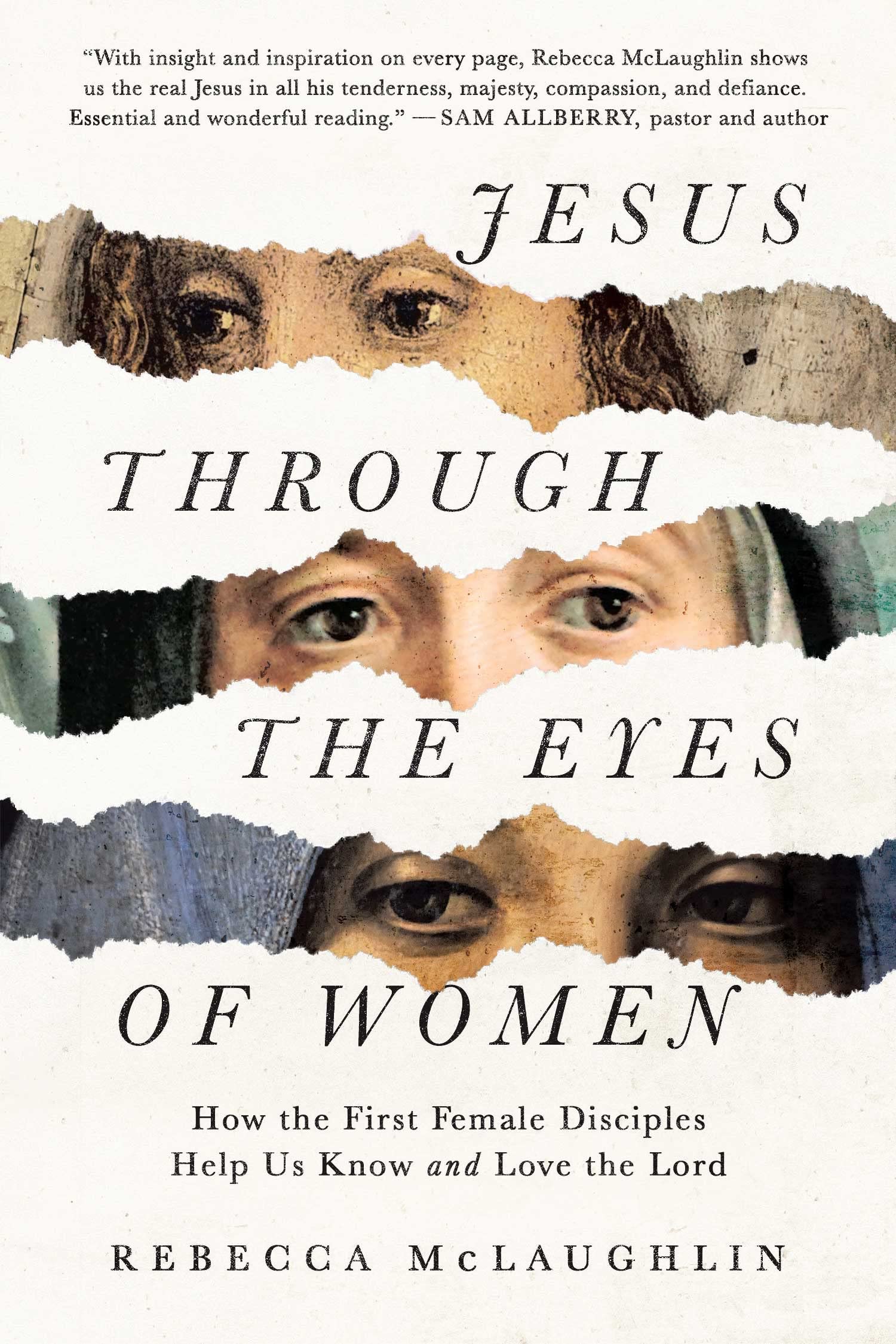 If the women who followed Jesus could tell you what he was like, what would they say?
Jesus’s treatment of women was revolutionary. That’s why they flocked to him. Wherever he went, they sought him out. Women sat at his feet and tugged at his robes. They came to him for healing, for forgiveness, and for answers. So what did women see in this first-century Jewish rabbi and what can we learn as we look through their eyes today?
In Jesus Through the Eyes of Women, Rebecca McLaughlin explores the life-changing accounts of women who met the Lord. By entering the stories of the named and unnamed women in the Gospels, this book gives readers a unique lens to see Jesus as these women did and marvel at how he loved them in return.
We’re delighted to offer this ebook to you for free.
Sarah Eekhoff Zylstra (BA, Dordt University; MSJ, Northwestern University) is senior writer and faith-and-work editor for The Gospel Coalition. She is also the coauthor of Gospelbound: Living with Resolute Hope in an Anxious Age and editor of Social Sanity in an Insta World. Before that, she wrote for Christianity Today, homeschooled her children, freelanced for a local daily paper, and taught at Trinity Christian College. She lives with her husband and two sons in Kansas City, Missouri, where they belong to New City Church. You can reach her at [email protected].
Michael J. Kruger is the Samuel C. Patterson Chancellor’s Professor of New Testament and Early Christianity at Reformed Theological Seminary. He served as president of the Evangelical Theological Society in 2019. He is the author of Surviving Religion 101: Letters to a Christian Student on Keeping the Faith in College and Christianity at the Crossroads: How the Second Century Shaped the Future of the Church. He blogs regularly at Canon Fodder.