

Every Bible teacher wants to be liked and appreciated by those he or she teaches. As a lecturer in Biblical Hebrew at Westminster Theological Seminary since 2009, Elizabeth (Libbie) Groves doesn’t have to wonder if her students appreciate her. She has repeatedly been the highest-ranked professor on student evaluation forms at the seminary. On the day I was there, not only had she dressed up like Elvis to make her point in Hebrew grammar memorable, she also fed her classes burritos. No wonder she’s a favorite! She’s also known for her dramatic recitations of passages in the Bible in Hebrew, including this presentation of the entire book of Jonah.
We’ve heard the saying over and over: “A text without a context is a pretext for a prooftext.” We want to understand the passage we’re teaching in context. But how do we work through context in a way that affects how we’re teaching? In our conversation, Groves walks listeners through two passages—Daniel 1 and Proverbs 3—demonstrating how exploring the various aspects of context in these passages saves us from teaching them insufficiently.
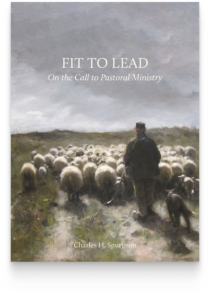
Free eBook by Charles Spurgeon. ‘Fit to Lead: On the Call to Pastoral Ministry’
 With the rate of pastors retiring, burning out, or concluding their ministries, the need has never been more urgent for aspiring ministry leaders to prepare well for their pastoral calling.
In the eBook Fit to Lead: On the Call to Pastoral Ministry, compiled by The Spurgeon Library at Midwestern Seminary, current and aspiring pastors will gain wisdom from Charles Spurgeon on how to discern and thrive in their call to pastoral ministry. In the short book, Spurgeon—the “Prince of Preachers”—discusses how to identify and encourage those called to ministry, as well as what steps to take in pursuing a call to ministry.
We are delighted to offer this eBook to you for FREE today. Click on this link to get instant access!