





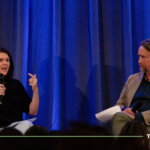


At TGCW26, Melissa Kruger teaches us from Psalm 1 in her keynote talk, Turn to God for Wisdom.
Transcript
The following is an uncorrected transcript generated by a transcription service. Before quoting in print, please check the corresponding audio for accuracy.
Melissa Kruger
Welcome to TGCW 26 I’m so glad to be here with you all. I’m so thankful we have Joni, who’s going to be sharing with us as we study the Psalms together, and we’re going to be looking at different types of Psalms. We’re going to be looking at the richness of God’s song book for us, and I’m thrilled today to get to start in Psalm One, which is a psalm of wisdom. So, as we begin, I want to ask you a question. I want you to think back to your teen years, or maybe in your 20s, and I want you to think about a piece of advice an older person gave you that as you look back on your life, you’re kind of like, man, I wish I would have listened to that a little bit more, you know. It could have been about, you know, how to invest your money when you were younger, it could have been about what to major in, it could have been about where to move, what to do with your life, in some sense, and some older person told you something. Well, I remember one piece of advice that my mom gave me, and she would always say this to me when I was in my teens. She would say, Melissa, take care of your skin, you will thank me when you are older, and I heard her, and like the 17 year old I was, I went off to work at a summer camp every year for six summers, and I never put one ounce of sunscreen on my face, and I think I was like, I really think I had this view. This is my 17 year old self. Well, at 50, I mean, I’m not gonna care what I look like anymore, right? And I mean, and then I was like, and I’m a Christian, so I’m like, at 50, I’ll be so sanctified, I’ll just be like, oh, the wisdom of wrinkles, and I’ll be so happy, and I wish there’s a.. there’s a side of me that wishes I could go back to that 17 year old and say you know there’s gonna be this thing called Instagram invented and they’re gonna be a lot more pictures in life and then there’ll be these things called podcasts and and rather than just listen they’re actually gonna put a video element to the podcast and sometimes they get really up close on your face so you might care just a little bit, but I’ve tried really hard to live up to my 17 year old sanctification expectations of my 50 year old self, but we all have advice that someone passed on to us, and now I want to ask you a different question. If you were talking to a younger person, someone in your life, and you had one piece of advice that you could take them, you could take them by the face and say, “Listen, listen to this. I want you to hear this. This is really important, and if you learn one thing from me, this is what I want it to be. If you could give that piece of advice to someone younger in your life, what would it be? And here’s what I can tell you. If I could pass on one piece of advice to someone younger in my life, to the next generation, it would be the wisdom that is found in Psalm One. And here’s the thing, it’s a grand declaration of wisdom, its message is simple, its pathway is clear, and its warning is strong, and essentially it says this: the blessed life is not found in delighting in the things of the world and gaining them, the blessed life is found in delighting in the law of the Lord, and gaining Him. And that’s where we’re going to begin today. We’re going to look at this psalm. It speaks wisdom to us. So I want you to open up your Bibles, if you have them. We’re going to start at Psalm one, and we’re going to read together Psalm one. Blessed is the man who walks not in the counsel of the wicked, nor stands in the way of sinner, nor sits in the seat of scoffers, but his delight is in the law of the Lord, and on it he meditates, meditates day and night.
Melissa Kruger
He is like a tree planted by streams of water that yields its fruit in season, and its leaf does not wither, and all that he does, he prospers. The wicked are not so, but are like chaff that the wind drives away. Therefore, the wicked will not stand in the judgment, nor sinners in the congregation of the righteous, for the Lord knows the way of the righteous, but the way of the wicked will perish. So Psalm one is a psalm of wisdom, trying to say, hey, here’s how to have the blessed life, and so we have to even ask, what does that mean? And let me start by saying, what it. Doesn’t mean it doesn’t mean gaining all the things in the world, we see people all the time who gain all these toys of the world, so to speak, and they’re absolutely miserable. What he’s talking about, what he’s saying here is the blessed life, the rich life, the satisfied life, the person who looks at his lot and says the boundary lines have fallen for me in pleasant places. That’s the blessed life. And as he goes into this, he’s going to show the psalmist is going to show us the pathway of blessing. He’s going to give us a really interesting picture of what blessing looks like, and then he’s going to tell us the promise of the blessed life. So that’s how we’re gonna go through this. We’re gonna look at the pathway of blessing, a picture of blessing, and the promise of blessing. So the way he begins, he actually starts with the negative. He says what the blessed man doesn’t do, and here’s what the blessed man doesn’t do. The first thing he doesn’t do is walk in the counsel of the wicked, and what I want you to, when you think about the psalm, I want you to start to see this downward progression of what’s happening. There’s a downward, slow progression. We’re going from walking to standing to sitting, and so it starts by saying the person is walking in the counsel of the wicked, so they’re maybe participating in sin, they’re walking, they’re listening to worldly voices, but they’re not yet fixed in it. But when we start to stand in the way of sinners, it becomes our habit. This is a person who starts to be known by their sin. And then we have the thought, the progression getting even farther, where you’re seated in the seat of mockers, so at the beginning you were listening to the counsel of the wicked, and finally the sinful progression goes so far that now you’re seated in the seat of scoffers, and you’re actually giving the advice that you once were being influenced by. Now, here’s the thing, I don’t think most of us go online and start googling, would you give me some wicked advice, that’s not what we do, right? So, how does this spiral begin? What do we even mean? And here’s what happens, we start prioritizing worldly voices over God’s word. We listen more to what people are telling us than the wisdom of what God says. And here’s the thing, we have so much advice coming to us that presents itself as wisdom. In reality, it is just foolishness dressed up as maturity, and these voices, what they do is they teach us to prioritize this world, our possessions, our outer beauty, our success, and maybe on the surface they don’t look that damaging, but there’s always a message underneath the message telling us love this world, keep your eyes on this world, keep looking at these things, and slowly our sinful thoughts become sinful affections, and then they become sinful actions. It’s like a compass gets off just by a little bit, but slowly we find ourselves progression progressing, and we find ourselves in places we never thought we would end up. That’s how sin works. In fact, in Screwtape Letters, if you remember the CS Lewis book, we have an imaginary correspondence between Screwtape – he’s a senior demon – to his nephew Wormwood, and he describes this descent so well. I’m going to read it for you. This is it’s such a subtle progression. Here’s what he says.
Melissa Kruger
You will say these are very small sins, and doubtless, like all tempters, you are anxious to be able to report spectacular wickedness, but do remember the only thing that matters is the extent to which you separate the man from the enemy, the enemy here being God. It does not matter how small the sins are, provided that their cumulative effect is to edge the man away from the light and out into nothing. Murder is no better than cards, if cards can do the trick. Here’s the point, indeed, the safest road to hell is the gradual one, the gentle slope, soft underfoot, without sudden turnings, without milestones, and without signposts. And so this describes this subtle descent, and it begins by who we are listening to the counsel of the wicked. It’s a slow, gradual descent, whereas the blessed man is listening to something very different. And the psalmist points this out. Who’s the blessed man listening to? It says his delight is in the law of the Lord, and on it he meditates day. And night, so this person is delighted in the law of the Lord, and she’s meditating on it day in and day out, that is what she’s thinking about, and here’s the thing, you might be tempted to say, well, you know, I mean, isn’t God’s word just some different people’s thoughts about God, and they pass it on to other people, and they say, “Hope, oh, here’s here’s something to know about God. I’m going to pass it on to you now. You tell someone else, and then they’re going to tell someone else. And so, isn’t it really just human wisdom about God? Well, here’s where it’s so important that we understand a good doctrine of Scripture. We do not believe that this book is man’s thoughts about God. We believe that the Bible is God’s revelation to man about himself, and this is so important for us to understand. We believe scripture is God-breathed, revealed by the Holy Spirit to various servants of God, as they received wisdom of God for the people of God. This is so important. It’s not just a history book, it’s not a how-to book. This is God saying to His people, this is who I am. It’s different from any other book in the world, and that is why we should listen to it, we should read it, we should delight in it. We should take it in, because God chooses to speak to you and me, and He does it through His word. Now, you may hear that, and you may have a different question. You may say, Yeah, I know. I know I’m supposed to delight in God’s word. I know I’m supposed to meditate on it day and night, but when I do, all I feel is my failure. I read it, and I don’t want to read it anymore, because it tells me all the ways I don’t measure up. And here’s the reality: we do read it, and all of a sudden, even just, even just this passage, you might read it, you’d be like, oh man, she’s going to talk about I’m supposed to love God’s word, and you may come to this conference, and you’re like, I’m not even sure I want to be here, I don’t really know if I want to delight in God’s word, I don’t know if I want to be here, and so what we immediately see is I don’t measure up to the person of Psalm One, and we read it, and it’s just like a burden and a weight. And here’s the thing, if you remember Pilgrim’s Progress, I don’t know, I love the kid’s version of Pilgrim’s Progress, so don’t know if you remember it. He actually reads the law, and do you remember what happens all the sudden? He feels this huge burden on his back, you know, and he feels like he’s just desperate to get rid of it. And if you remember in the story, where does he get rid of it? He gets rid of it when he finally gets to the cross, right? And he lays that burden down on the cross, and here’s the message behind the message of this psalm. What this psalm is not telling you is, go be a better person, go delight in the law of the Lord more, go meditate on it more.
Melissa Kruger
You be the blessed man, and then you’re going to get the promises of blessing. It’s actually directing you to this truth. God’s word reveals who He is, and it also reveals who we are, and what it’s actually telling you is that you will never be able to do this. Does that mean that you will never have the blessing? No, because here’s the thing, this psalm is ultimately it’s not about you and me, it’s about Jesus. Jesus is the blessed man of Psalm One. He’s the one who loved the law of the Lord, and meditated on it, on it day and night, never broke a single commandment. And here’s what he says. He says, if you come to me and you find life in me, and you believe in me, all of my righteousness becomes your righteousness, all of the blessings I deserve become the blessings that you get to freely enjoy. That’s what happens when we come to Jesus. And so this is a visual I want you to take with you. This is what I want you to think about. I want you to think about that burden, this huge rock that you cannot carry, and I want you to picture it transferring to your feet. And here’s what I want you to think about. No longer is it for you to carry, but it is here for you to build your life on. It is a firm foundation for your life. In fact, this is what Jesus said in Matthew seven. Here’s what He said: Listen, everyone who hears these words of mind and does them will be like a wise man who built his house on the rock and the rain fell and the floods came and the winds blew and beat on the house but it did not fall because it had been found founded on the rock God’s word is a light unto. Path, it’s what with all these voices that cry out to us and say you need this, this is a way to be blessed. Follow this path. God’s word says I am a sure foundation for you to build your life on. I remember years ago I was coming back from a conference and I was driving on the road and it was getting to be about dust time, and I can remember, I was, I think, I was talking to the phone, I was kind of straining to see, and all of a sudden I started to notice beside me it felt like this car was following me, and you know how you get that sense, like why it seems like every time I get in the slow lane to let him pass, he gets in the slow lane right in front of me, and then I was like, maybe I’m imagining things, so I’d get in the fast lane, I would go on path, you know, I try to get past him, and then he would speed on up and come right alongside me, and this kept happening, so all of a sudden you realize, huh, this person is after me. Why are they following me? And I kept straining. It started to drizzle at this point, and I was feeling stressed about it, and I noticed I felt like I was getting a headache, and I was straining so hard, and all of the sudden it hit me. I did not have my lights on. As soon as I turned my lights on, that truck drove away, and here’s what I realized at that moment, I thought the guy in that truck was after me, I thought he meant to harm me, and the whole time he was there to protect me, he was trying to help me see there’s something wrong, and you’re in trouble, and that’s what the law does for us. That’s what God’s word does for us. The reason we can delight in it is it always intends good for us. If you take anything away from this conference, here’s what I want you to know: God is always after your good, his word is he gives it to us, not to keep us from life, but to help us to understand what is truly life. It is, he is always protecting us with his word, he’s always guiding us, he wants good for us, and so we can delight in it.
Melissa Kruger
And here’s the thing, it’s not just that we need to know God’s word, we actually need to live it out. That Matthew passage said it’s he who hears the word and does what it says, so that’s a part important part of this. And here’s the thing, we can delight in God’s word, we can put it on our cute bags, we can put it on our notebooks, but if we’re actually not living it out in our lives, it’s not really impacting us, and that is why we don’t just delight in the law of the Lord, we meditate on it day in and day out, and here’s the thing: everything in your life right now is against you meditating on anything. We are so used to everything coming at us so fast, you know. We get on our cell phones, we expect to have news right now, and everything’s always entertaining and always popping up. And scriptures, the scriptures encourage us to slow down and actually start to think about our lives, to meditate on God’s word. And this isn’t like Eastern meditation, it’s not emptying yourself of knowledge or thinking, it’s actually filling yourself with knowledge and with thinking about God’s word, but you know it’s pretty clear our whole world understands that we have a focus problem right now. A few years ago, a friend sent me this new New York Times challenge, and it was called Test Your Focus, and here’s what it invites you to do every month, they send it out, and it presents a piece of artwork, and it asks you to stare at the artwork for about 10 minutes. That’s the goal, 10 minutes of looking at a piece of artwork, and it’s the goal is to help you learn to focus on something and just to stay attuned for 10 minutes. Most people did not finish the exercise. In fact, they said only one in four people lasted the whole 10 minutes. Well, I decided to try it, because I was like, I think, I think my focus is pretty good. And so I pull up, I pull up the artwork. It’s called A Vase of Flowers by Dutch artist Margarita Haverman. So go look it up and Google it. It is literally a vase of flowers, and so I pulled it up, and I was like, okay, this might be harder than I thought it was going to be. So I pull it up, and I start looking at, I’m pretty committed, I’m going to stay 10 minutes, and I’m going to look at this piece of artwork, and I started zooming in on. It and I just gave myself the time, and all of a sudden, as I started looking at this piece of art, I started noticing, oh, wow, the artists put little water droplets on the flowers, and oh, there’s a little bumblebee. I wonder why she put that bumble bee there. And then I realized there’s also a little snail, and then the vase had looked really dark, and I couldn’t see it, and as I zoomed in on it, I realized it had this old man’s face with these little baby cherub legs, and here’s what happened as I started to look at the painting, I actually became more curious about it. I liked it more. I wanted to understand it more, and I became much more curious about the artist. I wanted to know when she lived. I wanted to know why she painted it. I wanted to know more about her life. Looking at it longer made me more interested than looking at it for a short period of time, if this is true about me gazing at a human-made painting, what might happen if all of us went home and we set a timer for 20 minutes and we said, I’m just going to turn everything else in my life off and I’m just going to read God’s word, and I’m going to let myself just savor it, and I’m going to give myself the time to really look at this, and really meditate on it, and really think about it. What might happen if we did that?
Melissa Kruger
And I just encourage you, if you go home and you want a place to begin, start at Psalm 119 and just soak in it, just meditate in it, give yourself the time to do it, because here’s the thing, the world is shouting at you with its worldly wisdom, it’s coming at you all day long, and the way we can combat it is by choosing to listen to God’s word and continually be in it day after day after day, and so this is the path the psalmist puts us on. He says be in God’s word, delight in it, and meditate on it day and night. And then he paints this really interesting picture of the blessed life, and he gives us two images, so he starts with telling us the pathway of the blessed life, and now he paints a picture, and this is what it says: He is like a tree planted by streams of water that yields its fruit in season. In all that he does, he prospers. But then he says the wicked aren’t, so they’re like chaff. Well, you’ve probably, I think everybody here has seen a tree planted by a stream, and how, when you do that, sometimes you’re like, how is that tree even making it? And you see its roots are going down to the stream, and it’s drinking from it. Well, you may be less familiar with chaff. Chaff is a part of a grain of wheat, and when you are threshing, if I were to take a grain of wheat and thresh it in my hands, I’d roll it like this, and what would happen is the grain would fall to the ground, and the chaff would just blow away, and so he gives us this image of something that’s just blowing in the wind, and this image of a tree, he does this comparative, and I want us to think about it in three ways: dead versus alive, detached versus planted and fruitless versus fruitful. So, the first thing, what we can learn about when we think about chaff, it’s just an outer shell, it’s not alive any longer, it’s just blowing in the wind. And here’s the thing, this is who we are in our natural state, if we are not in Christ. The scriptures tell us that we are dead in our trespasses and sin. Chaff is a picture of our fallen state. It’s just an outer shell. Yes, we were made in the image of God. There’s a remnant of glory, but there’s no life inside. What this picture of a tree reminds us, is a tree is alive. It’s been planted, and every year it may look small, but every year it’s growing. There’s real life in there, it’s getting bigger, ring by ring. And that’s a picture of who we are in Christ, continually growing. And then the second thing is, chaff is completely detached, and I think this is such a picture of our culture as we think about it. Right, what’s true today might not be true tomorrow. It’s constantly being blown in the wind, and that’s that’s what chaff is like. There’s no fixed anchor to hold it, it’s just blowing this way or that way, versus a tree is actually planted. I have this deep dream of hydrangeas in my yard, and so this spring I decided to plant some of them, and I had to dig holes, and I want you to know, I don’t know if anybody dug some holes this spring. It is. Hard work to dig a hole and plant something. It is not easy to do. And here’s the thing, if you are in Christ, it is not because of your hard work. He takes you and he plants you and he puts you by the stream and he tends to you and he does that so that you might be alive and here’s the thing, when the winds come on that plant, where the winds come on chaff, it just blows where it will blow, but the wind, when the winds come to a tree, the tree may sway, but it stands firm because it’s been planted, it’s rooted, and that’s the image of the blessed person, and then lastly, chaff is fruitless. It will never produce anything ever again. It’s already produced this grain, and it’s done from there on.
Melissa Kruger
Whereas the blessed life is like a fruit tree, it’s constantly giving its fruit in season. I have this plum tree, and I kind of feel like, oh, I shouldn’t talk about it again, because I feel like I’ll always talk about this plum tree, but there’s actually a fruit tree in this text, so I feel like I am justified to talk about my plum tree a little bit, and I just, I actually just left, and right now it is bursting with fruit, but I watch it from my kitchen window, and I watch it at different seasons, and during the winter it looks completely dead. You would not think it is alive, but I know it’s alive. And then slowly, as spring starts to happen, little leaves come on it, and then the little flowers start to come on the tree. And then all of a sudden, right now, when it hits summer, it is overflowing with fruit. There are so many plums just sitting on the plum tree, and it’s just overflowing. And I will take all this, this fruit, and I’ll take it in my, I’ll take it in my house. And I love to make jam. I love to make cobblers with it. And jam is a slow process, so it gives me a lot of time to think, and I can remember sitting there and stirring the fruit, and stirring and making the jam, and all of a sudden it hit me, the fruit tree doesn’t actually really get to enjoy its own fruit, it just is blessing others, it’s just giving life to others, and here’s what it made me realize about fruitfulness. The fruit tree is just being what the tree is. It is a plum tree, and it’s just bearing fruit. It’s not trying to do that. It’s abiding in the ground, it’s drinking from that river, and it fruit is produced, it’s alive, and it’s actually giving life. And this is what happens to us when we come to Christ. He plants us, and He makes us alive, and all of the sudden, as we abide in Him, we become women who are different. He changes us, and he starts bearing fruit in us, and all of the sudden we become more loving and more kind and more patient, and other people come and they enjoy the fruit from our tree, and they start to say, I sat down with her, and she was so kind to me, and she listened so patiently to me, and she was so, she was so good to me, and they start being blessed just to be around you, not because you are trying so hard, but because you are abiding, and here’s the thing about the blessed man that we need to learn, and we need to really understand it’s not that we are blessed as an end to itself. We are blessed to be a blessing. We are made alive to help get to participate as God makes other people alive, because when you think about a piece of fruit, what’s in the center of a fruit, a seed. now. What does God invite us to do? He says, “Go scatter the seeds of the gospel. You’re alive. You get to tell other people how to be alive. You are blessed to be a blessing, and this is the beautiful picture of the blessed life. So we have this pathway, this is the way to be blessed. We have this picture of blessing, it’s a tree that’s alive and is actually giving more life. And then we’re finally, we’re told he closes by by giving, telling them the promise of the promise of the blessed life, and here’s the promise of the blessed life, and it’s kind of shocking. It says, whatever he does prospers, that’s what’s told to the blessed person, but it’s also contrasted with a really strong warning, and so I want us to listen to that. Here’s what he says: Therefore, the wicked will not. Stand in judgment, and we’re sinners in the congregation of the righteous. So, there’s this deep warning that comes, and I have to say, I don’t know if you’re like me, we don’t use wicked in our culture a lot. And when I even read it, I feel uncomfortable when I think about people I love who aren’t believers.
Melissa Kruger
I kind of feel like there should be this gradation scale, you know, like righteous kind of okay, teetering on the edge needs a time out pretty bad, and then wicked, but all of scripture points the reality there are only two ways, there’s righteous and unrighteous, there are wheat and there are tares, there are sheep and there are goats, there’s clean and there’s unclean, there are only two paths, prospering or perishing, that’s all. And here’s the thing, the earthly destiny for those who are apart from Christ is one of constant striving, constant upheaval, constant going this way and that way with no fixed anger. Do not believe the lie that the life of sin is the good life and you are missing out. It is not the good life. It is not the good life, and in this earthly realm it’s not. And then the eternal destiny is even more so, brain, it says those who stand in the way of sinners. Notice the parallelism of this passage. Those who stand in the way of sinners will not stand in the judgment. Those who sit in the seat of mockers, they are not going to sit in the congregation of the righteous. But the blessed man has a completely different outcome, whatever he does prospers, whatever he does prospers. Now, you may, we all hear that word, and I think we’re all like, “Oh, is this like a prosperity gospel message? Is that what we’re saying? What’s good to remember, if this psalm is about Jesus, remember the life of Jesus. Look at his life, he was the blood, the blessed man, but he was poor. He was betrayed. His family didn’t know what to do with him. They thought he was out of his mind. All of his closest companions abandoned him at his moment of greatest need. And you have to say, is that the life of blessing? He who deserved all the favor laid it down. Why did he do that? He deserved all the prospering, and he laid it down. And here’s what scripture tells us: He who knew no sin became sin, so that in Him we might become the righteousness of God. Here’s what we could say. He who knew no wickedness became like chaff, so that we might become a tree, a planting of the Lord. In fact, this is exactly what Jesus said in Luke four, right after Jesus’s temptation with Satan in the wilderness. He goes to the temple, he’s handed a scroll, it’s Isaiah 61 and this is what it says: The Spirit of the Lord is upon me, because He has anointed me to proclaim good news to the poor, He has sent me to proclaim liberty to the captives, and a recovering of sight to the blind, and to set at liberty those who are oppressed, and to proclaim the year of the Lord’s favor, and that’s where it ends in Luke, but if you go to Isaiah 61 three and you say, What is the year of the Lord’s favor? This is what it says, that they may be called oaks of righteousness, a planting of the Lord for the display of His splendor. Do you see the wonder of your salvation? I he became chaff, so you and I could become a tree. That’s what our Savior did to us, for us. That’s the life He gives for us. He took on chaff, so we could live. And so then we have to ask in Christ, what does a life of prosperity mean? What does it look like? What it doesn’t mean, and we all know this, is it doesn’t mean a life of perfect circumstances. It’s not a life of ease. Here’s, here’s the reality, though. What it does mean is that you are a planting of the Lord, and you will display his splendor. This is prosperity for the Christian. Because you are planted, you can rest assured you will be firm in the face of temptation. When it, when it beckons, you will weather the storms of suffering and sorrow. You will endure the day of the diagnosis that you do not want, you will continue to bear fruit in seasons of drought. Your meditation will overflow into delight. Your delight will overflow into obedience. You will stand up in judgment, and you will sit in the congregation of the righteous. He planted you.
Melissa Kruger
He tends you, and he will sustain you. Whatever happens to you externally, your soul is completely safe eternally. This is the prosperity for the Christian. And so, as we begin today, as we start this time together, my question for you, will you listen to wisdom? Will you listen to the wisdom of the psalm? If you are not a believer, if you are not a Christian, will you hear this message? Will you believe in the Lord Jesus Christ, and be saved. He will plant you, He will tend you, He will prosper you. Come to Jesus. Life is not found in any other place. He is the fount of all life. Come to Him. And if you are a Christian, will you plant yourself in God’s word, don’t keep listening to the verses to the voices of the world that tell you they’re trying to tell you buy this and be happy, do this and be happy, read this book and find life. Will you shut those voices off so that you have time to be in God’s word? And then I want to ask you the question Joni asked at the beginning of this session. How will you steward the life you’ve been given? We have 9000 women in this room. How will you steward where you have been sent in this world. He has planted you somewhere, and He wants to display His glory through you to the watching world. It may be some place you don’t want to be, but will you root yourself in Him? The place to begin is be in His word, and He is going to create in you. He is going to make you an oak of righteousness for the display of His splendor. So, here’s the thing: Psalm One, it sings to us, it sings to us the path of blessing, the picture of blessing, and the promise of blessing. So, here’s what we need to do with to one another in a world that’s shouting to us to find life in all of these places. Can we keep singing to one another the goodness of this message? Can we keep singing to one another the truths of Psalm One? Hear this. Blessed is the woman who delights in Jesus, and on Him she meditates day and night. She is like an oak of righteousness, a planting of the Lord for the display of His splendor. May it be true of us. Let’s pray. Father, we thank you that you have come, that you sent your son, and that he became like chaff, so that we might become alive. Lord, we thank you that you sent Jesus to rescue us. Lord, we thank you that you spoke your word, so that we might know how to live. Lord, we pray that we would be known as women who love Your word, who delight in it, who meditate on it day and night. And Lord, we pray that wherever we are planted, You would let us prosper, that we might glorify You in whatever place You’ve sent us. It’s in Your name we pray. Amen.
Melissa Kruger serves as the vice president of discipleship programming for The Gospel Coalition (TGC). She’s the author of multiple books, including The Envy of Eve: Finding Contentment in a Covetous World, Walking with God in the Season of Motherhood, Growing Together: Taking Mentoring Beyond Small Talk and Prayer Requests, Wherever You Go, I Want You to Know, and Parenting with Hope: Raising Teens for Christ in a Secular Age. Her husband, Mike, is the Samuel C. Patterson chancellor’s professor of New Testament and early Christianity at Reformed Theological Seminary, and they have three children.