Listen to the author read his article.
Why Aren’t Christians Funny?
Illustration: J. Ehle; Images: iStock.com/Inside Creative House/CSA-Archive
More By Michael P. Jensen


One of my father’s favorite jokes goes something like this:
Quizmaster: Now, for the $64,000 question, are you ready?
Contestant: Yes.
Quizmaster: Where was Abraham born?
Contestant: Um . . . er . . .
Quizmaster: Correct! You win $64,000!
While it’s not sophisticated comedy (see Gen. 11:28 if you need the context), I like to think my dad was catechizing me in the gospel of grace. The joke works because failure is rewarded. The contestant hesitates, stumbles, and still receives the prize. It’s a small parable of justification by grace alone.
If that’s the gospel we believe, then surely Christians should have a certain lightness about them. Not flippancy, and certainly not cynicism, but a deep confidence that, as Julian of Norwich put it, “All shall be well, and all manner of thing shall be well.”
So why, then, aren’t Christians known for being funny? Somewhere along the way, we decided that holiness looks solemn, that humor must be carefully managed, and that taking God seriously requires taking ourselves very seriously.
Taking Faith Too Seriously
The evidence is there in the Christian past. We’ve inherited a tradition that’s morally earnest, theologically weighty, and wary of levity. That instinct has ancient roots.
In the fifth century, John Chrysostom warned that laughter was inappropriate for the present age: “Men laugh and they weep, and it is a matter of weeping that they laugh.” Laughter isn’t for the present evil age, but crying is. Christian tears will provide the counterpoint to the frivolity and jollity that obscures the human need for redemption.
There’s wisdom here. Much of contemporary humor trivializes what should grieve us. The Bible knows the proper place of lament. Jesus himself was “a man of sorrows” (Isa. 53:3). The Christian isn’t called to a shallow cheerfulness that ignores the world’s brokenness.
At the same time, we should not confuse a heavy heart with a holy life. The New Testament never equates joylessness with godliness. The fruit of the Spirit includes joy (Gal. 5:22), and the kingdom of heaven is repeatedly described not as a courtroom or a lecture hall but as a feast (e.g., Matt. 22:2). When seriousness becomes our default posture, something has gone wrong.
Taking Ourselves Too Seriously
But perhaps the deepest reason Christians aren’t funny is that we often take ourselves too seriously. This isn’t simply a failure of piety but a cultural inheritance. In an age of anxious individualism, the self becomes a fragile project, endlessly managed and protected. Laughter is dangerous here, because it risks exposure—and so we cling to seriousness instead.
The New Testament never equates joylessness with godliness.
Theologically speaking, this is a problem. Augustine and Aquinas both understood pride as a kind of gravitational pull toward the self. To be obsessed with one’s importance, reputation, or performance is to live under a heavy burden. Humility, by contrast, creates space for laughter. It allows for self-forgetfulness.
G. K. Chesterton captured this with characteristic brilliance: “Angels can fly because they take themselves lightly. Never forget that the devil fell by the force of gravity. He who has the faith has the fun.”
A Christian who cannot laugh at himself may not yet have fully grasped grace. If my standing before God depends entirely on Christ, then my failures are no longer catastrophic. They’re real, but they aren’t ultimate. That frees me to acknowledge absurdity, not to fear it––even when I find absurdity in myself.
This is where the gospel changes everything. Justification by grace alone doesn’t merely settle our status before God; it reshapes our emotional posture toward life. Christ carries our heaviest burdens on his broad back. That knowledge should make us less defensive, less brittle, and less desperate to appear impressive. We don’t need to manage our image so carefully.
Free to Laugh
The gospel brings the freedom not just to laugh at ourselves but even to mock our Enemy’s efforts to destroy us.
Martin Luther understood this instinctively. Plagued by depression and convinced he was under spiritual assault, Luther saw humor as a form of resistance. The Devil, he believed, thrived on accusation and despair. The antidote wasn’t solemn introspection but mockery: “The best way to drive out the devil is to jeer and flout him, for he cannot bear scorn.”
A Christian who cannot laugh at himself may not yet have fully grasped grace.
For Luther, laughter wasn’t trivial; it was theological. It was an enacted confession that evil doesn’t have the final word.
Christian laughter, at its best, isn’t cruel, cynical, degrading, or smug. It’s confidently humble. We’re invited to laugh at pretension, including our own. We can acknowledge the absurdities of life under the sun without surrendering to despair.
In a culture marked by anxiety and self-importance, this sort of laughter will be powerfully strange. But perhaps that’s precisely our calling. To live lightly, not because nothing matters but because Christ has already secured what matters most.
Why aren’t Christians funny? Perhaps because we’ve forgotten just how good the gospel really is.
Free eBook by Rebecca McLaughlin: ‘Jesus Through the Eyes of Women’
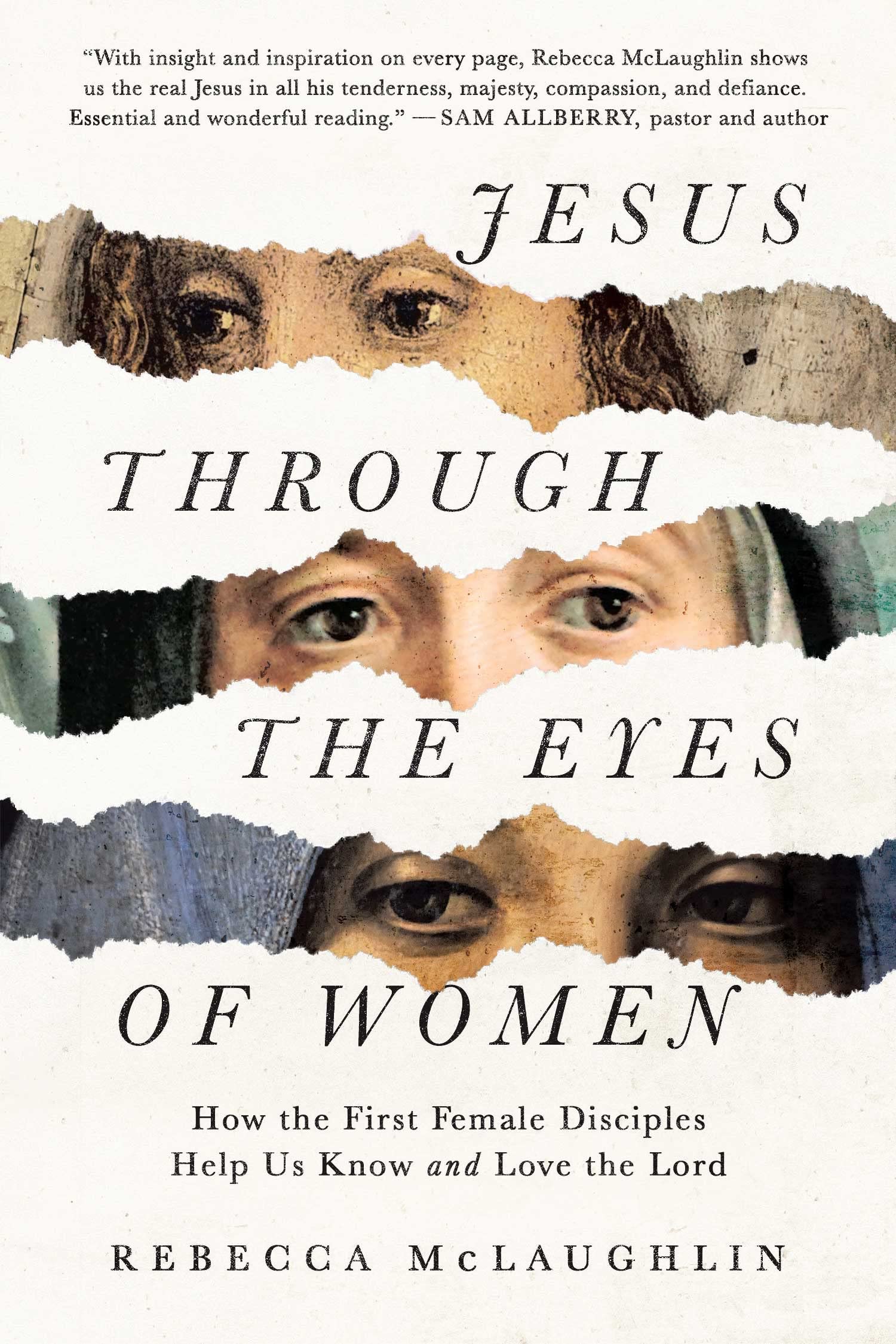 If the women who followed Jesus could tell you what he was like, what would they say?
Jesus’s treatment of women was revolutionary. That’s why they flocked to him. Wherever he went, they sought him out. Women sat at his feet and tugged at his robes. They came to him for healing, for forgiveness, and for answers. So what did women see in this first-century Jewish rabbi and what can we learn as we look through their eyes today?
In Jesus Through the Eyes of Women, Rebecca McLaughlin explores the life-changing accounts of women who met the Lord. By entering the stories of the named and unnamed women in the Gospels, this book gives readers a unique lens to see Jesus as these women did and marvel at how he loved them in return.
We’re delighted to offer this ebook to you for free.