


Discussions over worldviews can get muddled fast since every worldview comes with presuppositions, cultural blind-spots, and emotional baggage. For example, consider the common objection that if God is good, he should not allow bad things to happen. Otherwise he’s either evil for not intervening, and more like the Devil than God; or he’s not powerful enough to intervene, making him less than divine. But notice the problems that come with this objection:
- This objection presupposes that we can know there could never be a reason why a good, powerful, and all-knowing God would allow bad things to happen. It also assumes that God is not wise enough to intend for good what others intend for evil.
- This objection also has cultural blind spots. Interestingly, thinking people, even secular philosophers like Plato and Aristotle, rarely made this objection. What makes it prominent today? Surely we aren’t wiser or more sophisticated in our thinking.
- Also, this is a fundamentally emotional objection despite the logical syllogism. With 24-hour news updates and immediate Twitter feeds filled with disasters and attacks, suffering and evil is always before us, causing to ask difficult questions about the world and who governs it.
Graham Cole of Beeson Divinity School slices through some of the difficulty and organizes our thinking when we talk on worldview in the short videos below, produced by Christ on Campus Initiative (CCI). I find his response most helpful in the second video when, with regard to the question about how we assess a worldview, he asks, “Is it scriptural, thinkable, and livable?” You may observe the similarity but also the simplicity compared to John Frame’s tri-perspectivalism and the normative-situational-existential categories.
Free eBook by Tim Keller: ‘The Freedom of Self-Forgetfulness’
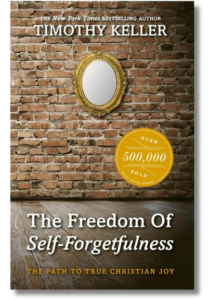 Imagine a life where you don’t feel inadequate, easily offended, desperate to prove yourself, or endlessly preoccupied with how you look to others. Imagine relishing, not resenting, the success of others. Living this way isn’t far-fetched. It’s actually guaranteed to believers, as they learn to receive God’s approval, rather than striving to earn it.
In Tim Keller’s short ebook, The Freedom of Self-Forgetfulness: The Path To True Christian Joy, he explains how to overcome the toxic tendencies of our age一not by diluting biblical truth or denying our differences一but by rooting our identity in Christ.
TGC is offering this Keller resource for free, so you can discover the “blessed rest” that only self-forgetfulness brings.