Over coffee, a friend who is a Harvard medical student told me, “I like Jesus’s teachings, but I’m a modern, scientific person. I could never believe in a resurrection.” Modernity leaves no room for the miraculous, especially not for a miracle as outrageous as a dead rabbi coming back to life. But what if history tells a different story?
Today’s scholars seriously discuss the resurrection’s historicity. They recognize that the ancient sources tell a coherent narrative about the days following Jesus’s death. The mainstream view among historians today is that it’s more probable than not that Jesus’s tomb was empty and that people genuinely believed they saw the resurrected Jesus.
Empty Tomb
The three earliest independent accounts of the empty tomb are found in Mark 16:1–8, John 20:1–10, and 1 Corinthians 15:3–5. Three different people separately recorded that the tomb was empty. Matthew and Luke also record the empty tomb in their Gospels but their accounts probably depend on Mark as a source.
Mark reports that three women discovered the empty tomb (cf. Matt. 28:1–8; Luke 24:1–3). As Dale Allison argues, the lack of additional theological and apologetic arguments in Mark’s account indicates his report is rooted in historical memory.
Similarly, John records that Mary Magdalene found the tomb empty, and that Peter and John verified her report. While Paul doesn’t explicitly mention the empty tomb in 1 Corinthians 15, his creedal formula, developed earlier than AD 51, implies its existence too.
The ancient sources tell a coherent narrative about the days following Jesus’s death.
The strongest evidence for the historical reliability of the empty tomb accounts is that they rely on women’s testimonies. In ancient Near Eastern society, a woman’s testimony wasn’t considered reliable. Josephus denounced evidence provided by women (Antiquities 4.219), and the Mishnah said women shouldn’t be witnesses (Mishnah Shabuot 4.1). The Gospel writers were aware of this bias, but they decided to record the women’s testimonies anyway. They wouldn’t do so if the story were false.
Some will object, saying there are ways to explain an empty tomb without claiming a miracle occurred. The Bible is aware of such debates. Matthew 28, for example, says the chief priests paid soldiers to spread a rumor about the disciples stealing Jesus’s body. But if the Jewish elite weren’t claiming this, why would Matthew include it in his Gospel? It’s implausible that Matthew invented a debate that would cast doubt on the empty tomb. More probable is that the tomb was actually empty.
Throughout history, other explanations for the empty tomb have been provided, but they also don’t hold up under scrutiny. As N. T. Wright argues, it’s unlikely the women went to the wrong tomb or mistook Jesus for someone else. It’s also doubtful that Jesus didn’t really die on the cross, or that Jesus wasn’t actually buried. The best explanation is that early Christians reported an empty tomb because they believed in Jesus’s bodily resurrection.
Still, the empty tomb isn’t the only evidence for the resurrection. We must also consider Jesus’s post-resurrection appearances.
Post-Resurrection Appearances
Matthew 28:8–10 and John 20:11–18 independently record Jesus’s appearances to women, and these reports clearly reflect a communal memory. Luke 24:13–35 also describes Jesus’s appearance to the two disciples on the road to Emmaus. The fact that only one, Cleopas, is named and that both are lesser-known indicates this narrative is authentic.
Paul independently records appearances verified by the Gospels. One to Peter was recorded in Luke 24:34 and 1 Corinthians 15:5. Both passages read like formulaic confessions, indicating they’re early church sources. Paul also mentions an appearance to the Twelve (1 Cor. 15:5; see Luke 24:36–49; John 20:19–23). These testimonies appear to be given in good faith because they’re from Peter, who earlier denied Jesus, and Paul, who had persecuted Christians.
The accounts of the post-resurrection appearances are sincere, widespread, early, diverse, unexpected, and supported by external witnesses.
The minor variations between the accounts support their authenticity too. Instead of prearranged, unanimous deception, we find the diversity we’d expect among different witnesses. Further, there’s no historically plausible reason to suspect the disciples invented their narratives. They were socially estranged, tortured, and executed for their beliefs. While people die for things they know to be true, it’s rare for them to die for what they know to be false.
Best Explanation and Source of Hope
The resurrection is the best explanation for the historical evidence. The New Testament shows it was a core belief of the early Christians. Eyewitness reports affirm both the empty tomb and the resurrection appearances. We have all the evidence we’d expect if someone in the ancient world really rose from the dead.
The resurrection is the best explanation for the historical evidence. The New Testament shows it was a core belief of the early Christians.
But Jesus’s resurrection isn’t just a historical probability—it’s also a present reality that’s transforming lives. Through his resurrection, Jesus inaugurated creation’s renewal. As J. R. R. Tolkien described it, the resurrection is a “eucatastrophe,” an event of such good and cataclysmic power that it’s renewing the entire creation. When Jesus walked out of the tomb, our fallen world was conquered by heaven.
Because of the resurrection, we have hope that death will die. We have a promise that all suffering will be healed. And we look forward to spending eternity embraced by our resurrected Savior’s love.
Free eBook by Rebecca McLaughlin: ‘Jesus Through the Eyes of Women’
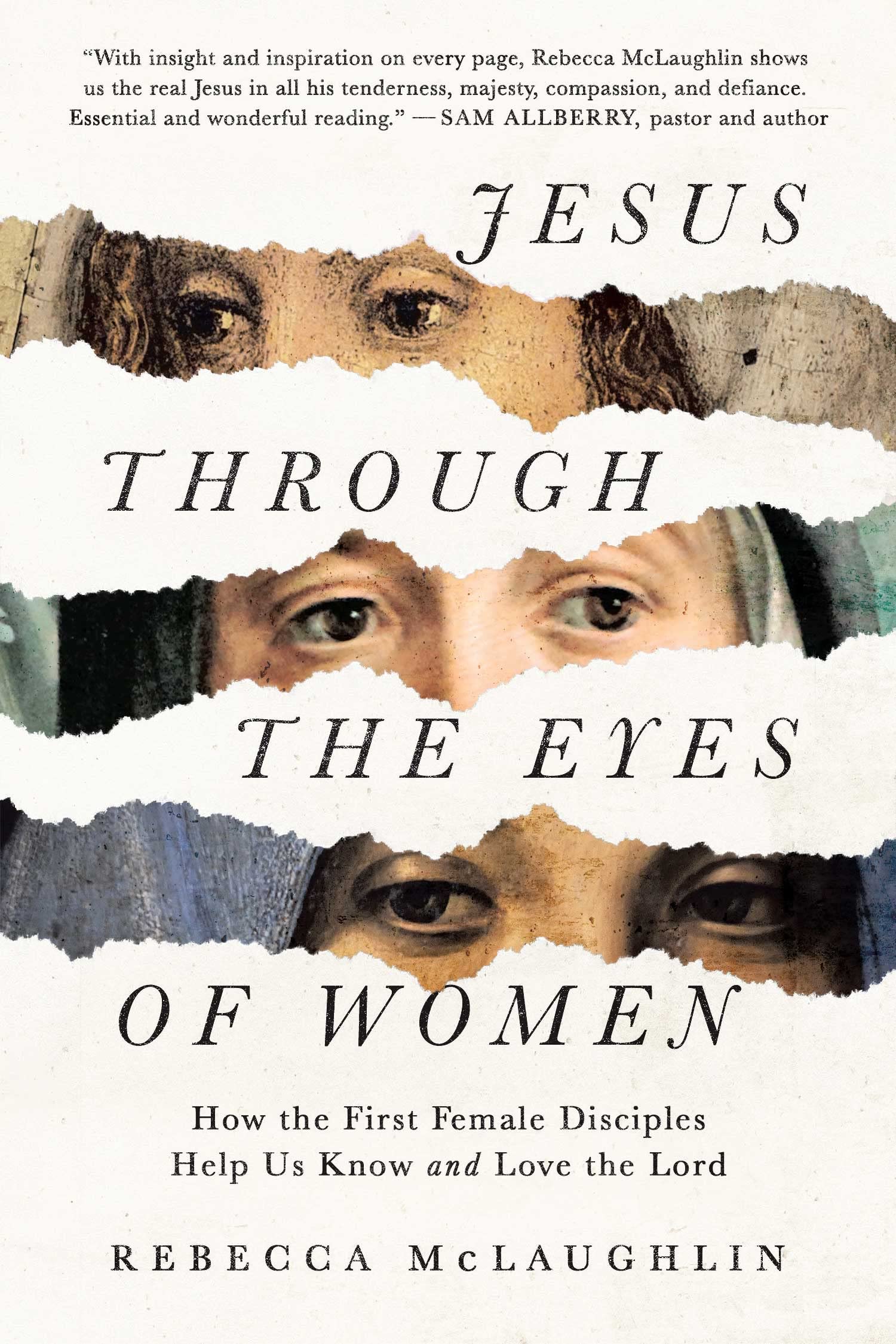 If the women who followed Jesus could tell you what he was like, what would they say?
Jesus’s treatment of women was revolutionary. That’s why they flocked to him. Wherever he went, they sought him out. Women sat at his feet and tugged at his robes. They came to him for healing, for forgiveness, and for answers. So what did women see in this first-century Jewish rabbi and what can we learn as we look through their eyes today?
In Jesus Through the Eyes of Women, Rebecca McLaughlin explores the life-changing accounts of women who met the Lord. By entering the stories of the named and unnamed women in the Gospels, this book gives readers a unique lens to see Jesus as these women did and marvel at how he loved them in return.
We’re delighted to offer this ebook to you for free.