



Those of us who speak English and live in the United States have been blessed with many good Bible translations. We can afford to engage in a discussion of translation philosophies. If we sour on one version, we can always grab another. Or another. Or another. Or many at once. Some preachers even search different Bible versions to find one that says what they want or need it to say for the sake of their sermon points. We have been blessed. Or is this proliferation actually a curse?
With the third question for the Perspectives in Translation forum at Bible Gateway, I asked, “Should I use multiple translations or stick with one?” Just because I have a stack of different Bibles in my closet, does that mean I should use all of them? Might each have its own season? Or will one suffice for every purpose? Is the answer different if I’m a pastor, scholar, or layperson? What about new Christians or unbelievers?
As you can see, this one question raises many more. Lone gone are the days when the King James Version sat in every home, when its peculiar phrases peppered presidential speeches. But the faithful work of modern-day translators brings its own blessings, too.
- Robert Yarbrough suggested we can benefit from daily meditation on one familiar translation. But occasionally glancing at other versions may help us understand passages in a fresh way.
- Craig Blomberg agreed with Yarbrough and observed how times have changed, with certain groups coalescing around favored translations. He suggested that readers who don’t know Greek and Hebrew should consult at least three translations to avoid outlying interpretations.
- E. Ray Clendenen observed that reading several versions will help Bible students focus on points that require further investigation.
- James M. Hamilton Jr. pined for the days when the archaic KJV dominated. These days it’s frustrating to memorize texts and then hear them quoted from a different version. “It’s far easier for us to inscribe the words of Scripture on the tablets of our hearts when we stick with one translation,” he said.
- Michael Bird heartily recommended reading several different translations. Reading levels in any congregation will vary, he said, and some translations are better suited for youth. All translations, Bird said, “have their relative strengths, weaknesses, uses, and shortcomings.”
Next week’s discussion at Perspectives in Translation will turn to “chesed,” one of the most important passages in the Old Testament that helps us understand God’s faithful, covenant love.
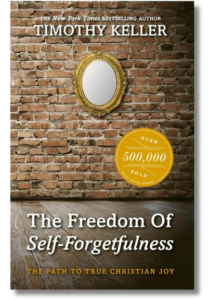
Free eBook by Tim Keller: ‘The Freedom of Self-Forgetfulness’
 Imagine a life where you don’t feel inadequate, easily offended, desperate to prove yourself, or endlessly preoccupied with how you look to others. Imagine relishing, not resenting, the success of others. Living this way isn’t far-fetched. It’s actually guaranteed to believers, as they learn to receive God’s approval, rather than striving to earn it.
In Tim Keller’s short ebook, The Freedom of Self-Forgetfulness: The Path To True Christian Joy, he explains how to overcome the toxic tendencies of our age一not by diluting biblical truth or denying our differences一but by rooting our identity in Christ.
TGC is offering this Keller resource for free, so you can discover the “blessed rest” that only self-forgetfulness brings.