

It’s hard to overstate how beloved George Saunders is. The fiction writer is one of the few true celebrity authors. To promote his latest book, Vigil, Saunders has been on Stephen Colbert’s The Late Show, recorded a podcast with New York Times journalist Ezra Klein, and talked with music producer Rick Rubin. Few authors can boast such an impressive lineup of interviews and appearances.
But Saunders isn’t merely a celebrity. Many people consider him a spiritual guide. In 2012, Joshua Ferris wrote, “Saunders writes like something of a saint. He seems in touch with some better being. He seems sent . . . to teach us mercy and grace.” A 2022 review of one of Saunders’s books from the L.A. Times also opens by comparing Saunders to a saint. And in a recent podcast interview, the host sounds a similar note, describing Saunders as a “secular saint.”
Fans have bestowed sainthood on Saunders because his fiction offers a clear moral vision. Moreover, in his last three works, Saunders has been obsessed with the afterlife. These works show us what the secular world looks for in saints and spiritual guides. They can help Christians point our neighbors not to another saint but to our great high priest (Heb. 4:14).
George Saunders on the Hereafter
Vigil released in late January and became an instant bestseller. Though the book has generated excitement, it reads less like a celebration and more like a funeral. Vigil tells the story of K. J. Boone, the CEO of one of the world’s largest oil companies.
The book begins with Boone on his deathbed. As the tycoon inches his way out of this world, he’s visited by apparitions who try to guide him to the next phase of existence. To transcend himself and achieve peace in the afterlife, Boone must admit he’s made mistakes. But throughout his career, Boone dug his heels in any time someone accused his work of causing harm. He even bankrolled scientists to confuse research around climate change.
So Jill Blaine, the spirit whose job is to usher Boone into a peaceful afterlife, has her work cut out for her. Boone has no interest in repenting. His main issue is self-centeredness. Boone seems to believe life is a movie about him. But in his death, he must renounce that selfishness to rest in peace.
In Vigil, “Saint” George teaches his followers to renounce selfishness.
These works show us what the secular world looks for in saints and spiritual guides. They can help Christians point our neighbors not to another saint but to our great high priest.
Vigil is far from Saunders’s first foray into religious themes. In 2017, Saunders released Lincoln in the Bardo, a much-celebrated experimental novel that’s being made into a movie starring Tom Hanks. The book is largely set in the titular bardo, a liminal space between life and death. It was inspired by a legend told about Abraham Lincoln—that after his 11-year-old son, William, died, Lincoln would visit the boy’s crypt late at night to hold his remains.
Saunders argues that the awful grief Lincoln experienced losing his son one year into the Civil War made Lincoln into the man and president we remember today. Before losing “Willie,” Lincoln could stand aloof from suffering. He was “able to laugh and dream and hope” because he hadn’t experienced true sorrow. But the grief of losing his son shifted Lincoln’s perspective, enabling him to see all people as “suffering, limited beings . . . outmatched by circumstance.”
In Lincoln in the Bardo, “Saint” George teaches his followers to practice sympathy.
In 2022, Saunders released a short-story collection called Liberation Day. It includes “Mother’s Day,” which tells the story of a bitter old woman named Alma. As Alma walks with her daughter down the street on Mother’s Day, she can’t help but think of all the ways she’s been dealt a bad hand in life.
Then, a freak hailstorm pelts Alma and her daughter with ice. Alma falls and dies. Her soul leaves her body, and in her new spiritual condition, she’s placed in a strange scenario. Her hands are so hot they glow orange like a fireplace poker left in the flame. Alma’s children are with her in this ethereal place, but they run away each time she reaches for them with her fiery hands. Alma can’t touch her children without burning them.
Fiery hands are a symbolic choice on Saunders’s part. With our hands, we reach for and grab what we want. With our hands clinched into iron fists, we tightly hold what we desire. With our hands, we hurt those who take away what we want. And with our hands, we embrace those we love. Alma’s burning hands represent her rampant desires. To truly be at peace, Alma must cool her passions.
In “Mother’s Day,” “Saint” George teaches his followers to tame their desires.
But in each of these works of fiction, Saunders isn’t writing just to instruct his followers in virtue. He’s trying to find the good and virtuous path himself.
Saunders Is Preparing for Death
Writing fiction has become a religious exercise for Saunders. He was raised Catholic but later converted to Buddhism because, as he claims, “[It] offered real practices that a person could do every day, and almost immediately I could feel myself changing.”
The main transformative practice Saunders found in Buddhism is meditation, which he’s fastidiously practiced almost every day (though he admits he’s become less disciplined in recent years). But as transformative as meditation is for Saunders, it doesn’t produce the same results for him that writing fiction does. Writing, he says, helps him focus on truth and be a better person.
One truth Saunders focuses on is his impending death. In a revealing profile with The Guardian, Saunders, who is 67, admitted that “death is close to becoming a ‘preoccupation’ for him and [despite his meditation and Buddhist spirituality] he worries that he is not prepared for it.” In his fiction, Saunders isn’t trying to accurately depict the afterlife or merely entertain readers; he’s discerning the best way to live now in light of his inescapable death.
Saunders isn’t writing just to instruct his followers in virtue. He’s trying to find the good and virtuous path himself.
“Saint” George’s preparations for death include becoming less self-centered, developing a rich sympathy toward others, and taming inordinate desires. On these themes, Christians can largely agree with Saunders. We see these goals as good pursuits.
Paul calls us to practice sympathy when he says to weep with those who weep (Rom. 12:15). He also beckons Christians to “do nothing from selfish ambition or conceit, but in humility count others more significant than [ourselves]” (Phil. 2:3). Scripture elsewhere identifies the heart—with all its desires—as the root of our quarrels, encouraging us to tame and reorient our desires (James 4:1–2).
Our World Is Hungry for Spiritual Guidance
Saunders’s elevation to celebrity sainthood shows that our world is hungry for these virtues he champions. His work boldly declares that sympathy, love, and self-control are good. In our age of institutional collapse, personalized “truth,” and moral relativism, Saunders’s fiction offers refreshing moral clarity to the secular crowd.
Everything about Saunders—his past association with Christianity, his conversion to Buddhism, and his emphasis on kindness—embodies today’s secular longings. And his fiction’s fascination with death speaks to the most timeless human fear. At the end of the day, Saunders is an aging man who isn’t prepared to die.
We Christians can sympathize with this fear while offering the counterintuitive assurance that no one can do enough to prepare for death. Each of us is too self-centered. Not one of us practices enough sympathy. No, not one person has tamed his desires enough to leave this world at ease. No one is prepared to die. No one except Jesus.
Only Jesus Readies Us for Death
Jesus was in total command of his desires. Even when tempted in the wilderness, he overcame desires for food, comfort, and power (Matt. 4:1–11). Jesus is the perfect high priest who sympathizes with those who suffer (Heb. 4:15). In humility, we can consider others better than ourselves because Jesus humbled himself in his incarnation and was obedient to the point of death on the cross (Phil. 2:3–8).
Jesus was prepared for his death. Even the moment he died didn’t catch him by surprise; he gave up his own spirit (Matt. 27:50; John 10:18).
Not one person has tamed his desires enough to leave this world at ease. No one is prepared to die. No one except Jesus.
Despite this, Jesus asked his Father to take the cup of wrath from him (Luke 22:39–46). He can sympathize with our longing to avoid death. Yet when his Father called, Jesus stood up from his knees and set his face like flint toward the cross. Because he preceded us both in death and resurrection, he’s able to give our frightened hearts this assurance:
In my Father’s house are many rooms. If it were not so, would I have told you that I go to prepare a place for you? And if I go and prepare a place for you, I will come again and will take you to myself, that where I am you may be also. (John 14:2–3)
The best way to prepare for death—and the only true way to become a saint—isn’t through meditation or writing best-selling novels. It’s through trusting in Jesus, who has prepared for our death far better than we could ever prepare for it ourselves.
Free eBook by Rebecca McLaughlin: ‘Jesus Through the Eyes of Women’
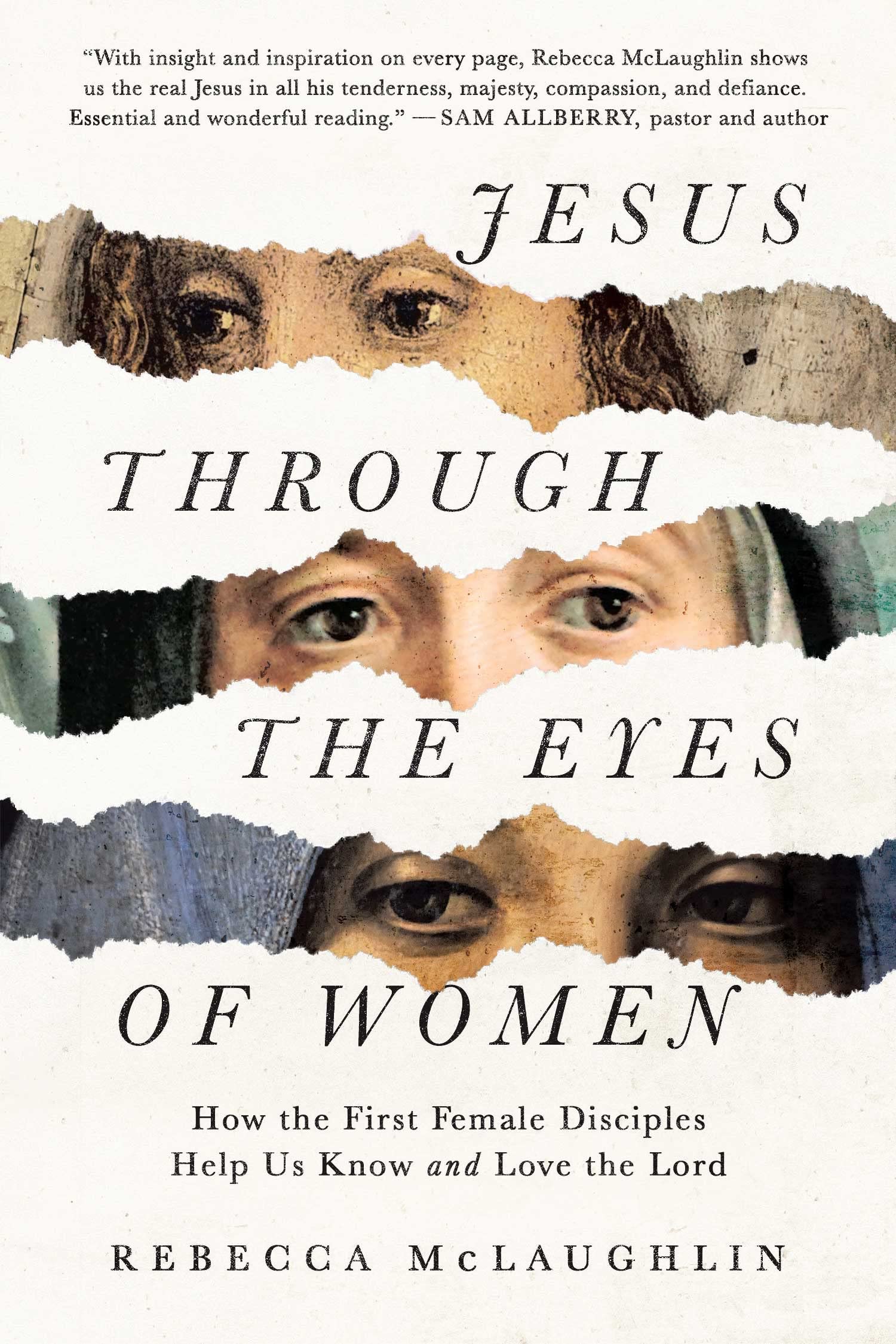 If the women who followed Jesus could tell you what he was like, what would they say?
Jesus’s treatment of women was revolutionary. That’s why they flocked to him. Wherever he went, they sought him out. Women sat at his feet and tugged at his robes. They came to him for healing, for forgiveness, and for answers. So what did women see in this first-century Jewish rabbi and what can we learn as we look through their eyes today?
In Jesus Through the Eyes of Women, Rebecca McLaughlin explores the life-changing accounts of women who met the Lord. By entering the stories of the named and unnamed women in the Gospels, this book gives readers a unique lens to see Jesus as these women did and marvel at how he loved them in return.
We’re delighted to offer this ebook to you for free.