







There’s a sense in which Easter is the most extraordinary event in the history of the world. A Jewish teacher in a remote province of the Roman Empire was publicly executed and sealed in a borrowed tomb. But three days later, he came back to life and was seen by hundreds of witnesses (1 Cor. 15:5–8).
Of course, God had—through Elijah, Elisha, and Jesus—brought people back from death before. But all eventually died again. What nobody had ever done was walk out of a tomb, appear to his closest friends in a glorified body, eat fish on the beach, and then ascend bodily into heaven (Acts 1:9–11). In every sense of the term, what Jesus did was extraordinary.
And yet, in a deeper and truer sense, the events of the first Easter morning were the most normal thing that’s happened in human history.
Strange World We Got Used To
The reason we don’t recognize this is that we’ve grown accustomed to living in a world where everything dies.
From plants to animals and bacteria to insects, everything that lives eventually dies. Almost every human who has ever lived has already died. Regrettably, unless the second most extraordinary event in history occurs in our lifetimes (i.e., the second coming of Jesus), you and I will die too. Death and decay seem like the baseline conditions for every living being in the universe.
We’ve grown accustomed to living in a world where everything dies.
When God finished making the world, he surveyed everything he’d made and called it “very good” (Gen. 1:31). Notice that the Creator didn’t say it was “good enough” or “good for now.” No expiration date was put on the lives of the people who bore his image.
Where, then, did death come from? As Paul tells us it came through sin: “Sin came into the world through one man, and death through sin, and so death spread to all men because all sinned” (Rom. 5:12). Death entered the world as a corruption that latched onto God’s good creation. We’ve just grown so used to the brokenness that we’ve confused it for the natural order of things.
What Actually Happened on Easter
When you hear the story of how God the Father raised Jesus from the dead, it may sound as if he’s introducing something new into the world. But the storyline of Scripture (creation, fall, redemption, new creation) clarifies that what was truly happening was the restoration of the original design. Rather than seeing the resurrection as God performing a strange exception to the rules of the universe, we should see it as God reasserting the rules. These were the rules that existed from before time began to the fall in Genesis 3.
That’s why the resurrection is both extraordinary and normal. Imagine you’d never seen a disease, and then one day you encountered it for the first time. You wouldn’t say, “Ah, so this is how bodies are supposed to work.” No, you’d immediately recognize something had gone terribly wrong. Because of sin, as Cornelius Plantinga Jr. says, the world is “not the way it’s supposed to be.” The resurrection is the restoration of the default setting for life in a world created to be “good.”
The Bible consistently frames death as an enemy, rather than a natural phenomenon. Paul says it plainly in 1 Corinthians 15:26: “The last enemy to be destroyed is death.” Hebrews 2:14–15 (NIV) also tells us that Jesus took on flesh specifically so that “by his death he might break the power of him who holds the power of death,” freeing those who were “held in slavery by their fear of it.”
Revelation 20:14 reveals that death itself will be thrown into the lake of fire to be destroyed. The whole arc of sin and death’s story resolves in Revelation 21:4, where God wipes away every tear and “death shall be no more.” From beginning to end, Scripture treats death as an occupying force that must be resisted, defeated, and finally destroyed.
And Easter is the morning death started dying.
Why This Matters for How We Hope
Seeing the resurrection as ordinary and death as abnormal can reframe our Christian hope. If we think of resurrection as God doing something out of character—something totally alien to the way the world operates—then our hope can start to feel like wishful thinking. It can lead us to wonder if the atheists are right when they claim we’re putting our faith in a miracle that goes against how things are supposed to work.
But if resurrection is actually the true nature of reality—if it’s the deep logic of creation that death has only temporarily obscured—then hope isn’t a form of irrational optimism.
As C. S. Lewis wrote in his essay “The Weight of Glory,” our longing for paradise isn’t a sign of delusion but of displacement. We feel the ache for “our own far off country” because we were made for the world that Easter makes possible. The existential homesickness we feel is evidence that we do indeed have a home. We’re not dreaming of a world that never existed; we’re yearning for the one we lost. And it’s a world that God has promised will return.
Easter in the Long Interruption
If you’re reading this on Easter Sunday, I want you to know that the hope of this day isn’t in vain. It’s not a beautiful idea that might collapse under the weight of real life. This hope is for real life, for the life that was always intended for us, breaking back into our broken universe.
We’re not dreaming of a world that never existed; we’re yearning for the one we lost.
The world you see around you, the one suffering from loss and decay and grief, isn’t the final word. The era we’re living through is merely the long interruption we call the fall. Easter only appears extraordinary because it’s the first time in all of human history that someone walked out the other side of death and announced, This is what normal looks like.
And one day—because of that first Easter morning—those of us who belong to Christ will wonder how we ever mistook the interruption for the whole story.
Free eBook by Rebecca McLaughlin: ‘Jesus Through the Eyes of Women’
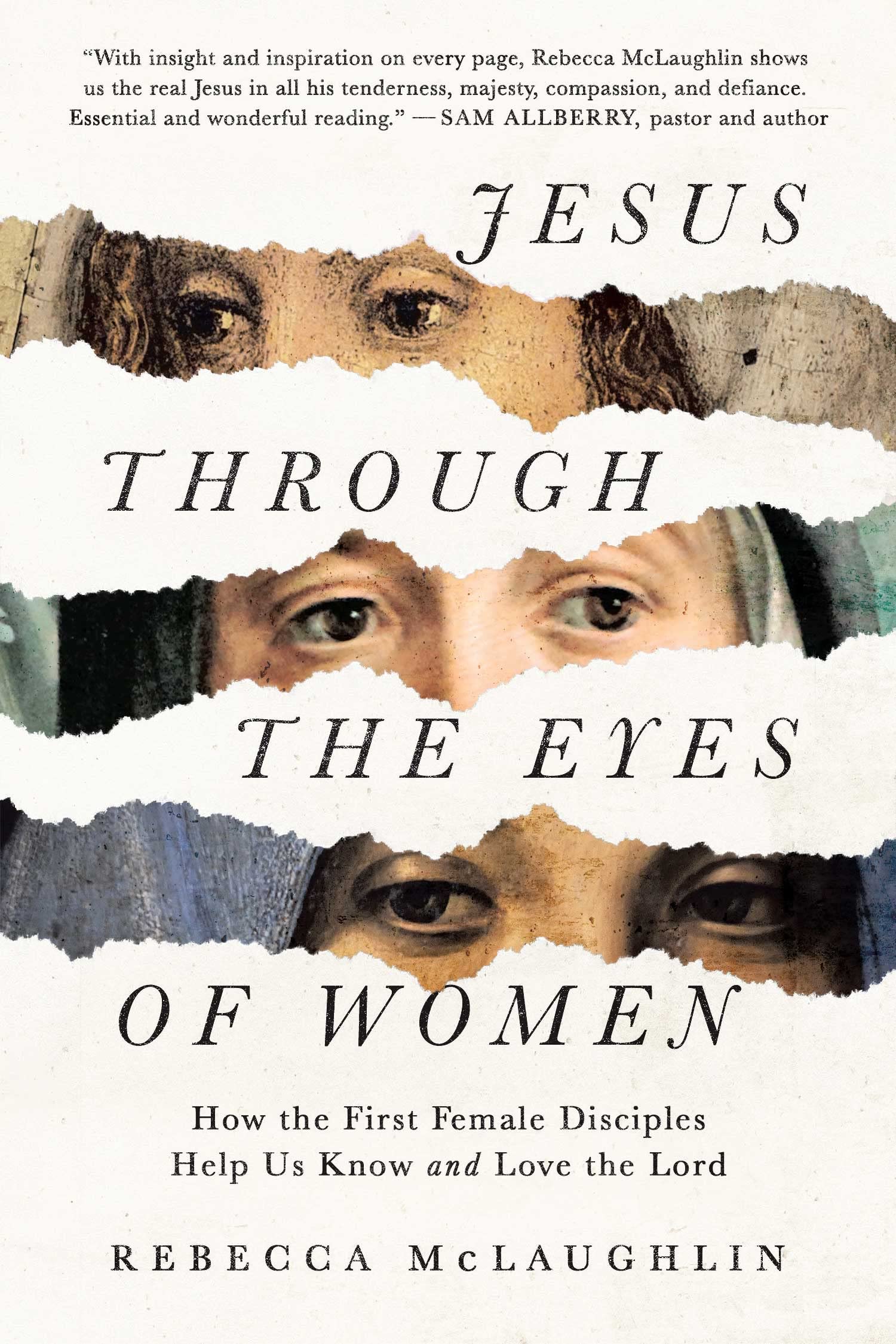 If the women who followed Jesus could tell you what he was like, what would they say?
Jesus’s treatment of women was revolutionary. That’s why they flocked to him. Wherever he went, they sought him out. Women sat at his feet and tugged at his robes. They came to him for healing, for forgiveness, and for answers. So what did women see in this first-century Jewish rabbi and what can we learn as we look through their eyes today?
In Jesus Through the Eyes of Women, Rebecca McLaughlin explores the life-changing accounts of women who met the Lord. By entering the stories of the named and unnamed women in the Gospels, this book gives readers a unique lens to see Jesus as these women did and marvel at how he loved them in return.
We’re delighted to offer this ebook to you for free.