
At the heart of the American gender debate is a single, recurring question: Who decides what’s best for children—parents or the government?
Thus far, the courts have answered resoundingly in favor of parents. And in doing so, the legal system is beginning to dismantle the transgender movement.
Transgender Conveyor Belt
The “Transgender Conveyor Belt” (a term coined by Luke Goodrich, my colleague at the Becket Fund for Religious Liberty) is a complex network of state and federal laws that has pushed children toward gender transition and contributed to the explosive rise in children who identify as transgender.
Here’s how it works:
- Step 1: As early as pre-K, schools teach children to question their gender identity.
- Step 2: For children who begin to question their identity, teachers must affirm their transition—with new pronouns, clothes, and bathrooms—and also hide it from parents.
- Step 3: If parents discover their child’s transition, the law stops them from seeking professional counseling that would help the child become comfortable with his or her biological sex.
- Step 4: If parents continue to resist, the state threatens to take custody away.
- Step 5: With the child well on the way to transitioning, the government guarantees access to gender-transition drugs and surgery.
- Step 6: To remove financial roadblocks, insurance companies must cover gender-transition procedures.
At each step, the law has pushed children down the path of gender transition. And the conveyor belt is a one-way track that won’t change unless it’s challenged head-on.
But there’s good news to report. The conveyor belt has been successfully challenged at almost every step.
Conveyor Belt in the Classroom
Step 1. The transgender conveyor belt begins where children are most impressionable—in the classroom. For example, just outside our nation’s capital, Montgomery County in Maryland forced pre-K and elementary-aged children (as young as 3) to read controversial books that promoted transgender ideology and encouraged gender transitioning—all without parental notice or opt-out. The school board encouraged teachers to use these books to “disrupt students’ either/or thinking” about gender.
The conveyor belt is a one-way track that won’t change unless it’s challenged head-on.
With Becket’s help, Muslim, Jewish, and Christian families sued Montgomery County to restore their parental religious-liberty rights to opt their children out. In a landmark decision, the Supreme Court ruled for the parents. As the Court explained, parents have the right to “direct the religious upbringing of their children,” and this right “would be an empty promise if it did not follow those children into the public school classroom.” For violating this constitutional right, Montgomery County had to pay the parents $1.5 million.
Step 2. Other school districts have pushed the envelope further, requiring teachers not only to affirm a child’s new gender identity—with new pronouns, clothes, and bathrooms—but also to hide the transition from parents.
That’s what California did when it directed public schools to treat a student’s expressed transgender status at school as private information that could be withheld from parents. But in another monumental decision, the Supreme Court blocked California’s policy and protected parents’ right to know what’s happening with their children at school. As the Court explained, schools cannot “cut out the primary protectors of children’s best interests: their parents.”
In a similar vein, the Court of Appeals for the Sixth Circuit recently ruled that public schools cannot force students to affirm another child’s new gender identity but must allow students to use pronouns that correspond with a child’s biological sex.
Conveyor Belt in the Home
Step 3. Even after parents learn about their child’s transition, the conveyor belt leaves them powerless to do much. Indeed, 22 states and more than 100 local governments have adopted counseling censorship laws, which prohibit parents from getting counseling services designed to help their child become comfortable with their biological sex. In essence, these laws require counselors to affirm a child’s transition.
But, again with Becket’s help, a Catholic licensed counselor and nonprofit organization stopped one of these laws in Michigan. In Catholic Charities v. Whitmer, the Sixth Circuit struck down Michigan’s counseling censorship law for blatant viewpoint discrimination—that is, for prohibiting counseling that helps children “align” their gender identity with their “biological sex” while “expressly permit[ting]” counseling that would push children to “transition away” from their biological sex.
Today, in Chiles v. Salazar, the U.S. Supreme Court struck down Colorado’s nearly identical counseling censorship law, ruling that such laws “suppress speech based on viewpoint” and “represent an egregious assault” on the First Amendment, which “stands as a shield against any effort to enforce orthodoxy in thought or speech in this country.”
Conveyor Belt in the Doctor’s Office
Steps 5 and 6. Once both children and parents have been pushed toward a gender transition, the conveyor belt reaches its endgame: medical transition.
Shortly before leaving office, President Biden finalized a rule that required doctors and hospitals to guarantee access to gender-transition drugs and surgery, regardless of the doctor’s or hospital’s religious beliefs. This was the second attempt to implement such a requirement, as President Obama adopted a similar rule in 2016.
But in both cases, courts across the country struck the rule down, concluding that the federal government doesn’t have the power to force “healthcare providers to perform novel ‘gender-transition’ procedures.”
Once both children and parents have been pushed toward a gender transition, the conveyor belt reaches its endgame: medical transition.
Not only is the federal government powerless to guarantee access to these risky procedures, but the Supreme Court also ruled last year in United States v. Skrmetti that state governments have the authority to ban minors from receiving these gender-transition drugs and procedures.
Even in states that continue to allow these procedures for minors, there’s still cause for hope. Earlier this year, a New York woman secured the first malpractice verdict against providers of gender-affirming care for minors, winning $2 million in damages for the double mastectomy she received as a teenager that “left her disfigured.”
In the wake of this decision, major medical groups, such as the American Society of Plastic Surgeons, recommend against gender transition procedures for minors. Citing the “substantial uncertainty” about the long-term effects of gender-transition procedures, the group concluded that there is “insufficient evidence” to support them.
This marks a massive shift from just a few years ago, when this same group claimed that these procedures “help gender dysphoria patients align their bodies with whom they know themselves to be and improve their overall mental health and well-being.”
Mounting Victories
The fight is far from over, but the victories are mounting. Thanks to the courageous people standing up to these policies, the legal system is beginning to dismantle the conveyor belt. As these cases show, violating parents’ right to direct the religious upbringing of their children carries a steep price.
Going forward, government officials would do well to heed the Supreme Court’s directive: Parents—and not the government—hold the primary responsibility for raising their children.
Free eBook by Rebecca McLaughlin: ‘Jesus Through the Eyes of Women’
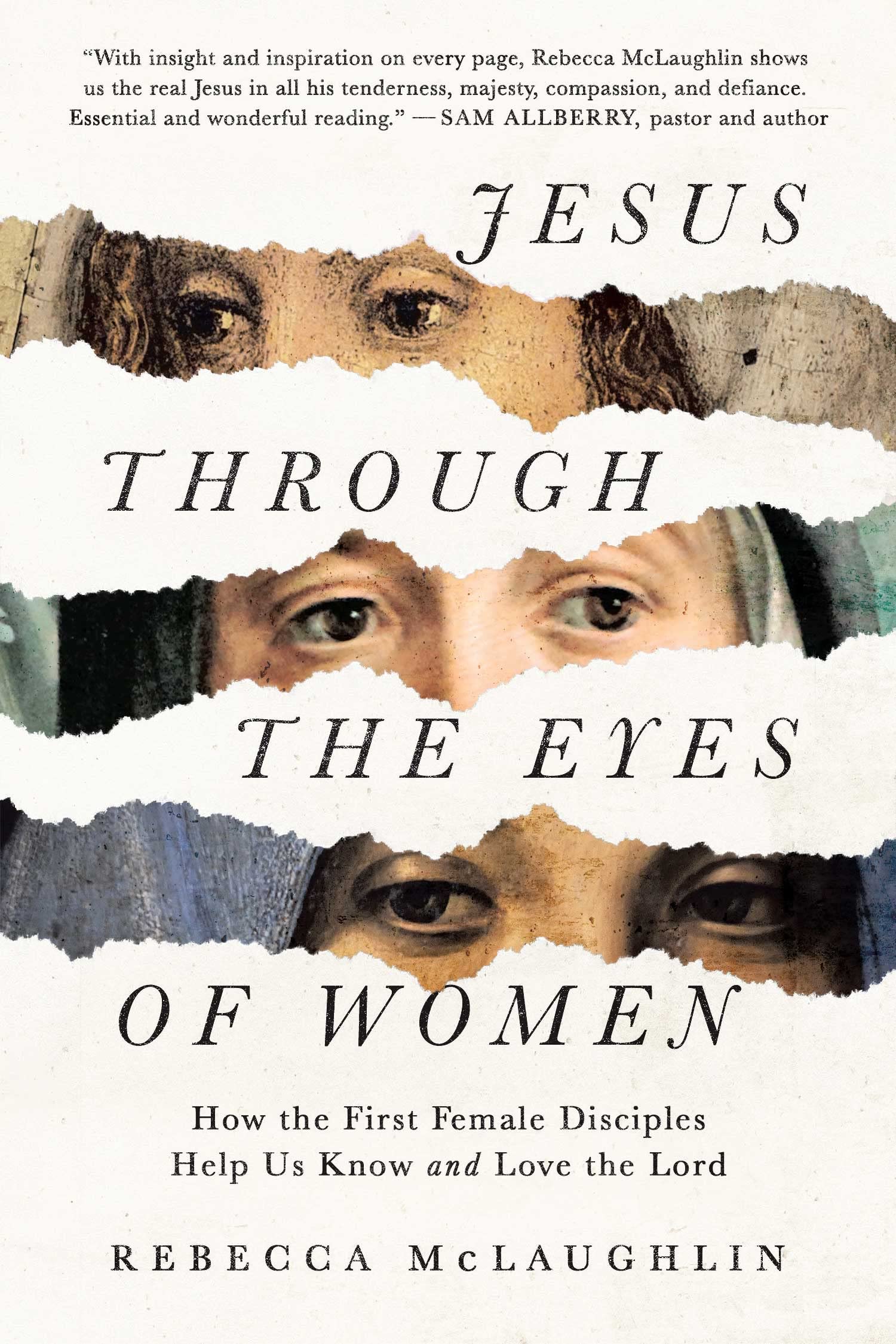 If the women who followed Jesus could tell you what he was like, what would they say?
Jesus’s treatment of women was revolutionary. That’s why they flocked to him. Wherever he went, they sought him out. Women sat at his feet and tugged at his robes. They came to him for healing, for forgiveness, and for answers. So what did women see in this first-century Jewish rabbi and what can we learn as we look through their eyes today?
In Jesus Through the Eyes of Women, Rebecca McLaughlin explores the life-changing accounts of women who met the Lord. By entering the stories of the named and unnamed women in the Gospels, this book gives readers a unique lens to see Jesus as these women did and marvel at how he loved them in return.
We’re delighted to offer this ebook to you for free.