Listen as D. A. Carson speaks on the topic of Biblical interpretation in this address from The Gospel Coalition sermon library.
Yesterday I tried to distinguish modernism from postmodernism by tracking out a bit of Western intellectual history. Throughout the Middle Ages and up to the end of the Reformation period, the fundamental epistemology, that is, the fundamental way people had of thinking about how you came to learn anything (how you came to know anything), was based on the assumption that God knows everything.
God is omniscient, so all human knowing is necessarily a subset of his knowing, and how you come to know is inevitably bound up with revelation. That is, God reveals something of what he knows, and as we come to know it, thus, we also know truly. Even though because we are finite as he is not, we can never know exhaustively as he can.
However, with the dawning of the Enlightenment, the crucial figure everybody sites as RenÈ Descartes in France, there came a fundamental shift in Western epistemology. Instead of epistemology being based on the assumption of God knowing everything and then all of human epistemology being bound up with the issue of how some of God’s knowledge becomes ours.… Instead there was an attempt to base human epistemology on some kind of basis that would be shared between Christians and unbelievers.
In part, the motivation for this was evangelistic, at least on the part of Descartes, and he came up with his famous phrase, “cogito ergo sum,” in 1619, published his book in 1634, and this kicked off a whole different era. Not many philosophers became convinced by his particular formulation, (cogito ergo sum: I think, therefore I am), but what was striking about this formulation was it did not presuppose God at all.
It predicated all existence simply on the fact that I think. I think, therefore I am. From this model of approach came a two-fold structure. First, a foundation which gradually changed over the years so it could be scientific and empirical or it could be conceptual. It could be presuppositional, but some kind of foundation which was deemed appropriate for each discipline on which you built with various methods.
You find the right foundation. You find the right methods. Then you turn the crank and out comes truth, and this truth was judged to be culture transcending, race transcending, language transcending, so that once you found the truth in any discipline by this means, it was true for all people at all times everywhere.
In other words, it was true truth. It was transcultural truth, but eventually it was observed that the I in “I think, therefore I am” was different in each case of each person who said it, and the I perceived things differently from one person to another, so that eventually this modern period in which the aim was to discover truth and to establish certainty and to have eternal objectivity came to blow itself apart.
By the time you reach Immanuel Kant, Kant is already arguing that the mind, the transcendental ego, is imposing order on data. In this century we’ve seen the rise of the new hermeneutic and radical hermeneutics, which were variously unpacked and explained until we came to the position in which we now find ourselves in.
We came there eventually to the place where most philosophers started arguing that there is no such thing as objective truth out there, and even if there is, we cannot possibly know it because we approach any situation, any text, any claim, any subject from our own biases, our cultural biases, our racial biases, our educational biases, how grumpy we are at the moment, whether things are going well or badly in our lives and so on.
Inevitably, what we get back from this material is not objective truth at all but something of what we make of the stimuli we are receiving. That’s about all. Although it used to be thought as far as texts were concerned that an author spoke what he or she thought was the truth in a text and then others read the text and were, thus, communicating with the author, now the text became cut off from the author because the author might misspeak himself or herself.
Texts changed their meaning with time, and now the meaning isn’t even in the text. It’s actually in the reader because the reader is going to understand the text differently to some degree from all other readers. Thus, the meaning doesn’t rely in the author (don’t worry about nasty things like authorial intent), and it’s not really in the text either because people will read the text differently, but it’s actually in the reader herself or himself over there.
Since all readers are different, all the eyes are different, although there might be overlap such that you find communal groups of commonly shared truth (truth so far as the community is concerned), we will not find culture-transcending truth. We will not find racially-transcending truth. We will not find linguistically-transcending truth.
When people try to argue science is an exception and so forth.… I tried to outline what some philosophers of science are saying in this respect. Clearly, this has bearing on a lot of issues. I tried to trace out how this has a bearing on your view of tolerance, on your view of pluralism, on your view of proselytism, and it touches virtually every discipline. This is not just something for theologians to worry about.
A lawyer came up to me afterwards, and he said, “What is, in fact, the case in the matter is a major debate in the discipline of law.” A book I edited a number of years ago, God and Culture, had an essay in it by Phillip Johnson, professor of criminal law at Berkeley, called “The Modernist Impasse in Law.” That is a cri de coeur from a Christian who is facing this kind of thing. It’s happening in the discipline of history. It’s happening in sociology and anthropology and English literature and so on.
With this as the background now, we come to the second session. This session, unlike Jeremy Begbie’s, is focusing in particular on the interpretation of the Bible in the postmodern world, so I want to turn now to examples of postmodern readings of the Bible to show you how it’s playing out in this area.
Let me begin, first of all, with simply a list of titles and say one or two things about each of them. In other words, I’m going to get the picture a little darker yet before we try and find any light in this morass. Here then is a book by S.L. McKenzie and S.R. Haynes, To Each Its Own Meaning. The title is already quite interesting, isn’t it? To Each Its Own Meaning.
In this book, the authors break up modern criticism into three periods: What they call traditional criticism when they’re doing things like source criticism and redaction criticism. If you don’t have a background in biblical exegesis and criticism, don’t worry about it. The next section is expanding the tradition. This deals with things like rhetorical criticism, the study of rhetoric and genres, and that sort of thing. The last category, which is basically postmodern criticism, is called overturning the tradition.
Here’s another book by Stephen Moore, Literary Criticism and the Gospels. Stephen Moore has two or three books out in this area. He is one of the most consistent, extreme, and informed of the postmodern biblical critics. He writes brilliantly, and sometimes he’s very funny, but the stuff is extraordinarily arrogant. If you want to get into this stuff, nevertheless, that’s not a bad place to go. Stephen Moore. Literary Criticism and the Gospels.
A book edited by J. Cheryl Exum and David Clines, both from University of Sheffield: The New Literary Criticism and the Hebrew Bible. Charles Mabee: Reading Sacred Texts through American Eyes. I’m not easily offended. I’m a Canadian, so it doesn’t matter. In point of fact, I chose that title on this list simply because it is typical of a great deal one finds in this area nowadays.
Nowadays it’s feminist exegesis, it’s African exegesis, it’s North American Indian exegesis, or it’s whatever. In this case, it’s American exegesis, and if somebody comes back and says, “Let’s just go after the text,” we say, “No, no, no. That’s just white male North Atlantic exegesis.” There’s just enough truth in that (we’ll come to the truth elements of this sort of claim) that one can’t write it all off, yet it is a harbinger of the times. What is perceived to be the front edge of biblical exegesis and interpretation finally comes down to this emphasis on the subjectivity of the interpretive community that we were looking at yesterday.
David Seeley: Deconstructing the New Testament. I tried to define deconstruction yesterday and how it works. If you want to watch it in operation, that one’s fairly mild compared to another one by Stephen Moore, Mark and Luke in Poststructuralist Perspectives, or another one by Moore, Poststructuralism and the New Testament: Derrida and Foucault at the Foot of the Cross.” Jacques Derrida and Michel Foucault were two people I mentioned yesterday.
Chris Rowland and Mark Corner (Chris Rowland has a chair at Oxford): Liberating Exegesis. Francis Watson, editor of a book called The Open Text and so on and so on. This is typical. Let me give you some examples of hard exegesis. This first one is a bit amusing because it’s so over the top. Those of us in the guild are working with this stuff all the time, and it has its way of filtering through entire departments in universities and elsewhere.
This was prepared by a PhD student of my acquaintance. This PhD student actually finished a New Testament PhD some years ago and is coming back for an Old Testament one (a glutton for punishment) and is doing this work at the University of Sheffield in this country where it is emphasized constantly that there is no such thing as the meaning of the text but only the meaning you find in the text or the meaning your interpretive community finds in the text or whatever.
Eventually, this student became convinced this was the way to go. In other words, this student is now a thoroughgoing postmodernist and is very much into what is now called reader response criticism. As part of reader response criticism and the study that is being pursued here on Isaiah 21, this survey sheet was prepared and was passed around the august desks of Tyndale House in Cambridge, especially to all the students who came from some sort of non-white Western male background.
The invitation was offered to record feelings and responses to one particular text with an attempt to try to chart the differences according to the particular responses from the various readers. This is a PhD project! Let me remind you of the text, Isaiah 21:1–12: A prophecy against Babylon.
“An oracle concerning the Desert by the Sea: Like whirlwinds sweeping through the southland, an invader comes from the desert, from the land of terror. A dire vision has been shown to me: The traitor betrays, the looter takes loot. Elam, attack! Media, lay siege! I will bring to an end all the groaning she caused.
At this my body is racked with pain, pangs seize me, like those of a woman in labor; I am staggered by what I hear, I am bewildered by what I see. My heart falters, fear makes me tremble; the twilight I longed for has become a horror to me. They set the tables, they spread the rugs, they eat, they drink! Get up, you officers, oil the shields! This is what the Lord says to me: ‘Go, post a lookout and have him report what he sees. When he sees chariots with teams of horses, riders on donkeys or riders on camels, let him be alert, fully alert.’
And the lookout shouted, ‘Day after day, my lord, I stand on the watchtower; every night I stay at my post. Look, here comes a man in a chariot with a team of horses. And he gives back the answer, “Babylon has fallen, has fallen! All the images of its gods lie shattered on the ground!” ’ O, my people, crushed on the threshing floor, I tell you what I have heard from the Lord Almighty, from the God of Israel.” That’s Isaiah 21.
The instructions on the sheet are as follows: “Provide name, ethnicity, nationality, age, and sex. Your reading process is ‘meaning-making.’ Keep asking: What does this passage mean to me? Meaning is context-bound and context is boundless. Put yourself at the center on the foreground of your meaning-making. Don’t worry about right or wrong interpretation. Be conscious that every reading is potentially a gender-cultured context.
Specific meaning-making activity: You are a reader with a unique personal formation including spiritual formation. Retrieve from your cultural background your past experiences and interact freely and reflectively with the passage. Use whichever Bible version that is most familiar to you.” (I would have thought for PhD students they should be using the Hebrew, but standards are falling everywhere.)
The aim of the exercise, according to this form that was being circulated, was: “To identify the reference’s inferences of Isaiah’s emotions in this passage, to elaborate on the kind and/or the realm of emotions in each of the references, and to reflect on a) the emotional impact of this passage on you or, b) if you were Isaiah, describe your emotional state. Please use both sides of this paper for your response.”
A friend of mine, an Iranian believer, a wonderful brother (he’s working on his PhD at Cambridge; because he’s not a white Western male he qualifies on only one score), was given one of these sheets. I’m afraid he has thoroughly Orthodox views on such matters, so under ethnicity he put “Politically incorrect question,” under nationality he put “A member of the world community,” and under sex he put “Meaningless.”
Then he summarized his emotional response to this passage which I have just read. “There is nothing out there. It is very windy. Some people have smoked pot, and they have visions. In Babylon that is all they do. Some see horses, others see chariots, and some jump from the watchtower into nothingness. This is my vision, my meaning. I write a poem for Saddam of Babylon: ‘For all you do, this Scud’s for you.’“
That example doesn’t have much to do with anything, but it was so good I couldn’t.… Let me give you a more serious one. A colleague of mine has written a book that is in the press now (it will be out this autumn) on the use of adultery as a metaphor for spiritual apostasy. That’s quite an important theme in the Bible when you start looking for it. You have marriage established already in Genesis 2.
Then when the covenant is established with the people of God between God and the people of God, already breaking the covenant is likened in some respects to breaking the marriage covenant. In both cases, there is infidelity. Out of the whole typology in which Yahweh is seen as the groom and Israel, the entire nation, is seen as the bride, which then converts in the New Testament to Christ as the groom and the church as the bride, there comes finally a picture of the consummation in the book of Revelation as the marriage supper of the Lamb.
Along the line, therefore, you get various spin-offs of that prevailing metaphorical language. Thus, Paul can say to a church, “I have betrothed you as a pure virgin to Christ,” which is not just talking to the women; it’s talking to the men and the women. It’s talking to the church. Likewise, in the Old Testament then, when Israel falls away, it is likened to the falling away of adultery, and some of the language in this respect is shocking in the Bible!
One whole Old Testament book is really predicated on that kind of metaphorical use of language, the book of Hosea, for example. I will assume all of that background, but along the line he wanted to explore some modern feminist exegesis. It’s important for the sake of clarity here to distinguish different kinds of feminism. This is not the kind of feminism that is trying to be biblically faithful but interprets the Bible in a way that not all people here would agree with.
This is the kind of feminism that precedes by deconstructing Scripture toward a certain end, and the particular book in this context that this friend of mind deals with in an appendix is by Athalya Brenner and Fokkelien van Dijk-Hemmes, On Gendering Texts: Female and Male Voices in the Hebrew Bible published by Brill in 1993, with respect to the relevant Old Testament passages, pages 167 and following.
I have some various notes here to give you some quotes. You might, first, want to look at a couple of Old Testament passages so you can see the passages that are being commented upon. For example, Ezekiel 16. I won’t take time to read the whole thing. The NIV heads it “An Allegory of Unfaithful Jerusalem.”
“The word of the Lord came to me: ‘Son of man, confront Jerusalem with her detestable practices and say, “This is what the Sovereign Lord says to Jerusalem: Your ancestry and birth were in the land of the Canaanites; your father was an Amorite and your mother a Hittite. On the day you were born your cord was not cut, nor were you washed with water to make you clean, nor were you rubbed with salt or wrapped in cloths. No one looked on you with pity or had compassion enough to do any of these things for you.” ’ ”
Then God comes and rescues the infant baby in her blood. Then verse 8: “Later on I passed by, and when I looked at you and saw that you were old enough for love, I spread the corner of my garment over you and covered your nakedness. I gave you my solemn oath and entered into a covenant with you, declares the Sovereign Lord, and you became mine.”
Verse 14: “And your fame spread among the nations on account of your beauty, because the splendor I had given you made your beauty perfect, declares the Sovereign Lord. But you trusted in your beauty and used your fame to become a prostitute.” As it works out, the prostitution language is the metaphorical way of referring to running after other gods, breaking the covenant, not keeping your word, being thoroughly ungrateful to the one who in fact rescued her and so on and so on. All of that chapter works on that metaphor, and it is frightening.
By the time you get to verse 49 … “Now this was the sin of your sister Sodom …” Sodom here is language to refer to Samaria, the northern kingdom, and the northern kingdom had already been destroyed for her spiritual unfaithfulness. “She and her daughters were arrogant, overfed and unconcerned; they did not help the poor and needy. They were haughty and did detestable things before me. Therefore I did away with them as you have seen. Samaria did not commit half the sins you did.”
Again, chapter 23: “Two Adulterous Sisters.” It reads, “Son of man, there were two women, daughters of the same mother. They became prostitutes in Egypt, engaging in prostitution from their youth. In that land their breasts were fondled and their virgin bosoms caressed. The older was named Oholah, and her sister was Oholibah. They were mine and gave birth to sons and daughters.”
If you don’t understand it, it’s explained for you. “Oholah is Samaria, and Oholibah is Jerusalem.” The same sort of metaphor is worked out in various ways in which the prophet goes so far as to say the fundamental difference between this kind of prostitution and the more common form in the red-light districts of town is that in the red-light district form of prostitution you actually sell your favors at a price, whereas you’re so cheap and shoddy you actually pay money in order to give your own virtues away.
That’s the background. There are a lot of texts like that. Those are two of the most striking, so let’s pick up what is being said. The second author of this book, van Dijk-Hemmes, reads the text as “sexual violence.” The metaphorical wife is “victimized” by her husband. Because the wife expresses “her desire for her lover” she is “transformed into a harlot who shamelessly goes after her lovers.”
“The ‘male, misogynist metaphorical language,’ in calling people to return to Yahweh is ‘also, and simultaneously, an example of propaganda, addressed to men, extolling an ideal patriarchal marriage.’ Turning to Ezekiel 23, van Dijk-Hemmes premises her remarks with the idea that metaphors require their readers to ‘participate in the construction of the metaphorical meaning’ of the text, allowing her to distinguish between a male ‘readerly response’ to Ezekiel 23 and a female one. The literary strategies deployed in the text ‘organize or mobilize’ each reader’s perception. […] What then is its message?
Van Dijk-Hemmes sets out to explore the question by accepting as her point of departure ‘a significant congruence between biblical and especially prophetic texts on the one hand, and modern pornographic depictions of female sexuality on the other hand,’ in both of which female sexuality is featured as ‘a symbol of evil.’ The function of pornography is to preserve ‘male domination through a denial, or misnaming of, female experience.’ Van Dijk-Hemmes notes that the target audience of the oracle is ‘required to hear the text via Ezekiel’s (fictive) ears …’“
(Why his ears are fictive I’m not sure, but that’s irrelevant.) “But she sees underlying the passive verbs of verse 3b (‘their breasts were caressed … their virgin bosoms were fondled’) male sexual molestation of the girls in Egypt. Where Ezekiel and a male reader may see female sexual profligacy, a female reader sees male sexual abuse.
Far from sinning in Egypt, Israel was oppressed; but within an andocentric frame of reference the victim is blamed for her own suffering. The reader of the biblical text, at verse 8 and elsewhere, is ‘seduced’ into perceiving the abuse of Oholah and Oholibah in Egypt as something which all their lives they perversely enjoyed.
While most interpreters have failed to save themselves from its degrading influence, so successful is the male text’s strategy, a feminist participating in the construction of the metaphorical meanings renders the male reading unnecessary. Thanks to a feminist [deconstruction], it is now possible to discern a pornographic interest in keeping female sexuality ‘an object of male possession and control.’
Van Dijk-Hemmes acknowledges that the whole people of Israel, male and female alike, are drawn into the metaphor of Oholah and Oholibah. The ‘andocentric-pornographic character of this metaphorical language must indeed be experienced as extremely humiliating by an M (i.e., a male) audience forced to imagine itself as being exposed to violating enemies.’
It is the nature of the metaphor, however, which gives male readers an escape through identifying with the wronged husband or with the ‘righteous men’ of verse 45. Female readers are provided with no such expedient for moderating the power of the text’s accusations. For them, ‘the metaphorization of women in Ezekiel 23 performs first and foremost of violent speech act’ worse than that in Hosea.
Brenner [the other author of this book] introduces her critique by proposing that readers ‘avoid falling into that trap of complicity with the text’ by making allowances for it as prophetic. It is thereby ‘too easily privileged’ as superior to ourselves. Brenner prefers to approach Jeremiah not as prophecy but as poetry …”
She’s after Jeremiah here rather than Ezekiel, but they are similar sorts of texts. If it is poetry, then she goes on, “… poetic-textual authority is easier to undermine than so-called prophetic authority. […] Brenner then goes on to define pornography in such a way that Jeremiah’s literature falls within that category, in agreement with van Dijk-Hemmes [in Ezekiel]. Brenner states, ‘If contemporary pornographic literature is found to contain anti-female bias, the same should apply to pornographic biblical literature.’
To defend her charge of biblical pornography, Brenner finds in Jeremiah 2–5 the perception of female sexuality as ‘irregular, abnormal,’ ‘animalistic’ and associated with bestiality. Male sexuality, by contrast, ‘represented by God’s behavior, is praiseworthy both socially and morally.’ She finds as the most striking and original feature of Jeremiah 2 ‘the animalization of the metaphorized woman-in-the-text, which amounts to “dehumanization’ and ‘misogyny”‘.
The function of Jeremiah’s text is to call the community to ‘accept the validity of the poet’s (male) perspective for his God and for yourselves.’ The biblical text, defined as pornography, deals with ‘the objectification and degrading of “woman” in a manner that makes the abuse of females acceptable or even commendable.’
It ‘restricts female sexual choice to an actual state of slavery,’ and it ‘stresses the nature and meaning of male power.’ The cause of it all is ‘male insecurity and need to affirm and reaffirm gender control in the face of change.’ ‘This [i.e., Jeremiah, Hosea, and Ezekiel] is M [male] literature, not just andocentric but truly phallocentric and woman-suspicious.’ Brenner compares [the] Story of O [published in London in 1972] ‘a modern piece of literary pornography’ with ‘Jeremian pornography.’ ” That’s her expression.
“She summarizes the plot and message of the Story of O as follows …” (In case you’re not up on your pornography.) “O, the focal figure of the narrative, is a young woman in love. She remains anonymous throughout the book: all the other characters apart from her, females and males alike, do have names. The story charts her journey from being a loving person to becoming a naked, abused sex object whose spiritual or physical death is imminent by choice.
And yet, the literary O—and its authorial parent?—celebrates her situation. At the end of her story O is a non-person, a womb controlled by her lovers and open to all, an Orifice—and by her own testimony she views her condition as the uttermost condition she can achieve this side of death. No matter whether her death is symbolical, or will be realized shortly.
Through an intense didactic effort on the part of her male mentors, through physical punishment ranging from beating to group rape to other sadistic forms of physical and mental violation, she becomes reeducated. Now naked, with a chain through her genitals for all to see, publicly displayed as a (positive!) lesson for other nubile females, she has fulfilled her destiny. She has come to realize that the punishment is no punishment, that the physical marks on her body are no mere torment marks. They are her master’s stamp, she finally belongs.”
This is the control that is being used to read Jeremiah and Ezekiel. You need to understand that. Brenner affirms that in Jeremiah, Hosea, and Ezekiel, this fantasy such as is illustrated in the story of O reaches its ultimate. “The male fantasy of male domination is acted out as total through the equation of male power and with divine power. Further, the male fantasy of female submission becomes total and totalitarian through the required recognition of male divine authority. The choice of metaphor is deeply rooted in male infantile fantasy.”
I could go on. Had enough? I wish I could tell you that is atypical, but it isn’t. I have found at least 30 authors who have argued that the deconstructionist’s exegesis, for example, of John 4 on the woman at the well has to be deconstructed in line with contemporary sensitivity such that, in fact, one needs to entertain an alternative worldview in which, in fact, Jesus is either out to seduce the woman at the well or to make her his mate in some ways.
If you don’t believe me, one of the best exemplars of this is a book by Sandra Schneiders called The Revelatory Text, which was published three or four years ago. Schneiders is a Catholic. In the opening chapters of that book espouses the authority of the text, inspiration. She’ll even swallow infallibility. She’s not quite comfortable with inerrancy, the heritage of the church, and so on and so on and so on, but by the time you’ve finished using postmodern exegesis with the text, this is nevertheless the exegesis of John 4 that comes out, and she’s not alone in this.
As I say, I could give you a bibliography of about 30 items just on John 4. I’ve picked on these particular ones just because they are particularly striking in this area, but I assure you I could do very similar things for the doctrine of God. I’m going to come back to that one a little later. I could do similar things in the area of Christology, the area of apocalyptic.
If you’re shocked (maybe a bit angry with me) for bringing up these sorts of things, then let me tell you quite frankly, this is what your kids are being exposed to in university all the time. If you don’t realize it, that just shows you’re out of it. I tell you that quite frankly. Let me work through rather briefly with you how this sort of approach to texts affects a number of areas of Christian reading, Christian interest, Christian primacy, before we start beginning to tackle our way back into the discussion as it were.
Let’s first of all picture Miss Christian going off to university at the age of 18 from a nice, evangelical church. Your church, maybe. A local evangelical Anglican parish or safe FIC church. A godly home. Loving parents. Old-fashioned apologetics. She goes off, and she’s determined to trust the Lord and to be obedient, and she might even join the local CU.
She’s not studying biology which would have threatened a former generation witless. She’s going in for English or cultural anthropology, and when she tries to offer a Christian witness in class discussions or anything like this, pretty soon she stands out as being a bit of an odd duck, but the teacher is pretty cool, pretty suave, and points out she thinks like that, of course, because she does come from a Christian background. “You would acknowledge that has shaped how you got to your own position, your own levels of evaluation of what you’re reading, wouldn’t you?”
“Well, yes.”
“If you had been brought up an atheist or if you had been brought up a Muslim then maybe you’d look at these same texts a little differently, wouldn’t you?”
“Well, unless I became a Christian I suppose I would.”
“You wouldn’t want to say that you’re necessarily right and everything and they’re necessarily wrong and everything, would you?”
“Well, no. I mean, they might be right in some things.”
“Exactly. It depends on what kind of venue you come from, doesn’t it?” That’s before you’ve started in any of the theoretical stuff. That’s before you’ve started on trying to understand deconstruction as a literary technique or before you’ve understood the nature of postmodernism as an entire epistemology in western culture and so on.
At the end of the day, after a few months, unless this young woman is extraordinarily well-taught or well-read or talks with the right kinds of people or gets some anchors thrown down somewhere, pretty soon the best you could hope for her realistically is that somehow she holds on to some sort of privatized Christian faith, but in public you don’t want to say too much about that sort of thing because in public it sounds narrow-minded and bigoted. You don’t want to sound narrow-minded and bigoted at university, do you?
Without having had a single tenet of biblical faith overthrown, it has all been relativized with the result that she is permitted to hang on to it, even encouraged to hang on to it, provided she says it’s for her and for her interpretive group, provided she doesn’t say others ought to turn to it too, provided she doesn’t have the audacity to suggest even for a moment that this is truth in the public arena that claims everyone’s allegiance with a God behind it before whom everyone will one day give an account. That you must not say.
Thus, this will at the very least, unless she’s a very remarkable young woman, affect her approach to evangelism, apologetics, Bible study. Do you see? Nowadays when you send your young people off to university, they’re not likely to get clobbered by Biology 101. They’re going to get clobbered by English 101 or Sociology or Law or Cultural Anthropology or Social Ethics or History or whatever. It depends on the university and the school and how far it has gone, but that’s where the dangers are today. Biology is a minor footnote in the list of dangers.
Free eBook by Charles Spurgeon. ‘Fit to Lead: On the Call to Pastoral Ministry’
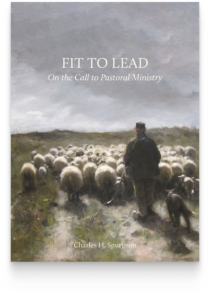 With the rate of pastors retiring, burning out, or concluding their ministries, the need has never been more urgent for aspiring ministry leaders to prepare well for their pastoral calling.
In the eBook Fit to Lead: On the Call to Pastoral Ministry, compiled by The Spurgeon Library at Midwestern Seminary, current and aspiring pastors will gain wisdom from Charles Spurgeon on how to discern and thrive in their call to pastoral ministry. In the short book, Spurgeon—the “Prince of Preachers”—discusses how to identify and encourage those called to ministry, as well as what steps to take in pursuing a call to ministry.
We are delighted to offer this eBook to you for FREE today. Click on this link to get instant access!