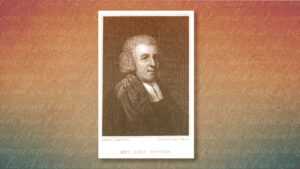
In this sermon, D. A. Carson explores the themes of justification and righteousness as presented in Romans 3:21–31. Carson focusing on how these concepts demonstrate God’s justice and grace through faith, apart from the law, and are universally accessible through Christ’s sacrifice.
Last night I began with Galatians 2 and Michael Horton followed with Galatians 3. Today he began not only with Galatians 3 but with Romans 4, so I’ll back up and go to Romans 3. Thus, we’re dove-tailing, whether we want to or not.
I’d like to direct your attention to Romans 3. I’m going to read down to the end of the chapter, Romans 3:21–31. But I shall focus almost all of my attention now on 21–26 and then at the very end I’ll say just a wee bit about the closing verses of the chapter.
Now there are some parts of the Bible that are loose in the sense that they’re narrative or they’re not too condensed. They flow easily. You can follow along very easily as you read. There are other parts that are tight, thick, and they are hard to understand when you’re just reading right through. You start to get so many theological words, one after the other, that unless you know the passage extremely well, you’re reading the words but not following it anymore. It’s just too much too fast.
This is one of those passages. So in a passage like this, after reading it, what you really have to do is slow down and unpack it. After you really have unpacked it well, then when you read it again, you see how it all hangs together. You see how it all folds together. But you need it unpacked first before the reading of it grabs you.
So although we’re going to read it now, if you start feeling as we go through it, “I haven’t really gotten the whole flow of this,” hang in there. At the end we’ll read it again, and then perhaps you will see how the flow really does hang together. Hear, then, the Word of the Lord as it is found in Romans 3:21 and following.
“But now a righteousness from God, apart from law, has been made known, to which the Law and the Prophets testify. This righteousness from God comes through faith in Jesus Christ to all who believe. There is no difference, for all have sinned and fall short of the glory of God, and are justified freely by his grace through the redemption that comes by Christ Jesus. God presented him as a sacrifice of atonement, through faith in his blood.
He did this to demonstrate his justice, because in his forbearance he had left the sins committed beforehand unpunished; he did it to demonstrate his justice at the present time, so as to be just and the one who justifies those who have faith in Jesus. Where, then, is boasting? It is excluded. On what principle? On that of observing the law?
No, but on that of faith. For we maintain that a man is justified by faith apart from observing the law. Is God the God of Jews only? Is he not the God of Gentiles too? Yes, of Gentiles too, since there is only one God, who will justify the circumcised by faith and the uncircumcised through that same faith. Do we, then, nullify the law by this faith? Not at all! Rather, we uphold the law.” This is the Word of the Lord.
In coming to this passage, we are coming to what Martin Luther called the chief point and the very central place of the epistle to the Romans and the whole Bible. Whether one wants to take that judgment absolutely or not, it is a pretty terrific attestation of the significance of this passage at least in Martin Luther’s understanding of the gospel.
Yet the passage desperately needs to be said within the framework of Romans. There have recently been some expositions of this passage which in my view have really skewed off. I don’t have time to go through them. In my view, one of the reasons why they’ve skewed in a false direction is because the expounders have forgotten just where this passage shows up in Romans.
It shows up after the large block of material from 1:18 to 3:20. The whole point of that material is to prove, basically, quite frankly, that we’re all dead. How does it begin in 1:18? “The wrath of God is being revealed from heaven against all the godlessness and wickedness of men who suppress the truth by their wickedness.”
Then Paul unpacks how we suppress the truth of God’s creative power. We suppress the truth of his righteousness. We distort even our own humanness, our maleness and our femaleness, our sexuality. He spends time proving that both Jews and Gentiles stand under God’s curse.
If you have the great revelation of what we now call the Old Testament, the Hebrew canon, as the Jews did, well, they don’t live up to that standard. If we have instead the stamp of God in us without having all of the Scripture, we have the Imago Dei, well, our conscience itself is enough to condemn us, because whatever revelation we have received, whether from nature or from our very constitution as human beings, we don’t live up to what we do know.
We just don’t. We have good days and bad days, but we don’t live up to it in any sort of consistent way. We stand under the righteous wrath of God, so that the argument ends, in chapter 3:9 and following, with a catena of quotations from the Old Testament all designed to prove one point.
It’s a terrifying passage. I have to tell you before I read these verses from the middle of chapter 3 that this bears on the hardest thing to get across now in university evangelistic missions. I mentioned last night that when I do university missions today, I’m dealing with biblical illiterates.
So what’s the hardest thing to get across? The existence of God? Nah. The Trinity? Nope. The deity of Christ? No. The resurrection of Jesus? No. I don’t mean they all agree with me when I say these things, but I can get the notions across. If they hear and understand and say, “Oh, it’s that which Christians believe,” whether they believe it or not, then they can see a certain coherence to it.
No, the hardest thing to get across to this generation is sin. Because at that point, I have gone to meddling. I’m not talking about a system over there that they may or may not believe in, I’ve gone to meddling. There is so much in our culture that teaches us at the end of the day that we define our own sins, either individually or socially.
We belong to a certain community that has established its own heritage of rights and wrongs. For somebody else to come in and say “this is right” or “that’s wrong” just sounds like manipulation from the outside. It fails to recognize the social origins of all constructions of good and evil. So it is thought. People become very indignant with this notion of sin. So that means I’ve got to spend a lot of time talking about it.
Because, you see, unless you get agreement on what the problem is, you can’t have agreement on what the solution is. If the problem is simply our dislocation or our sense of loneliness in the universe or our sense of inadequacy or the pathetic abilities in this matter of self-esteem, then you start tilting the gospel to meet the need as you understand it. Don’t you realize that the gospel will give you your real sense of self-importance? And that would solve the problem of self-esteem.
Well, in one sense, the gospel does do that. That’s not entirely false, but it’s not at the heart of what the gospel is. Unless you get agreement on what the problem is, you don’t get agreement on what the solution is. So Paul spends two and a half chapters on what the problem is before he tells us what the solution is. Do you see? We have to come to grips at some point with the way God views sin.
Now I’m going to read you these verses from chapter 3:9 on, and I have to tell you, in a university context, they are shockers. But even in a church context, deep down, a lot of us squirm when we read these verses because we think they are just a wee bit over the top, which shows how much we ourselves have been influenced by the surrounding culture. Listen to them.
“What shall we conclude, then? Are we any better?” That is, we Jews, over against Gentiles. “Not at all. For we have already made the charge that Jews and Greeks alike are all under sin.” He spent two and a half chapters demonstrating it. “As it is written: ‘There is no one righteous, not even one; there is no one who understands, no one who seeks God.
All have turned away, they have together become worthless; there is no one who does good, not even one. Their throats are open graves; their tongues practice deceit. The poison of vipers is on their lips. Their mouths are full of cursing and bitterness. Their feet are swift to shed blood; ruin and misery mark their ways, and the way of peace they do not know. There is no fear of God before their eyes.’ ”
And something deep within us says, “Wait a minute, Don. Haven’t you heard of wonderful organizations like MÈdecins Sans FrontiËres, Doctors Without Frontiers? Don’t you believe in the notion of common grace? We do so much good in the world.” Paul doesn’t deny any of that. He doesn’t deny any of that.
Yet even when we’re doing the good whatever-it-is that we do in the world, it is still so habitually done independently of God, because we are going to be our own gods. We are at the center of the universe. We end up thus de-Godding God in our effort to be able to sing with Frank Sinatra, “I did it my way,” which is the very heart of all idolatry. All the bad stuff that comes emerges finally from that vaunt itself: independence. It’s awful.
Not too long ago, I read a piece by a chap called J. Budziszewski. He wrote an essay called “Escape from Nihilism.” He did a Ph.D. in Ethics in which he argued, in fact very forcefully, that we make our own rules for right and wrong. We establish our own moral structures. This was before he became a Christian. He became a Christian subsequently. Then in giving his testimony, he wrote:
“I have already noted in passing that everything goes wrong without God. This is true even of the good things he’s given us, such as our minds. One of the good things I’ve been given is a stronger than average mind. I don’t make the observation to boast; human beings are given diverse gifts to serve him in diverse ways.
The problem is that a strong mind that refuses the call to serve God has its own way of going wrong. When some people flee from God they rob and kill. When others flee from God they do a lot of drugs and have a lot of sex. When I fled from God I didn’t do any of those things; my way of fleeing was to get stupid.
Though it always comes as a surprise to intellectuals, there are some forms of stupidity that one must be highly intelligent and educated to achieve. God keeps them in his arsenal to pull down mulish pride, and I discovered them all. That is how I ended up doing a doctoral dissertation to prove that we make up the difference between good and evil and that we aren’t responsible for what we do. I remember now that I even taught these things to students; now that’s sin.
It was also agony. You cannot imagine what a person has to do to himself (well, if you are like I was, maybe you can,) to go on believing such nonsense. St. Paul said that the knowledge of God’s law is ‘written on our hearts, our consciences also bearing witness.’ The way natural law thinkers put this is to say that they constitute the deep structure of our minds. That means that so long as we have minds, we can’t not know them.
Well, I was unusually determined not to know them; therefore, I had to destroy my mind. I resisted the temptation to believe in good with as much energy as some saints resist the temptation to neglect good. For instance, I loved my wife and children, but I was determined to regard this love as merely a subjective preference with no real and objective value.
Think what this did to very capacity to love them. After all, love is a commitment of the will to the true good of another person, and how can one’s will be committed to the true good of another person if he denies the reality of good, denies the reality of persons, and denies that his commitments are in any sense in his control?
Visualize a man opening up the access panels of his mind and pulling out all the components that have God’s image stamped on them. The problem is that they all have God’s image stamped on them, so the man can never stop. No matter how many he pulls out, there are still more to pull. I was that man.
Because I pulled out more and more, there was less and less that I could think about. But because there was less and less that I could think about, I thought I was becoming more and more focused. Because I believed things that filled me with dread, I thought I was smarter and braver than the people who didn’t believe them. I thought I saw an emptiness at the heart of the universe that was hidden from their foolish eyes. But I was the fool.”
And then he begins to unpack how grace began to call him. Now the point is, unless you really do see the lostness of human beings in our rebellion against God, it’s very difficult to make sense of what comes next. I wish I had time to unpack more of the early chapters here. I’m going to take it as the given.
Now in the passage in front of us, Paul talks about being just before God. The phrase righteousness of God, or it could equally be rendered the justification of God, actually shows up in these six verses four times. The verb to justify shows up an additional two times. In addition, the adjective just or righteous shows up as well.
In other words, this whole passage has to do with how a person is going genuinely to be just before God, granted the miserable condition we’re in in the first two and a half chapters. That’s what it addresses. To get at the heart of what Paul is saying, I think it will be easiest to break up his argument into four progressive points. Paul establishes four things.
1. He sets forth the revelation of God’s righteousness in its relation to the Old Testament.
Verse 21. “But now a righteousness from God apart from law has been made known to which the Law and the Prophets testify.” Begin with this little expression but now. Now is introducing something, something new. This is not just a logical, “But now, in this step of the argument …” This particular expression is used by Paul in diverse ways but clearly in the context here, it means, “But now, at this point in the stream of redemptive history,” “now something new has come along.”
So the first question we must ask ourselves is, “What is the nature of the change that Paul here envisages?” In the past, there was something else, but now what is there? Many, many suggestions have been made. Perhaps one of the most common is in the old covenant, God demonstrated himself in righteous wrath, but now under the terms of new covenant, but now this side of the cross, you see God in all of his glory and grace.
That’s a very common way of looking at the Bible. So many Christians, for example, think, “Oh, you know, in the Old Testament, you do see God as a … you don’t want to put it crassly and say he’s bad-tempered, but you know, a lot of people do get slaughtered. There are a lot of judgments there. It’s pretty harsh. But in the New Testament, Jesus tells us to turn the other cheek.”
You see? “But now it’s different.” As far as I can see, that won’t work at all. After all, the Old Testament insists equally strongly that God is slow to anger. He’s plenteous in mercy. He does not easily or quickly chide. As a father pities his children, so the Lord pities those who fear him. He knows our frame. He remembers we’re dust.
There are many, many passages of that sort. The psalmist is constantly praising God for his mercy and his patience and his forbearance and so forth. And in the New Testament, yes, it is true that Jesus teaches us to turn the other cheek and that’s all wonderful, but after all, almost all of the most colorful, metaphorical depictions of hell come from Jesus’ lips.
Before you start thinking that the God who discloses himself in the New Testament is all full of sweetness, kindness, and light, it’s worth remembering a passage like this, found at the end of Revelation 14. “Still another angel, who had charge of the fire, came from the altar and called in a loud voice to him who had the sharp sickle, ‘Take your sharp sickle and gather the clusters of grapes from the earth’s vine, because its grapes are ripe.’
The angel swung his sickle on the earth, gathered its grapes and threw them into the great winepress of God’s wrath. They were trampled in the winepress outside the city, and blood flowed out of the press, rising as high as the horses’ bridles for a distance of 1,600 stadia.” Now the imagery (it is imagery) is drawn from ancient wine vats, stone vats into which you threw the grapes as they were ripe.
The servant girls would kick off their sandals, pull up their skirts, go in there, and trample down the grapes. At the bottom of the vat were little holes with channels under the holes and the grape juice would get squeezed out and run off and be collected in bottles which eventually you made your wine.
And now in this imagery, people are being thrown into this wine press, this wine press of God’s wrath, and they’re being trampled down until their blood flows to a distance of 200 miles at the height of a horse’s bridle. Now you tell me that the picture of God in the New Testament is of a softer, gentler God. Whatever the but now means, I don’t think that’s it at all.
In fact, truth to tell, as you move from the Old Testament to the New Testament, I don’t think you move from a picture off the wrath of God to the love of God. I think you move rather to a ratchetting up of both. When you begin with the Old Testament and you move to the New Testament, the pictures of the wrath of God are actually ratchetted up in intensity.
When you move from the Old Testament to the New Testament, the pictures of God’s love and mercy are ratchetted up in intensity. We have focused on these, but not those. Yes, here you do see God’s love displayed spectacularly in the cross, but you also see pictures of sin and judgment and condemnation and ultimately hell.
Do you know why people overlook these realities? Because the truth of the matter is, our culture is so present-orientated that when we hear these depictions of final judgment, we filter them out. We’re really not frightened, in our culture, of hell. We’re far more frightened of old age and sickness or bankruptcy or disease. We’re more frightened of temporal judgments than final judgments.
But as you move from the old covenant to the new, yes, there’s probably less emphasis on temporal judgments in the New Testament than the Old, but there are far more emphases on eternal judgments. Quite frankly, there they might be creedal points, but we’re not frightened of them in our world. But if you take them seriously, then you have to see that as you move from the old covenant to the new, you ratchet up the intensity of both the promises of God’s love and the threats of God’s wrath.
So we still come back to, what does this mean? “But now …” What has changed? What is different? Well, in brief, you can see what it is. “But now a righteousness from God has been delivered apart from law.” Now then, once again you’ve got a translation challenge. You can read this from the Greek in two ways. Let me read them in English both ways.
“But now a righteousness from God apart from law has been made known.” In which case the righteousness of God is itself apart from law. Or you can read it, “But now a righteousness from God, apart from law has been made known.” Or in English word order, the way we’d say it is, “But now a righteousness from God has been made known apart from law.” In other words, it’s not so much a different righteousness. It’s that it’s been made known a different way.
It’s been made known now apart from the law of covenant. In other words, from Moses on, all the demonstrations of God’s righteousness in the Old Testament is bound up with the structure of the Mosaic covenant. That’s the covenant under which God’s people found themselves. But now righteousness from God has been made known apart from the law of covenant. We’ve come to the end of the law of covenant.
That’s what’s being said. What’s being introduced now is a new covenant to which, after all, Jeremiah pointed 600 years before Christ. He announced the dawning of a new covenant. With many anticipations of a time coming when there would be a priest king in the order of Melchizedek, not simply priests in the order of Levi bound up with the Mosaic covenant.
So now it’s here, this righteousness from God which we need to solve the problem of the first two and a half chapters, to be just before God. This righteousness from God has been made known apart from the law of covenant. But that does not mean that it is so completely cut off from the Old Testament that quite frankly now we can just scrap the Old Testament. “We don’t need that. That was yesterday’s news. Nowadays we have righteousness apart from the old covenant.”
Because immediately, Paul adds another clause. “But now a righteousness from God apart from the law has been made known to which the Law and the Prophets testify.” In other words, he insists that if you rightly read the Old Testament, then these very Old Testament laws and prophets themselves, these Old Testament writings, pointed forward to what is now coming, come to be.
Yes, we’re under a new covenant, but yet those old covenant structures did anticipate what now is. Well, we’re used to thinking about that, but perhaps not in exactly the terms Paul uses here. We read, for example, the Passover accounts, the initial Passover accounts in which the angel of death passes over the land of Egypt and all those who are in homes protected by the blood of a lamb sprinkled on the doorposts and on the top lintel, they’re all saved.
They’re saved from this wrath. It’s no wonder, then, that we read in Paul’s writings in 1 Corinthians, “Christ, our Passover, has been sacrificed for us.” In other words, there are reasons for thinking that Old Testament structures are themselves looking forward to something; they’re announcing something beyond themselves. Then you can do the same for Yom Kippur, the Day of Atonement in the Old Testament. And Hebrews works that out in great detail.
That is to say, yes, in the Old Testament, the priests took the blood of bull and goat and went into the sanctum sanctorum, the Holy of Holies, the Most Holy Place, the inside cubicle room of the Old Testament, and sprinkled the blood of bull and goats, both for his own sins and for the sins of the people, in the presence of God on the altar on the top of the tabernacle.
Yes, he did that, but the ultimate sacrifice, the ultimate payment for sins, is surely not the blood of one more bull. How does that cover anything? It’s got to be finally the blood of Christ himself. So that is worked out in great detail, especially in Hebrews 9 and 10. And so in all kinds of ways, these Old Testament structures pointed forward. And to understand what they’re doing in the New Testament, you need to understand the Old Testament antecedents. To understand the Old Testament properly, you need to see to what it points.
Nevertheless, the covenant under which we now find ourselves, this provision of righteousness, is not determined under the terms of the old covenant. No, righteousness from God apart from law has been made known now, but it is that to which the Law and the Prophets testify. In other words, the first thing that Paul sets forth is the revelation of God’s righteousness in its relationship to the Old Testament. He tries to establish the roots of the good news in what we call the Old Testament, the first part of the Christian Bible.
2. He sets forth the availability of God’s righteousness to all human beings without racial distinction but on condition of faith.
He sets forth the availability of God’s righteousness to all human beings without racial distinction, Jews and Gentiles alike, but on condition of faith. Now before we catch the drift of verses 22 and 23, we will do so in a moment, there is one detail in the text that we need to clarify.
Verse 22. “This righteousness from God comes through faith to all who believe.” Now in English, the noun faith sounds different from the verb to believe. They come, in fact, from two separate roots in English. It sounds different. But in Greek, it’s the same root. So to try to make them sound the same, let me render it this way. “This righteousness,” verse 22, “from God comes through trust in Jesus Christ to all who trust.”
And you start saying, “Okay, sounds a bit repetitious. Not quite good English. Is it good Greek?” It’s repetitious. Partly because of that repetition, people have sometimes taken the first word, faith, to mean what it sometimes means elsewhere, not faith but faithfulness. And they read it this way. “Righteousness from God comes through the faithfulness of Christ to all who trust.”
That way you’ve got rid of your repetition. Theologically, that does make sense. In one sense, you still have the emphasis on faith here, don’t you? It comes to all who have faith, “to all who trust.” But it comes through the faithfulness of Jesus Christ. Certainly in the New Testament, especially the epistle to the Hebrews, there’s a lot of emphasis on the faithfulness of Jesus Christ.
He obeys his father. He’s faithful to the very end. He’s faithful over the whole house where God has made him his son. There is a lot of emphasis on that. It makes a certain kind of theological sense, yet it’s wrong. Not the notion of the faithfulness of Jesus Christ (that’s true), but this rendering is wrong here. For right through chapter 3 and 4 of Romans, Paul returns the notion of faith again and again.
In every single case, he really is referring to our faith. Not to Christ’s faithfulness, but to our faith. That raises the question again: why, then, does Paul repeat himself? You see, if this is really talking about our faith in Jesus Christ, which is what it’s talking about, why does he then repeat it, “to all who have faith”? Do you see? Or to use the translation that I suggested so that you could see the parallel use of words, “to all who have trust in Jesus Christ,” to all who trust. Why the repetition?
But there is a reason. The reason is bound up with the little word all. Take a look at the text again. “This righteousness from God comes through trust in Jesus Christ to all who trust. Because there is no difference. All have sinned and fall short of the glory of God.” In other words, the reason for the repetition is to introduce the notion of all, to emphasize the notion of all. This is what connects this paragraph back to the previous two and a half chapters.
“This righteousness from God comes through faith in Jesus Christ to all who have faith.” There’s no difference, for all have sinned. In other words, he spent two and a half chapters showing that all have sinned and the only way that this righteousness form God that is now appearing makes sense to address that suite of need is if it is available in principle to all without distinction. Do you see? Jew and Gentile alike. Jew and Gentile are condemned.
To meet that kind of need, it must be available in principle to all human beings without racial distinction. To Jew and Gentile alike, to all who have faith. So that this righteousness from God is available not simply to Jews under the terms of the old covenant or to those who become Jews by taking on the restrictions of the old covenant and being circumcised and so on. It comes to all who have faith, whether they’re Jews or Gentiles.
It’s open in principle to all human beings without racial distinction, but on condition of faith. That is part of what makes this new covenant new. The old covenant, the Mosaic covenant, was bound up very definitely with a certain ethnic group, with the Israelites. And if you wanted to participate in the blessings of that covenant, it wasn’t enough just to go and live in Israel.
Sooner or later, you had to come under the terms of the covenant. You had to submit to the covenant. If you were male, you had to get circumcised, for a start. And then in theory, you’re supposed to follow the laws of the old covenant and so on. The blessings of the covenant were mediated through the terms of that covenant.
“But now a righteousness of God has appeared apart from that law of covenant.” Although that law of covenant testifies to this, this righteousness from God comes through trust in Jesus Christ, to all who trust in Jesus Christ, for all have sinned and fall short of the glory of God. That is precisely what ties this paragraph to the previous two and a half chapters. The solution meets the need.
Now in one sense, if we’re Christians, we’re used to this sweep of things, aren’t we? We’re used to a cross-racial church. Well, we are in a sense. I still think the wonder of it needs to fall on us again. Around the throne on the last day, there will be men and women there from every tongue and tribe and people and nation. Not just white, middle-class Americans.
This spectacular diversity is something that is actually the ground of unity. Reread Ephesians. “When Jew and Gentile alike are brought together into one new humanity in Christ Jesus because we have been saved,” according to Ephesians 2, “by grace alone, through faith alone, in order to produce the good works that God has ordained from before the foundation of the world.”
So this also then stands behind what we find in Galatians 3 at the end, a passage that was read a little earlier. So far as our standing before God is concerned, “Don’t you see?” Paul says. “If this gospel is true, then in Christ there’s neither Jew nor Greek, slave nor free, male nor female.” This is an incredibly sweeping breadth, for this righteousness from God is open to those who have faith in Christ. To all who have faith in Christ, for all are lost. All fall under sin’s condemnation and desperately need the forgiveness that only God himself provides. It’s a wonderful passage.
And of course, pragmatically, that means that it needs to be worked out, too. Of course there are some churches that are situated in neighborhoods that draw from only one ethnic group. I understand that. In which case the way you demonstrate the outflow of this may be by linking up with churches that are grounded in other ethnicities and working out some things together, things where you can share some things.
Places where you can mix and match and swap ministers for a week or two or whatever you want to do. Something to demonstrate that you’re not simply American Christians but Christian Christians. But if your church is in a neighborhood where the population is already diverse, ideally, surely, one of the things you want to do is demonstrate the diversity precisely in your congregation. A community of believers who are different but nevertheless have an incredible oneness and unity in Christ Jesus.
Let me tell you, if it weren’t for the fact that I’m a Christian, I wouldn’t be spending a whole lot of time seeking out a whole lot of people who are very different from me. I like people who are like me. It’s terrible, isn’t it? But eventually, if the gospel is what is so important to you, then you discover that you have links with the strangest bods in all kinds of parts of the world and down the street.
Part of my job takes me to country after country. In the last year and a half or two years, I don’t know how many countries I’ve been in. I’ve met Christians in Kazakhstan and in China and Thailand. I’ve met Christians in Australia and Switzerland and Ireland and on and on. It’s part of my job. I’ve met Christians in Colombia. I’ve met converts from the drug cartels. And they’re brothers and sisters in Christ. What can I say?
I was in Thailand a week ago and there I met some Christians who are my brothers and sisters in Christ. What can I say? How does that work out in Albuquerque? Because don’t you understand, this gospel, this righteousness from God, is for those who trust Christ, for all who trust Christ, for all have sinned and come short of the glory of God. Those deep commonalities must transcend our personal tastes in music and our personal tastes in food and our personal tastes in clothing style and what economic status we have and on and on.
Doesn’t Jesus himself teach this on the Sermon on the Mount that any pagan idiot can find friends amongst people are like him? It takes the grace of God to transcend those kinds of things because there’s something deeper going on. That’s the second point Paul establishes.
3. Paul sets forth the source of God’s righteousness in the gracious provision of Christ Jesus as the propitiation for our sins.
Now that’s another long one. I don’t know how to shorten it again, so I haven’t. Or I could shorten it and make it cutesy, but it wouldn’t be quite telling the truth. Verses 24 and 25a. We read. “We are justified freely by his grace through the redemption that came by Christ Jesus. God presented him as a sacrifice of atonement through faith in his blood.”
Now there’s an entire array of terms here that need just a wee bit of unpacking so that we’re all on the same page. A word like redemption in our world today, is a “God talk” term. In other words, you normally don’t go through your life and talk fluently about redemption. Redemption is stuff Christians talk about.
Although in the West until fairly recent times and still in some sectors today, redemption is sometimes used in an economic sense. You redeem a mortgage. Now people don’t use that language anymore, but a bare 50 or 60 years ago, they did. When there were a lot more pawn shops around, people spoke of redemption. If you needed some money in the Great Depression, you’d go and hock a watch.
You’d set it up in the pawn shop and they would keep it for three weeks or six months or whatever the term was agreed and before they’d sell it, and in that time you could go back and redeem it. That is, you could pay the money to have it freed, for it to be released so that you could have it back again, which was the price of the money that was given against it plus a small percentage so the person could stay in business. You would redeem your watch.
Now in the ancient world, redemption language was not “God talk” language particularly. Oh, it’s there in “God talk” language. God redeems Israel from slavery, for example, but it’s economic language. It’s common language in the Greco-Roman world. It was used, for example, for the redemption of slaves.
Now you could become a slave in the ancient world because of some marauding party, or because of a war and you were on the losing side. Yes, you could, but sometimes in the ancient world, you became a slave because of economic circumstances. There were no bankruptcy laws to protect you. No Chapter 11, no Chapter 13.
Supposing you borrow some money to start a business and then there’s an economic downturn, then you lose your shirt. What do you do? Well, you sell yourself and maybe your whole family into slavery. There’s nothing else you can do. There are no bankruptcy protection laws. You sell yourself into slavery. That’s it. So there were many, many people who became slaves in the ancient world not out of marauding military parties but out of bankruptcy.
But supposing you have a cousin, a well-to-do cousin, 20 miles away. Twenty miles in the ancient world is a day’s journey. But he hears eventually, some weeks later, perhaps, maybe even some months later, that you’ve had to sell yourself into slavery. Not only is this cousin pretty well to do, he’s pretty decent. So he decides he’s going to buy you back. He’s going to redeem you.
So he makes the day’s journey and he travels to where you have become a slave and an arrangement is made. There was adequate provision for this under law. The way it normally worked was like this. The redeemer paid the money, the price money for the slave, to a pagan temple, plus a small cut for the priest of the temple.
Well, how small was dependent, but nevertheless, a cut for the priests, you see. Then a temple paid the price money to the owner of the slave. The slave was then transferred to the ownership of this god. Thus you were redeemed from that slavery to become a slave to the god.
Well of course, if you’re slave to a god, that basically means you can do anything you want. So it was in part a legal fiction in order to say that the person does not lose his slave status but nevertheless is freed from slavery on the human sphere because the price has been paid. The man has now been redeemed.
Well, elsewhere, of course, Paul picks up that language and says, “Yeah, we’ve been redeemed from the slavery to sin. But as a result of this, we have become slaves of Jesus Christ.” In fact, many of our versions that have “servant of Jesus Christ,” the word most commonly used is one which always refers to a slave, without exception. We are slaves of Jesus Christ.
We’ve been redeemed from the slavery of sin. Somebody has paid the price. We’ve been redeemed from slavery to sin and have now become slaves to God and Christ Jesus. That’s the language that’s being used here. We have been redeemed by the blood of the Lamb, as we sing. “This righteousness from God comes through faith in Jesus Christ to all who believe. There is no difference, for all have sinned and fall short of the glory of God. And we are justified freely by his grace through the redemption that came by Christ Jesus.”
We are just in God’s sight, justified freely by grace. The slave can’t buy his own freedom; otherwise, he wouldn’t be a slave. He wouldn’t have fallen into this slavery, when it’s an economic kind of slavery, if he could’ve bought his way. He can’t save himself. Now how does it work? It still hasn’t been explained. Because it’s not literal redemption money. It’s not literally paid to sin. In what sense does it work?
This is unpacked now. Verse 25. “God presented him [Christ Jesus] as a sacrifice of atonement through faith in his blood.” Now our English translations offer a lot of different words to explain the original. Sacrifice of atonement; propitiation; expiation; one version has, remedy for defilement. What does the word mean? I won’t unpack the technicalities, but I would argue here that the best translation is propitiation.
That has to be explained, but on the other hand, almost all the terms have to be explained. Sacrifice of atonement is not obvious. How many people on the streets of Albuquerque know what sacrifice of atonement means? If you’ve got to explain a term, you might as well explain the right one. The right one in this context, as far as I can see, is propitiation. What does it mean? Propitiation is the act by which someone becomes propitious. Now it’s clear.
Propitious simply means favorable. Propitiation is the sacrificial act by which someone becomes favorable. In paganism, you have a lot of gods who are a bit whimsical and bad-tempered. So you want to make a sea voyage? You want to make sure the god of the sea, Neptune, is favorable, so you offer a propitiation, a propitiating sacrifice, in the hope that Neptune, the god of the sea, will you give a nice, safe sea voyage.
The object of the sacrifice is the god himself. It’s a propitiating sacrifice to the god. The object of propitiation is to make the god propitious, favorable. Expiation, by contrast, aims to cancel sin. Expiation is the act by which sin is cancelled. The object of expiation is sin, cancelling sin. The object of propitiation is god, making god propitious. And the particular word that is used here is used most commonly in the Old Testament for propitiation, that is, a propitiating sacrifice that turns aside the wrath of God.
Now in the 1930s, there was a professor born in Wales by the name of C.H. Dodd. Although he made a profession of faith in Christ during the Welsh revival in 1904 and 1905, in fact by the 1930s he had become quite a liberal theologian at the University of Manchester in Britain and ultimately taught New Testament at the University of Cambridge. He was an interesting man.
He wrote an essay in the 1930s that finally came out in a little book about 1933 that had worldwide impact at the time. What he argued was this word cannot possibly mean propitiation because according to the Bible, God is already so propitious, so favorable, that he sent his Son. God so loved the world that he gave his Son. If he’s already so favorable to us that he gives his Son, how can you speak, then, of the Son’s sacrifice on the cross as making God favorable?
God’s already favorable, or else he wouldn’t have sent his Son in the first place. So how can this possibly be propitiation? He insisted that it must really be expiation. God cancels the sin, but he’s already favorable toward us. He doesn’t need to be made more favorable to us. In fact, when he ultimately edited the New English Bible, he was the chief of the committee that did the translation, he so much hated the term propitiation and didn’t really like expiation either that he is the one that used the term remedy for defilement.
On the senior committee that was actually tackling all of this, he was heard, when they were going through the Greek text of Romans 3, to mutter under his breath as they were going through the text, “What rubbish.” Whereupon someone wrote a limerick.
There was a professor called Dodd,
Whose name was exceedingly odd;
He spelt, if you please,
His name with three D’s,
While one is sufficient for God.
Now that doesn’t answer a blessed thing, but it’s a peculiarly English way of handling theological controversy. Somebody eventually pointed out to Dodd, “Listen, before you say this can’t be propitiation, what do you do with the fact that the previous two and a half chapters are all headed up by verse 18 of chapter 1? ‘The wrath of God is revealed from heaven.’ Isn’t there some sense in which God’s wrath is against us?”
He replied, “No, no, no. The Bible does say, John 3:16, “God so loved the world, he gave his Son.” So you must understand the wrath of God not to be real wrath. It must be a kind of metaphorical way of talking about the inevitability of moral consequences. You do bad stuff, bad stuff happens to you. That’s what the Bible means by ‘the wrath of God,’ ” he said. “There’s nothing personal in it. It’s just bad stuff happens to you if you do bad stuff to other people. That’s it.”
Suddenly, I’m not sure we’re reading the same Bible. It seems to me when you read through the Bible that whatever else the wrath of God is, it’s intensely personal. “The Lord your God is a jealous God, visiting the iniquity of the fathers upon the children to the third and fourth generation of those who despise me.” The real danger of Dodd’s analysis is that God doesn’t have much that’s invested in all this.
There’s some sort of impersonal moral law in the universe and God is merely presiding over things from a distance, and if you do something bad, well, inevitably, bad stuff comes back. It’s like karma, you know? You do bad stuff, karma hits you. Hold up your head, you’re going to get swiped. You might as well get used to it. That’s karma. God comes along and saves you from karma.
But that’s not the God of the Bible. Just read! As you read the Bible, what you discover is that every single sin we commit is not simply transgression of some abstract moral code so that karma comes back and hits us. Sin, in the Bible, is first and foremost offense against God. For example, there’s David. He commits adultery, then murder, and eventually the prophet Nathan confronts him. In the wake of David’s repentance, David writes Psalm 51. In Psalm 51, amongst the things he said is, “Against you only have I sinned and done this evil in your sight.”
Now in one sense, of course, that was a lot of bunkum. Pure hogwash. I mean, he certainly sinned against Bathsheba. He seduced her. He sinned against her husband, Uriah the Hittite. He had him bumped off. He sinned against the military high command. He corrupted them in order to have Uriah bumped off. He sinned against his own family. He betrayed them. He sinned against the whole covenant people. He betrayed the nation as its chief officer. I mean, there’s nobody he hasn’t sinned against.
Now he has the cheek to say, “Against you only have I sinned!” And you want to say, “David, David, get realistic here!” And yet there’s another sense in which this is exactly the case. For what makes sin so sinful, so awful, so heinous, so guilt-bearing is that it is first and foremost sin against God. That’s why Jesus says that the first commandment, the most important commandment, is to love God with heart and soul and mind and strength. It’s the first commandment because it’s the one we always break when we break anything else. Always. It’s awful.
If you cheat on your income tax, the party that’s most offended is God. If you cheat on your spouse, the party that’s most offended is God. If you indulge in racism, the party most offended is God. If you nurture bitterness, the party that’s most offended is God. That’s what makes sin, sin. We must be reconciled to this God.
We certainly need to have horizontal relationships restored as well, but if you have the horizontal relationships restored and you don’t have forgiveness from God, you don’t have much … in eternal terms. What you must have is God looking at you favorably.
The fact of the matter is the Bible pictures God standing over against us in wrath and over against us in love. That’s what Dodd failed to see. He stands over against us in wrath because of our sin and his holiness. If he didn’t stand over against us in wrath when his holiness sees our sin, it wouldn’t say much for his holiness.
“Oh well, yeah, okay. You can be Hitler and bump off all those millions of people. No skin off my nose; I don’t care.” Does that make him holier? God’s wrath is the inevitable confrontation of God’s holiness over against our sin. The remarkable thing is that God stands over against us in love just the same. Not because we’re so loveable or cute but because he’s that kind of God. In the fullness of time, God sends forth his Son. He sets forth his Son to be the propitiation for our sins, the one who makes God propitious, favorable, toward us.
There’s one more illustration here that may help just a wee bit. Have you ever in your witness used this illustration to explain what the gospel looks like? We say, “It’s like a judge who has a guilty party before him at the bar and pronounces sentence, whether it’s five years in jail or a ten thousand dollar fine, whatever. Then the judge steps back from the bench, takes off his robes, goes down, writes up a check for the fine or alternatively, goes to prison and takes the prisoner’s place.” We say, “This is what the Christian gospel is all about. It’s a substitution.”
Have you ever used an illustration like that when you’re trying to describe the gospel? I certainly have. I don’t anymore. It’s not entirely wrong. It does explain something of substitution, but I’ll tell you why it doesn’t quite catch fire in our society. Because in the Western world, the judge is supposed to be the independent arbitrator of a system that is bigger than he is. If the judge is the one that’s gotten mugged, then when the mugger stands before him, the judge must recuse himself. He must not be the offended party.
That’s why we speak of criminals sinning or committing an offense against the state or against the law or against the republic or, in a monarchy, against the crown. We don’t speak of the criminal committing an offense against the judge. Because if the offense is against the judge, the judge is supposed to recuse himself or herself so as to preserve a certain kind of neutrality.
Because the judge is merely the independent arbitrator of a much bigger system of law, do you see? And the offense has been against the law. So if in our system, a judge pronounced sentence and then went down and took the criminal’s place, it would be a miscarriage of justice. He doesn’t have the right to do that. He’s supposed to be an independent arbitrator of the system. The offense is not against him. He doesn’t have the right to do that!
But with God, it’s different. He is the judge and he’s always the most offended party and he never, ever, ever recuses himself. But that’s all right because he’s never corrupted either. His justice is still absolutely perfect. But when we sin against God, we’re not just sinning against the law and God as a neutral observer.
That’s where Dodd got it so wrong. He is the most offended party and he is our judge and he stands over against us in wrath righteously because he is holy. He stands over against us in holiness, but he also stands over against us in love, because he is that kind of God. And he sends forth his son to be the propitiation, the one who sets aside God’s wrath for our sins. That brings us to the last point and then we’re done. This still does not quite explain how it works so far.
4. Paul sets forth the demonstration of the righteousness of God through the cross of Jesus Christ.
Verses 25b and 26. “God did this,” that is, setting forth his son to be the propitiation for our sins, “to demonstrate his justice,” not his love here, his justice, “because in his forbearance, he had left the sins committed beforehand unpunished.”
That is, the sins committed beforehand, before the coming of Christ, before the cross, before this “but now” in chapter 3, verse 21. Before that time, the sins were left unpunished. Oh, I know there were temporal punishments. The punishment of the exile, tragedies in David’s life, there were punishments, but there was still no ultimate punishment to pay for sin. He had left the sins ultimately unpunished.
Why? For what reason? “He did it to demonstrate his justice at the present time so as to be just and the one who justifies the ungodly.” Do you hear what’s being said? The way that Jesus propitiates his Father is in the Father’s wise plan. All of God’s justice is worked out in Christ, who takes our curse, our penalty, in his own body on the tree. That’s why Christians speak of satisfying the wrath of God.
This does not mean that God is up in heaven smirking, “Oh, this really satisfies me.” It means that the demands of his holiness are met in the sacrifice of his own Son. Nor is this, as some have suggested, an instance of cosmic child abuse, “God beats up on his kid.” Before we read a bare two chapters later in 5:6. “You see, when we were still powerless, Christ died for the ungodly. Very rarely will anyone die for a righteous man, but for a good man, some might possibly dare to die. But God demonstrates his own love for us in this: While we were still sinners, Christ died for us.”
Notice. God demonstrates his love in that Christ died for us. You are not to think that somehow God stands over against us and Christ stands for us. God demonstrates his love by sending Christ. You’re bound up with the very nature and mystery of the incarnation, the nature and mystery of the Trinity. This is a triune God plan.
It hurts the Father to lose his Son, but he does it because he loves us. God demonstrates his love for us by sending his Son, and the Son demonstrates his love for us by listening to and conforming to his Father’s own wonderful plan so that this plan of the triune God is worked out in God’s justice being secured and protected by virtue of the fact that Christ bears our sin and God’s just standards are preserved even while we stand free and go forgiven.
God demonstrates his justice in the cross. Do you want to see the greatest evidence of the love of God? Go to the cross. Do you want to see the greatest evidence of the justice of God? Go to the cross. That is what you must have. It’s where wrath and mercy meet, holiness and peace kiss each other.
Now I want to leave you this time with some homework. For what you have undoubtedly seen as we’ve worked our way through this passage and the four things that Paul has set forth is this emphasis on faith. Faith, faith, faith. Have you noticed? And now it is the faith theme that is picked up in verses 27 and following. Faith is mentioned again and again in verses 27–31.
The things Paul there says about faith are then picked up and unpacked in the same order in chapter 4 so that the outline of 3:27–31 becomes the outline of chapter 4. I’m going to give you the outline and then you can go away and meditate and figure out how it all works. Okay? What is faith, then? He’s established that we’re justified by grace through faith. What, then, is faith, or, how does it function? What does it do? Here we go.
First, faith excludes boasting (3:27 and 4:1–2). Second, faith is necessary to preserve grace (3:28 and 4:3–8). Third, faith is necessary if Gentiles and Jews alike are to be saved (3:29–30 and 4:9–17). Finally, Christian faith, far from overturning the Old Testament, fulfills and upholds the Old Testament anticipation (3:31 and 4:18–25). Now let me read again.
“But now a righteousness from God, apart from law, has been made known, to which the Law and the Prophets testify. This righteousness from God comes through faith in Jesus Christ to all who believe. There is no difference, for all have sinned and fall short of the glory of God, and are justified freely by his grace through the redemption that came by Christ Jesus. God presented him as a sacrifice of atonement, through faith in his blood. He did this to demonstrate his justice, because in his forbearance he had left the sins committed beforehand unpunished; he did it to demonstrate his justice at the present time, so as to be just and the one who justifies those who have faith in Jesus.”
Dilemma wretched: how shall holiness
Of brilliant light unshaded, tolerate
Rebellion’s fetid slime, and not abate
In its own glory, compromised at best?
Dilemma wretched: how can truth attest
That God is love, and not be shamed by hate
And wills enslaved and bitter death—the freight
Of curse deserved, the human rebels’ mess?
The cross! The cross! The sacred meeting place
Where, knowing neither compromise nor loss
God’s love and holiness in shattering grace
The great dilemma slays! The cross! The cross!
The holy, loving God whose dear Son dies
By this is just—and one who justifies.
Free eBook by Charles Spurgeon. ‘Fit to Lead: On the Call to Pastoral Ministry’
 With the rate of pastors retiring, burning out, or concluding their ministries, the need has never been more urgent for aspiring ministry leaders to prepare well for their pastoral calling.
In the eBook Fit to Lead: On the Call to Pastoral Ministry, compiled by The Spurgeon Library at Midwestern Seminary, current and aspiring pastors will gain wisdom from Charles Spurgeon on how to discern and thrive in their call to pastoral ministry. In the short book, Spurgeon—the “Prince of Preachers”—discusses how to identify and encourage those called to ministry, as well as what steps to take in pursuing a call to ministry.
We are delighted to offer this eBook to you for FREE today. Click on this link to get instant access!