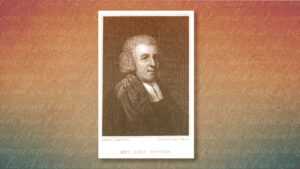
Listen or read the following transcript as D. A. Carson speaks on the topic of Faith from Romans 3:27-4:25
It is a privilege for me to join you here at Cornerstone. Although I’ve been in this area numerous times, I think it’s my first time at this church. I’m delighted to be with you. I would like to direct your attention this morning to Romans 3:27 to the end of chapter 4. This passage follows one of the greatest texts in the New Testament on the significance of the cross. Immediately after that passage, Paul embarks on this extended meditation on the nature of faith. Romans 3:27–4:25. I shall begin by reading the passage.
“Where, then, is boasting? It is excluded. On what principle? On that of observing the law? No, but on that of faith. For we maintain that a man is justified by faith apart from observing the law. Is God the God of Jews only? Is he not the God of Gentiles too? Yes, of Gentiles too, since there is only one God, who will justify the circumcised by faith and the uncircumcised through that same faith.
Do we, then, nullify the law by this faith? Not at all! Rather, we uphold the law. What then shall we say that Abraham, our forefather, discovered in this matter? If, in fact, Abraham was justified by works, he had something to boast about—but not before God. What does the Scripture say? ‘Abraham believed God, and it was credited to him as righteousness.’
Now when a man works, his wages are not credited as a gift but as an obligation. However, to the man who does not work but trusts God who justifies the wicked, his faith is credited as righteousness. David says the same thing when he speaks of the blessedness of the man to whom God credits righteousness apart from works:
‘Blessed are they whose transgressions are forgiven, whose sins are covered. Blessed is the man whose sin the Lord will never count against him.’ Is this blessedness only for the circumcised, or also for the uncircumcised? We have been saying that Abraham’s faith was credited to him as righteousness. Under what circumstances was it credited?
Was it before he was circumcised, or after? It was not after, but before! And he received the sign of circumcision, a seal of the righteousness that he had by faith while he was still uncircumcised. So then, he is the father of all who believe but have not been circumcised, in order that righteousness might be credited to them. And he is also the father of the circumcised who not only are circumcised but who also walk in the footsteps of the faith that our father Abraham had before he was circumcised.
It was not through law that Abraham and his offspring received the promise that he would be heir of the world, but through the righteousness that comes by faith. For if those who live by law are heirs, faith has no value and promise is worthless, because the law brings wrath. And where there is no law there is no transgression.
Therefore, the promise comes by faith, so that it may be by grace and may be guaranteed to all Abraham’s offspring—not only to those who are of the law but also to those who are of the faith of Abraham. He is the father of us all. As it is written: ‘I have made you a father of many nations.’ He is our father in the sight of God, in whom he believed—the God who gives life to the dead and calls things that are not as though they were.
Against all hope, Abraham in hope believed and so became the father of many nations, just as it had been said to him, ‘So shall your offspring be.’ Without weakening in his faith, he faced the fact that his body was as good as dead—since he was about a hundred years old—and that Sarah’s womb was also dead.
Yet he did not waver through unbelief regarding the promise of God, but was strengthened in his faith and gave glory to God, being fully persuaded that God had power to do what he had promised. This is why ‘it was credited to him as righteousness.’ The words ‘it was credited to him’ were written not for him alone, but also for us, to whom God will credit righteousness—for us who believe in him who raised Jesus our Lord from the dead. He was delivered over to death for our sins and was raised to life for our justification.”
This is the Word of the Lord.
What is faith? Our culture offers many implicit definitions, and not one of them easily lines up with what the Bible says. So it is rather difficult in a university mission these days, for example, to explain what faith is when there are already other definitions presupposed that are on the table.
I suppose that the closest use of the word faith in the culture at large to anything in the Bible is this: We sometimes speak of different faiths, by which we mean different religions. In truth, sometimes the Bible speaks of faith as the Christian religion. For example, Jude speaks of the faith once for all delivered to the saints. What he means is the whole structure of Christian thought, what we might well call the Christian religion.
Even there when the New Testament speaks of Christianity as the faith, interestingly enough it uses that word only of the Christian religion and never speaks of other religions as faiths. In fact, it rather views them as idolatries, which is not quite the way we use the word faith today. Alternatively in our culture, faith is something that if you screw your stomach muscles up tightly enough and scrunch yourself into a kind of spiritual commitment and somehow believe enough you can use to wrest blessings from God.
More commonly yet, in the broader culture, faith is mere religious preference. So that there are facts out there that you cannot easily avoid. You throw a ball up in the air and all things being equal it will fall back down again. The law of gravity still operates. That’s a fact, but when it comes to whether you’re a Buddhist or a Muslim or a Christian or whatever else, well that’s a matter of faith. That is, it’s a matter of religious preference. It’s divorced from the realm of anything that belongs to truth categories and is merely a question of religious preference.
If in that sort of world we start encouraging the exercise of faith, all it sounds like is, “Make sure you choose. Make sure you choose religiously.” That’s not quite what Paul has in mind in these verses. Christian faith in the Bible, though it has different nuances from place to place, always has an object.
The validity of Christian faith turns not in the first place on its intensity, but on its object. Faith, in the New Testament, is valid only insofar as the object of faith is valid. If you are passionately committed to believing something that is not true, that faith, in the Scripture, is not considered a great virtue.
In the passage immediately before the one that we read, there we learn that God has set forth Jesus to be the propitiation for our sins. That is, the one who by his atoning death bore God’s wrath, turned God’s judgment aside so that God could simultaneously protect his own justice and be vindicated while still declaring us just.
We are to place our faith in this Jesus, this Jesus who has done that. Jesus, who died on the cross, is the object of our faith. If he didn’t really do that or didn’t really succeed in that, then Christian faith is empty and vain. That’s why Paul says with respect to the resurrection of Jesus, “If Jesus did not really rise from the dead, then you can believe until the cows come home, but quite frankly, your faith is a waste of time. For a start, it means that the apostles are all a bunch of liars because they kept saying that they saw the resurrected Jesus.”
In other words, Paul does not say, “Provided you believe in the resurrection of Jesus, it will do you a lot of good.” Rather he says, “It really happened! Faith is merely the means by which you listen to the reports of the apostles and God opens up your own heart so that you come to believe what is, in fact, objectively true.” “If it’s not true,” he then says, “we’re, of all people, most to be pitied, because we’re believing something that isn’t true.”
Paul does not want to make a divorce between faith and truth. In fact he says, “You still remain in your sins. You’re still condemned if there’s no sacrifice that has paid for these sins.” So the apostles are liars. You’re deluded. You’re, of all people, most to be pitied, because you’re believing something that isn’t true. You see, to believe something that has an invalid object is not for Paul any sign of deep spirituality but a sign of utter folly.
Now, however, in the passage that I read, Paul gives us several further characteristics of true Christian faith. Remarkably, there is a tight parallelism between chapter 3, verses 27–31 (that is, the end of chapter 3) and all of chapter 4. That is, the argument that is briefly set out in chapter 3:27–31 is then expanded upon in the same order with the same points in chapter 4 and applied to the life of Abraham.
So if you want to understand the brief, concise argument of chapter 3, verses 27–31, all you have to do is read chapter 4 slowly and you discover the same points that are unpacked and unpacked and unpacked so that we can have a good grasp of what it means to say, “I believe in Jesus Christ, who died on the cross for my sins.” Here then are the four parallels that Paul draws between these two passages and what they mean for us.
1. Faith excludes boasting.
On the one hand, chapter 3, vere 27. On the other hand, chapter 4, verses 1–2. “Where, then, is boasting?” Paul has just talked about the importance of God justifying those who have faith in Jesus. So now he asks the rhetorical question, “Where, then, is boasting? It is excluded. On what principle? On that of observing the law?”
That is because certain people have somehow conformed themselves a little better than others to God? They’ve observed the law? Is that the basis on which boasting is excluded? He says, “No, but on that of faith.” If we don’t understand, then he unpacks it in chapter 4, verses 1 and 2. “What then shall we say that Abraham, our forefather, discovered in this matter? If, in fact, Abraham was justified by works, he had something to boast about—but not before God.”
In the context, Paul is doubtless thinking of those who rely on the law for their approach to God. Those who might come before God and say, “I may not be perfect, but I haven’t acted as badly as so-and-so over here. I have followed the sacrificial system exactly. It’s true that I’ve tried to be very disciplined in my prayer life and in my faithful attendance at the high feasts of the temple.” But that means if that’s the basis of our approach before God, then sooner or later we have the right to say for all eternity that we made it and others didn’t because we were better.
That’s the unavoidable conclusion. If at the end of the day in the final analysis we stand before God basically because we’re nicer or better or cleaner or more disciplined or somehow more controlled, a little better, a little closer to perfect, then for all eternity we will be able to say properly, with a solid boast, a substantial boast, “I’m here and someone down there is not because, quite frankly, I’m better than the alternative.” It would be a valid boast. There is just no escaping from that logic.
Paul says, “If, in fact, we’re accepted before God because of faith in Jesus Christ, where is boasting?” Paul does not view faith as a kind of good work that we’ve turned on. “I’ve got more faith than you do!” That sort of thing. It’s not perceived as a virtue that I have chosen, forced myself into. No, it’s a kind of self-abandonment to Christ. It’s an accepting of what he has done by God’s own good grace, believing what he has done and abandoning myself to him!
There’s no brownie point in that. Paul says, “Surely you see that was also true of Abraham. After all, if Abraham was declared righteous before God because he did a lot of good things (and he did do a lot of good things) then surely he has something to boast about, but never before God.” Why? What’s his point? Why is he saying things this way?
First of all, it’s important to recognize that Abraham is important both to Paul as he addresses Jews who are unconverted and to Paul as he addresses Christians. He’s important to unbelieving Jews because after all, from the Jewish perspective, Abraham was the head of their race. He was the first Hebrew.
But he’s also important from Paul’s perspective as a Christian Jew because, as we’ll see in the following verses, he is the paradigmatic figure who starts a whole new humanity where faith is of fundamental importance. So elsewhere Paul argues that Christians today are children of Abraham. How he gets there is very important. We’ll come to that in a few moments.
Before we press on with the argument, it is very important to see that we who are Christians, though we know this argument in theory, we sometimes forget it in fact. If you’re a Christian of any standing at all, you know that men and women are justified by grace through faith. Don’t you? Yet how often do we think somehow that God accepts us on the basis of what sort of a day we’ve had? You know what I mean?
You get up some morning and you’ve been working too hard. You’re grumpy. You reach for a clean pair of socks and they don’t match. Reach for another pair and there’s a hole in the toe. It’s raining. You stumble out to the car a little late, put the key in the ignition, and turn the switch. Stone dead. Battery’s gone. Your 16-year-old left the lights on. Twit.
Eventually you get to work 40 minutes late and your boss is annoyed. Then your coworker asks some question about the faith. You’ve been trying to witness to her for some time. You just snap and bite her head off. Eventually, you get home. You have a note from your spouse saying, “Sorry, called away. Use one of the frozen dinners.”
Then that night your cold begins to break and your nose starts running. When you get down to pray that night, it sounds something like this, “Lord God, this has been one rotten day. I know some days are like that, but this is one of them. I don’t really have much to say. Forgive my sin. Bless everybody. In Jesus’ name, amen.” You go to bed. Wipe that day out.
Then there are other days when you wake up and the birds are singing and the light is streaming through the window. You feel refreshed and you stretch. “This is going to be a great day! The first day of the rest of my life!” You smell bacon coming from the kitchen. Yes, unbelievable. You bounce out of bed and eventually you get into the car and the car starts.
You get to work and the boss greets you at the door. “You know, I’ve been looking at your records. I’d like to give you a promotion.” Then the same woman in the next office confronts you again and this time you explain the Christian faith over the coffee break with great passion and discernment and wisdom and humility of mind and she agrees to come with your family to church the next Sunday.
You get home and friends are in, friends that you really like, with a wonderful meal ahead of you. Your 16-year-old is actually on best behavior. It’s wonderful! That night you go to bed and you start praying for the pastor and the missionaries and for loved ones overseas and for people you’ve scarcely met and the neighbors. You go on and on and on, and you go to bed feeling really good about yourself. Have you ever done that? Which was wrong? Which day?
They’re both completely wrong. Because somehow we’ve slipped into the view that we’re acceptable to God according to what sort of a day we’ve had. What a ridiculously pagan notion! We’re acceptable before God whether we’ve had a good day or a bad day because of the merits of Christ Jesus.
We’re justified by grace through faith. Whether we’ve had a good day or bad day is important in terms of our maturation, in terms of our sanctification, in terms of our growth in grace, in terms of our consistency, in terms of our self-discipline, but at the end of the day it does not finally commend us in any final sense to God.
No, no. Faith excludes boasting. No one will stand up in heaven and begin to boast. No one. No one. So what on earth are we doing practicing our boasting here? In fact, more broadly, isn’t that what Paul says when he asks another series of rhetorical questions to the Corinthians? He says, “What have you but what you’ve received? If you received it, why do you boast as if you didn’t receive it?”
“Oh,” you say. “Wait a minute! I realize that I have good parents and enough food. There are some people in the world that didn’t get all of that, but I’ve worked very hard for what I’ve got!” Who gave you the ability to work? Who gave you the discipline? Who gave you the health? Who gave you the genes that made it possible?
“What have you but what you’ve received? If you’ve received it, why do you boast as if you didn’t receive it?” How much more true then is that of the most fundamentally glorious gift of all, the gift of salvation? No, faith excludes boasting.
2. Faith is necessary to preserve grace.
Chapter 3, verse 28: “We maintain that a man is justified by faith apart from observing the law.” Then, expanded in the life of Abraham, chapter 4, verses 3 to 8. What Paul now does is quote Scripture with respect to Abraham. “What does the Scripture say?” Then he quotes Genesis 15. “ ‘Abraham believed God, and it was credited to him as righteousness.’ Now when a man works, his wages are not credited as a gift but as an obligation.”
That is, after you’ve finished your week or two weeks or month, you won’t appreciate it if your employer comes to you and says, “I’ve got a little gift for you,” and then gives you your paycheck. You say, “It’s not a gift! I earned that! You owe it to me! That’s part of the contractual arrangement, isn’t it?”
If God owes us heaven, then it’s payment. It’s wage. Is that the way it was for Abraham? Abraham, at least he believed God enough to obey, so the fact that he left Ur of the Chaldeans, maybe he’s made the father of all because he was a little more obedient than some. Is that what happened? Not according to Scripture.
“ ‘Abraham believed God and it [that is, that faith] was credited to him as righteousness.’ Now when a man works, his wages are not credited as a gift but as an obligation. However, to the man who does not work but trusts God who justifies the wicked, his faith is credited as righteousness.”
It’s worth thinking about that very carefully. The Old Testament text means that God accounts to Abraham a righteousness that does not intrinsically belong to him. The text is not saying that Abraham was righteous, so God totted it all up and said, “Oh Abraham. Nicely done. When I do the sums, it turns out you’re righteous.”
Rather the text is saying, “Abraham believed God, and God totted up that faith for righteousness, but not because it somehow made him righteous, not because somehow it was the equivalent of righteousness, not because it was a deed of righteousness. It’s the way God reckoned it. It’s the way God totted it up.” Do you know how we know that? Because it’s explained further in verse 5.
“To the man who does not work but trusts God who justifies the wicked, his faith is credited as righteousness.” Who does God pronounce just? Who does he justify? He’s the judge. He justifies, he pronounces “just” or “unjust.” Who does he pronounce just? Those who are just? If he pronounces just those who are just, then he is merely saying, “They have acted appropriately and I declare them just so they can get in.” So it’s back to works.
But in fact this text says that God pronounces just those who are wicked. The reformation had a little phrase that came to be very important in the history of Christian thought. Simul justus et peccator. Simultaneously just and a sinner. Because God doesn’t justify us after we’ve earned enough brownie points to be admitted. God justifies us. He declares we’re just. He declares us not guilty and declares us just, not because we’re so good, but while we’re still sinners. Yay!
Because of the passage just preceding. Christ bore our sin. He already turned aside God’s wrath. We receive it by faith. That faith is reckoned to us as righteousness, justice. That is the confidence we have. Christians don’t go around telling other people we’re better than others intrinsically. We go around saying, “By God’s grace we have found a fountain to cleanse the unclean, a righteousness that is not our own, an acceptance before God that we cannot earn. We are poor beggars telling other poor beggars where there is bread. No place for boasting here.”
This is not true only for Abraham; something can be said for others from the Old Testament. Verse 6: “David says the same thing when he speaks of the blessedness of the man to whom God credits righteousness apart from works: ‘Blessed are they whose transgressions are forgiven, whose sins are covered. Blessed is the man whose sin the Lord will never count against him.’ ”
This is not because the sin didn’t occur or is not really bleak. No, no, no. God does this. The point of the exercise is that people who are blessed by God are blessed not because they have earned something from God but because they have received something from him. God is not under any obligation.
There are so many people who think of the Christian religion as a kind of tit-for-tat arrangement. You offer God the right kind of praise (with guitars or pipe organ or whatever your tradition demands) and then God smiles at you and he gives you some sort of blessing. Do you want some blessing from God? Well, you make sure that you say your prayers. You make sure you witness now and then.
A verse a day keeps the Devil away. Keep reading your Bible. Be nice to your kids. Smile. Forgive somebody who hurts your feelings. Then God will forgive you. It’s all a tit-for-tat relationship. God has his psychological needs and we have our needs. His psychological needs are to be praised. Provided we praise him then God has his needs met. Then as a result, we will get our blessing.
We’re not so crass as to put it quite that way, but isn’t that what we often think deep down? That is a profoundly pagan way of looking at God. For the gods of ancient paganism, as in modern paganism, are all finite. These finite beings have their own needs. All you have to do is read the Greek mythology and discover that they’re fornicating and lusting and fearing and forgiving and not forgiving.
They’re just sort of like us, only more souped up. All their sins seemed a bit more souped up as well. They all have their psychological needs. That’s why Paul, when he addresses intellectual pagans in Athens and he tries to explain what the God of the Bible is about, one of the things he says is this: “He does not need us.” Isn’t that remarkable?
In fact, he says just the reverse. “We need him for life and breath and everything else.” God is under no obligation toward us because he doesn’t need us. It’s not as if in eternity past he was sitting up there in all of his transcendent splendor thinking, “Crumbs, this is a lonely existence. I think I need somebody to sing me some praise choruses.” God has no needs!
It’s not that he doesn’t respond to us. It’s not that he doesn’t interact with us. He’s a personal God. It is important to keep saying that. He can respond in pleasure and in wrath. He can respond in joy and in anger. He’s a personal God who interacts with us, but not out of some deep psychological need, but perfectly in line with all of his perfections including the wisdom of his will.
When we get angry, usually it’s a function of losing it. When God gets angry, it’s never because he’s lost it. It’s out of the will function of his holiness. God has no needs. He doesn’t need us. That’s why the Old Testament pictures God.… “If I were hungry, would I speak to you? If I want a Big Mac, the cattle on a thousand hills are mine. In fact, the whole world is mine. All of McDonald’s is mine already. I don’t need you. You’re mine.”
That means that it is profoundly pagan to drift in thought or practice into a way of looking at God which introduces a kind of tit-for-tat spirituality. “If I do this, then you do that.” Oh, God in his mercy sometimes in the Scripture even responds to the odd person who approaches him like that he’s so gracious, but it’s never ever, ever because God himself will otherwise be frustrated. He’s got these deep needs that only we, his creatures, can meet.
No, it’s the other way around. “Every breath we draw,” Paul says to the Athenians, “is by his sanction.” We need him. The first responsibility of all moral sentient beings made in the image of God is to recognize their creaturely dependence. That’s why our first commandment is to love God with heart and soul and mind and strength. It is not to think that we are God. No, no, faith is necessary then to preserve grace. Grace is bound up with the very being and freedom of God.
3. Faith is necessary if Jews and Gentiles alike are to be saved.
The point is made in chapter 3, verses 29 and 30. “Is God the God of Jews only? Is he not the God of Gentiles too? Yes, of Gentiles too, since there is only one God, who will justify the circumcised by faith and the uncircumcised through that same faith.”
One of the entailments of monotheism is that he is God of all. Again, unlike paganism where there were many, many gods. Gods who operated in discrete domains: god of the sea, god of communication, god of war, and so on, and then gods for particular individual peoples. Thus when the Romans took over some new territory, what they did was always arrange for god swaps.
They made sure that some of the locals took on some of the gods in the Roman pantheon and the Romans took on some of the pagan gods. They had god swaps. The reason for that is that if it ever came to civil war, nobody could be sure on which side which god was fighting anymore. It was all political … all these gods with their little domains and their little tribes.
Even though God is in covenant community with Israel in the Old Testament, never does this God permit himself to be reduced to Israeli dimensions. Thus even when the temple is built, Solomon says, “Look, the heaven of heavens cannot contain you. How much less this house that I have built.”
One of the entailments thus of monotheism (that is, the belief that there is but one God) is that he’s God of all. Recognized or not, he’s the God of all. Thus, if this God has any compassion at all, one of the entailments of monotheism is mission. That’s already seen going all the way back to Abraham, isn’t it? “In you all the nations of the earth will be blessed.”
That means that at the end of the day, you cannot imagine that the fundamental approach to God, even on the part of the covenant people of the Jews, is finally secured by how well you obey the law since, after all, there are vast numbers of people who are not Jews who were never given the law, never had a temple, Yom Kippur, and Day of Atonement prescribed, who were not given all the details that you find in Leviticus and Numbers and Deuteronomy and elsewhere.
Is that the fundamental issue then? “No, no, no,” Paul says. “Is he not the God of Gentiles too? Yes, of Gentiles too, since there is only one God, who will justify the circumcised by faith and the uncircumcised by the same faith.” “Ah,” but someone says. “Wait a minute. Could it not be instead that what will happen is the Gentiles will be brought under the Mosaic law covenant?
Maybe they’ll all become Jews. You could have mission that way too, couldn’t you? You could have one God and the covenant with the Jews already in place. Now you’ll have everybody else joining the Jews, all being circumcised, all being people of faith but obeying the law, going and offering their sacrifices on Passover and their sacrifices on the Day of Atonement, and so forth. Wouldn’t that do just as well?”
Ah, but Paul unpacks that argument too, doesn’t he, in verses 9–17. He does so in two parts. First, in verses 9–12, evidence of this point from Abraham’s own experience. That is, at the point that faith is necessary if Jews and Gentiles alike are to be saved. Look at his argument in verses 9–12. “Is this blessedness …” That is, the blessedness of sins forgiven, of all that Abraham received. “… only for the circumcised, or also for the uncircumcised?”
Is it for Jews and Gentiles or only for the circumcised, those that come under the Mosaic covenant, Jews, and those who become Jews? “We have been saying that Abraham’s faith was credited to him as righteousness.” That’s already been established. Quoting Genesis 15:6. Now Paul asks a further question.
“Under what circumstances was it credited? Was it after he was circumcised, or before? It was not after, but before! And he received the sign of circumcision [after], a seal of the righteousness that he had by faith while he was still uncircumcised.” Just take it there for a moment. Do you see what the argument is?
It’s not as if God called out Abraham and then said, “All right, you’re mine. Now I’ll circumcise you to start the covenant.” So he’s circumcised, and then Abraham had great faith. If it were done in that order, that faith would sort of flow out of the circumcision. It would be a way of signaling, as it were, what we need is a whole lot of people to come into the covenant, get circumcised, and confess themselves as Jews, and their faith will flow out of that.
What happened historically? Historically, it was the other way around! Abraham believed God so he left Ur of the Chaldeans and left Haran, came and believed God. It wasn’t until he had demonstrated his faith again and again and again that God then circumcised him. The circumcision of the old covenant was a sign that this man Abraham already had believed, this faith that was already credited to him as righteousness.
In other words, Paul is insisting on the importance of reading the Old Testament narrative in sequence. Read it in sequence. There you discover that Paul observes that Abraham was justified by faith long before he was circumcised. “So then, he is the father, therefore, of all who believe but have not been circumcised, in order that righteousness might be credited to them.”
That’s worth explaining, too. When we use father-son language, we mean it genetically. I’m a father. I have a daughter and I have a son. I am genetically their father. But in the ancient world, this father-son language was often used functionally. The reason for it is easily understood. Let me address the men just for a moment now.
You men who are doing vocationally what your fathers did, put up your hand. Go ahead. Put them up high. I see maybe four hands. That’s it. But in an agrarian world, in a pre-Industrial Revolution world, almost all sons (98 or 99 percent) ended up doing what their fathers did. Your father’s a baker; you become a baker. Your father’s a farmer; you become a farmer. Your father’s name is Stradivarius; you make violins. That’s the way it is.
For the girls, likewise, the daughters ended up doing what their mothers did. Thus, the father and the mother became not only the genetic parents, but they became the kind of supervision of the entire frame of reference and vocational training and work and everything. A kid growing up on the farm learned all there was about farming; the father taught him everything.
A kid growing up in Stradivarius’ home learned all about choosing of the woods and making the glue and cutting and all the rest, all the secrets of making a Stradivarius violin. It was part of the formation of the next generation. Thus, you are identified by your vocation. You are identified by your work. You are identified by what you did with a certain kind of family.
Today because of all the money that we have, we are free to do all kinds of different things vocationally. Most of you obviously have. In a place where people end up doing what their parents did, you can understand why you start generating some interesting figures of speech. Somebody is called a son of Belial in the Bible. Belial means worthlessness. You know what that means? You’re so disgustingly worthless that the only explanation is that your father is worthlessness personified.
Then you get these further extensions. You remember what Jesus says? “Blessed are the peacemakers, for they shall be called sons of God.” Do you see what he means by that? God is the supreme peacemaker, so if you start acting like God, then you’ll be making peace. If you’re in the business of making peace, then clearly you’re acting like God, at least that far. Aren’t you?
Jesus is so much the son of his father, that everything the Father does, the Son also does, we read in John 5. Nobody can say that for me. I’m not like God. If I make peace, then I’m acting like God and, to that extent, I’m God’s son. But I can’t be God’s son the way Jesus is God’s Son, because everything the Father does, he does.
I can’t do that. In that sense, I’m not God’s son. So there is always a distinction to be made between his sonship and mine. The same is true with respect to the Devil. Do you know what Jesus says in John 8? He says to his opponents, “You are of your father, the Devil, and the lusts of your father you will be.”
He’s not saying that the Devil somehow copulated with their mom to produce them and they’re half-breed Devil people. It’s not like some program on television called Alien or something. No, it’s purely functional. What did he say? “He was a murderer from the beginning and you’re trying to murder me. He was a liar from the beginning and you’re not telling the truth about me. Therefore, you’re of your father, the Devil and the lusts of your father you will be.”
It’s a functional category. This runs right through many, many biblical expressions. Now the question comes, “Who is a child of Abraham?” Is it merely the one who is Abraham’s descendant according to genes? In that case, only Jews can be Abraham’s children. But if the categories are fundamentally functional, then those are truly Abraham’s children who have Abraham’s faith, that faith which is credited to him for righteousness even when he wasn’t circumcised.
That means you truly are a child of Abraham if you have Abraham’s justifying faith, if you trust this God. God counts up your faith as righteousness whether you’re circumcised or not, whether you’re a Jew or not. So Paul concludes this section, “Abraham is the father of the circumcised, who not only are circumcised but who also walk in the footsteps of the faith that our father Abraham had before he was circumcised.”
In verse 11, “It is the faith of the uncircumcised in order that righteousness might be credited to them.” Faith is necessary if Jews and Gentiles alike are to be saved. Not only is this true with respect to Abraham’s own experience (verses 9–12), the same evidence is found in the whole sweep of redemptive history (verses 13–17).
“It was not through the law that Abraham and his offspring received the promise that he would be heir of the world …” That is, it wasn’t as if he actually first took on the law and as a result then he had some wonderful promises. Let me explain. If you asked a first-century conservative Jew, “How do you please God?” he or she would say, “By observing the law.”
“How did David please God?”
“By observing the law.”
“How did Moses please God?”
“By observing the law.”
“How did Abraham please God?”
“By observing the law.” You say, “Wait a minute, how can you say that Abraham pleased God by observing the law, because the law didn’t come until half a millennium or more after Abraham?”
“Ah yes, but we know that you please God by observing the law, so he must have had a special, private revelation from God and that’s how he pleased God. After all, doesn’t the Genesis text say that Abraham observed all of God’s statutes? Those statues surely are the law. If Abraham pleased God it must be because he obeyed the law. That means God must’ve given him a private revelation.”
“Oh, how did Enoch please God? We know he walked with God and was taken. How did he please God?”
“By observing the law.”
“Wait a minute, he’s only seventh from Adam! The law wasn’t given then! Why do you say that Enoch pleased God because he obeyed the law?”
“Well, we know that’s how you please God. The whole Bible’s full of it. So if Enoch walked with God, it can only be because he obeyed the law.”
Do you see what’s happening in that sort of argument? The law is being elevated to the place where it controls the whole Old Testament storyline. It comes along in the time of Moses and is graciously given, but it’s being written back into all the earlier events. Now Paul comes along and says, “No, no. That’s not how you read the Bible.” Don’t forget, this Paul has exactly the same Bible that we call the Old Testament as the Jews that he’s debating.
Why do they disagree on their interpretation of it? It’s because so many of those Jews were insisting that the law controls everything. Paul is saying, “No, no, no. Read the Bible as a continuous story, and then you discover that there were people like Abraham who believed God and it was credited to him as righteousness, not only before he was circumcised, but before the law was given. You cannot make the law the final thing. You cannot do it.” That’s his whole argument in verses 13–17.
“It was not through the law that Abraham and his offspring received the promise …” They came along before the law was given. “For if those who live by law are the only heirs, faith has no value and the promise is worthless. What law does is bring wrath.” Law comes along and says, “You mustn’t do this, you mustn’t do this, you mustn’t do this.”
And I go ahead and do it, in any case, and that brings down law on my head. That’s Paul’s argument likewise in Galatians 3. “No, no, the promise comes by faith, so that it may be by grace and may be guaranteed to all of Abraham’s children …” That is, not just the literal ones genetically, but all those who share Abraham’s faith. “… not only those who are of the law, but also those who are of the faith of Abraham. He is the father of us all.”
4. Christian faith does not nullify the law, it doesn’t cancel the law. It upholds it, it fulfills it.
Look at the end of chapter 3. Chapter 3, verse 31 reads: “Do we, then, nullify the law by this faith?” Are we canceling the law? Are we saying the law doesn’t matter? Paul says, “No, no, no. That’s not the way it is at all! Rather, we uphold the law.” How can he say he’s upholding the law when he spends so much time arguing that Christians are not Christians primarily because they observe the law?
Well, go back to the beginning of that paragraph. It is something that Paul has already explained in 3:21. He says, “Now a righteousness from God has been made known apart from law …” That is, the righteousness from God that’s come in Christ Jesus, apart from the whole law covenant, it’s been made known to us in the coming of Jesus. “… to which the Law and the Prophets testify.”
That is, the Old Testament law pointed forward to it. It bore witness to it. So if the Old Testament law pointed forward to Jesus, if the Old Testament law anticipated Jesus, then when you point to Jesus, you are saying, “You’re upholding the law. You’re upholding what it was given for. You’re upholding what it came for.”
We’re not throwing out the Old Testament, we’re saying, “If you understand the Old Testament properly, it is pointing to Jesus, it is pointing to grace, it is pointing you to the cross, it is pointing you to faith. We’re not throwing it out; we’re upholding it.” That’s exactly what Paul says then at the end of chapter 4, as well.
Do you see what he argues in verses 18–22? You have another example from Abraham, this crucial test of faith, whether or not he would really believe God that God would give him a son. He does believe. Then, verses 23–25, “This has made an example for us. The words ‘it was credited to him’ were written not for him alone, but also for us.”
That’s what the Old Testament says. The law can refer to the whole first five books of the Old Testament. “Read that section,” Paul says. “Read that law and you will see that it is pointing forward to Christ. For God will credit righteousness to us, to us who believe in him who raised Jesus our Lord from the dead.”
I know that this is a tight argument. For those who are not used to reading texts in tight arguments, it can be a big chunk. I understand that. But I’m telling you, it is crucial for mature Christian faith. At the time of the Reformation, they had a number of slogans. When I was a boy, I really didn’t understand them.
They had Sola Scriptura, Sola Gratia, and Sola Fide, amongst other slogans. By Scripture alone. By grace alone. By faith alone. When I was a boy I thought, “How can you have three things alone? If you have one of them alone, then you have one, but if you have three alones, it sounds like preacher’s rhetoric that is sort of slipping the bounds of logic.”
Then as I got older, I discovered that by Scripture alone meant Scripture alone is the final authority, the final revealed authority by which all of religion is to be judged. By grace alone was saying that at the end of the day, forgiveness of sins and the promise of a resurrection body, and the communion of saints and all that we have in Christ Jesus, the prospect of an eternal life with him, all of it is by God’s free gift. It’s by grace alone.
By faith alone? What that is saying is that there is only one means, one way of apprehending, only one way of receiving it, only one way of latching into this grace. Not because you commend yourself to God. Not because you try harder or because you have a certain color skin or you have an above-average IQ or you’re a little more courageous than others. No, no, it’s by faith alone. By Scripture alone. By grace alone. By faith alone.
Brothers and sisters in Christ, there is something so perverse in all of us. It keeps percolating out to the top of our existence so that somehow we start thinking foolishly against Scripture. Against grace, we start thinking that somehow there is something good enough in us to commend ourselves to God.
We’re not so crass as to start saying, “Oh boy, now that God’s got me, he’s really got a hot one.” But deep down, we may start acting that way, as if somehow we’re doing God a favor. You know when you do something self-sacrificial? You’re a kid and without being asked, you take out the garbage and make your bed and sweep out the garage.
Or you’re older and you really go out of the way to help your in-law who’s really in difficult circumstances with Alzheimer’s. You go away feeling (well, you wouldn’t put it so crassly), “God got a bargain with me, all right. There are other Christians who don’t put themselves out like this.” Am I the only one who’s ever thought that?
Isn’t is appalling when Jesus himself says that after we’ve done everything, we’re still unprofitable servants. We’re supposed to do everything. We only do it rarely, and then we’re stupid enough to pat ourselves on the back for it. No, no, no. We receive this bounty, this grace by faith alone. Fifty billion years into eternity when we look back at all of our remembered experience, we shall still say, “I am here not because God owes this to me but out of sheer grace he has given it to me, and I trust it yet. I trust it yet. By faith alone.”
I don’t know you, but there are some of you I’m sure who are not Christians at all. Maybe even exposed to Christian teaching, maybe just barely, in which case this has been a big chunk for you and you wonder still what it’s all about. Let me tell you, the first step in becoming a Christian occurs when you know, deep inside you, God is tugging at your mind and heart and you cry out, “Lord, I believe. Help my unbelief. God, have mercy on me, a sinner.”
Lord God, we thank you that in your great grace you have disclosed these wonderful things to us in the pages of your Word. At a certain level, they are straightforward and easy, but you have provided arguments that are variously easy, complex, and difficult, teaching us how to read the whole of the Bible.
Give us understanding, Lord God, to see what the argument is but then, having seen it, so to apply it to our lives that we will not sin against you by acting as if somehow we are doing you a favor by our existence. O Lord God, we are debtors to grace. It is a wonderful thing to be forgiven, it is a wonderful thing to have eternal life, to know something of the pulsating power of the Spirit of God within us, giving us hearts and minds to love what we formerly detested and to loathe what we formerly cherished.
So strengthen our faith, Lord God, by clarifying before us always the right object of that faith: Christ Jesus, his person and work, his utterly self-sacrificing death on the cross, his resurrection, that all of our confidence may be in him, whether we’ve had good days or bad days. O Lord God, ground our faith, we pray in Christ Jesus. We ask for his glory and for his people’s good, amen.