



The stories of Jesus have so many twists and turns that you, seeing the headline for this column, are probably already spinning up surprising moments.
- Is it the shock of watching the scorned Samaritan—and not the Jewish religious leaders—stop to help the dying man on the road to Jericho?
- Or the response of the wicked tenant farmers who kill the vineyard owner’s son and throw him out?
- Maybe it’s the posture of the father when the prodigal returns from the far country—his willingness to endure the shame of the community by running down the street to embrace him.
All these moments were designed to shock the original hearers. After 2,000 years of retelling, we’ve grown so accustomed to them that we no longer feel their force.
But one parable stuns me, no matter how many times I read it. (Some scholars, including Klyne Snodgrass, would classify it as an analogy rather than a parable proper.) It comes in the middle of Luke’s Gospel, easy to read past. But it contains one of the most breathtaking images in all of Scripture (and it’s barely even the point).
Read it slowly, and pause over the picture Jesus paints.
The Verse You Almost Missed
Be ready for service and have your lamps lit. You are to be like people waiting for their master to return from the wedding banquet so that when he comes and knocks, they can open the door for him at once. Blessed will be those servants the master finds alert when he comes. Truly I tell you, he will get ready, have them recline at the table, then come and serve them. If he comes in the middle of the night, or even near dawn, and finds them alert, blessed are those servants. (Luke 12:35–38)
The overall point is urgency: Be ready, keep your lamps lit, stay alert for the Master’s return. All of that is expected.
But then one line is smuggled into the story, and it flips everything upside down. Did you catch it? When the master returns from the wedding banquet, he will serve them. The servants welcome him home, and then he gets ready, dresses himself for the occasion, seats them at the table, and brings them the meal.
It’s as if King Charles returned to Buckingham Palace, put on the clothes of a waiter, and served dinner to his wait staff. Or Lord Grantham came home from a journey, greeted the servants lined up outside Downton Abbey, and ushered them inside to take their places at the table in the dining hall.
John Piper urges us to meditate on the image of the sovereign Son as a table waiter:
Masters do not serve their slaves. They don’t even thank their slaves. What more could Jesus have said to make his behavior at the coming of the Son of Man more mind-blowing?
This is the picture Jesus paints of his return. A complete reversal of expected roles. We will sit. He will serve.
What the Master Plans to Do
That’s why I call this the most astonishing moment in Jesus’s parables. The surprise doesn’t come from the fact of his return; it comes from what he intends to do when he arrives.
The church father Cyril of Alexandria saw in this passage a portrait of our happy Savior, one who knows we’re “weary with toil” in this world, who delights in the opportunity to comfort us, to set before us “spiritual banquets” and spread “the abundant table of his gifts.”
I think of the scene in The Lion, the Witch, and the Wardrobe when Aslan is on the move and the spell of the endless Narnian winter begins to break. A merry party of Narnian animals in the wood—a squirrel with his wife and children, two satyrs, and a dwarf and old dog-fox—sit around a table with heaps of plum pudding, with decorations of holly. Father Christmas has been there, and he has laid out an impromptu feast for these poor, long-suffering creatures.
Jesus is the Master who serves his servants. It’s as if God himself is overflowing with the enthusiasm of a grandmother on Christmas Day, who can’t wait for her guests to taste what she’s been laboring over all day in the kitchen. The joy of the giver fills the feast.
J. C. Ryle believed this to be “one of the most wonderful promises made to believers” because it means there’s no limit to the honor Christ will bestow on those ready to meet him at his return. Our King will delight in delighting us.
Too Glorious to Be the Point
What strikes me most is how casually this verse appears. It’s not the central point of the passage. It’s almost incidental to the main exhortation. It feels like a throwaway line about what the master will do when he comes home, yet what it contains is staggering.
The plans of the Lord for those who love him must be so vast, so layered, so lavish that even a mind-bending picture of the coming feast can be dropped into a parable almost as an aside. Which raises a question worth pondering: If something this glorious can be mentioned in passing, what else is God planning for his children that we can’t even imagine?
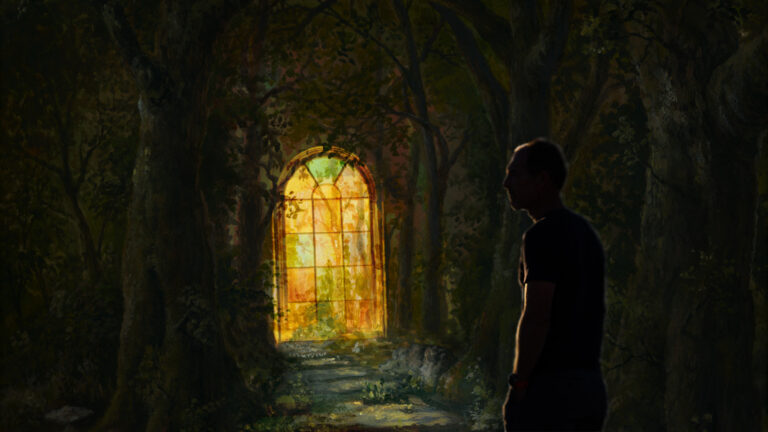
The Lord who will one day dress himself as a servant to bring us to the table is a Lord worth watching for. So let’s keep our lamps lit, hearts awake, faces turned toward the door. The Master is full of surprises.
If you would like my future articles sent to your email, as well as a curated list of books, podcasts, and helpful links I find online, enter your address.