





Two weeks after the school year started last September, I got an email from the vice president for academic affairs at Dordt University. Her name is Leah Zuidema, and she told me that faculty and staff were reporting their students were more highly engaged than normal—more responsive in class, better about doing their homework, and more interested in learning. In short, they were doing unexpectedly well.
Leah and I wondered if more of them had been in high schools that were implementing stricter cell phone policies, or if they’d had more time to bounce back from COVID-19 restrictions. I called up one of her professors—Mark Christians, who teaches psychology.
“Class attendance, especially from two or three years ago to now, has improved,” he said. “Even the consistency of completing assignments is at a much better level than it was a few years ago. And simple things like asking questions, engaging in conversation before class, after class— I think those are a little bit better.”
I asked him what he thought was going on.

“To be brutally honest, I don’t know,” he said. “I’m only comparing some of the classroom behaviors—coming to class, consistently completing assignments, the number of academic alerts that may happen in a semester. And I think this semester I’ve only sent out one. Other semesters, I may have already had six or seven out.”
I asked if it was something about the freshman class, but his upperclassmen are doing well too. I asked if it was a change in technology, but we couldn’t think of anything that would make such a difference between the spring and fall semesters. And then Mark said this:
Sorry for my random speculation, but chapel attendance has been up. Until the last five years, it was good, strong. But [now it’s] standing room only. It’s a voluntary, optional faith development activity, so that’s wonderful.
And there it was—only I didn’t fully see it, even then. I knew Dordt had a new dean of chapel, and it was the beginning of the school year, so maybe kids were simply piling in to see what was different over there.
To double check, I started emailing campus pastors I knew from around the country: “Hey, I’m hearing from Dordt University that students are more spiritually and academically engaged right now. Are you seeing anything like that?”
Here’s what they wrote back:
From Chicago: “100% it’s crazy!”
From Oregon: “Yep, we had 587 students at our college kickoff last week. We packed out the largest auditorium on campus. People sitting in the aisles.”
From Iowa: “Literally every Salt Company across the country would say it is uniquely fervent and open. Anecdotally, the Salt Attendance at Iowa State in September 2023 was around 1,400; 2024 was nearly 1,700; this past fall is just over 2,000. We’ve done Salt for nearly 40 years and NEVER seen increases like that in percent or numbers—all of this while the university enrollment is flat.”
Whoa. What’s going on here? Is it possible that Gen Z is having something of a revival?
Unlikely Converts
I’ll be honest: Gen Z isn’t the generation I expected to see in anything like a revival. Surveys show us they’re the most secular generation on record—the least likely to believe in God, go to church, or have a religious affiliation. One major reason for that is the shrinking faith of their parents—Gen Z is also the generation least likely to have grown up in church, attended Sunday school, or prayed over a meal with their family.
On top of that, they spend, on average, more than seven hours a day on screens and are famously anxious, depressed, and isolated. As a group, they’re much more likely to be playing games or streaming videos on their phones than showing up at youth group.
No, Gen Z isn’t the place you’d look for a renewed increase in spiritual engagement.
“I actually did not grow up in faith at all,” 19-year-old Kya Hardy said. “Nobody in my family was religious.”
Kya was raised on the south side of Chicago.
“In high school, I was a hot tamale,” she said. “I was captain of the volleyball team. I was on the cheer team. I was a pretty good student, but my time also consisted of partying, drugs, and drinking. I was really worldly—gossiping, dating. I was going all nine yards.
“[During] COVID-19, I was like, OK, I’m in school, but I’m also bored. I didn’t have anything to do. I wasn’t getting those social interactions with people. That’s when TikTok became big. So I got spiritual. I started believing in rocks and the universe. I started doing tarot card readings.”
Over in Iowa, college junior Ryan Goodman didn’t feel like anything was missing from his nonreligious home life. It was the opposite—Christianity felt like something his family didn’t have the time or desire to add to an already busy schedule.
“There was a consensus: We didn’t necessarily need God at the moment,” he said. “That was how we viewed it. It was just something that we didn’t do. High school was a very busy time. I thought, I already got so much stuff going on. I was in high school football. I was joining all these clubs. I had a lot of friends who went to church regularly and who had asked me to join various Bible studies and stuff. Back then, I was like, Well, I don’t really see the need for it.”
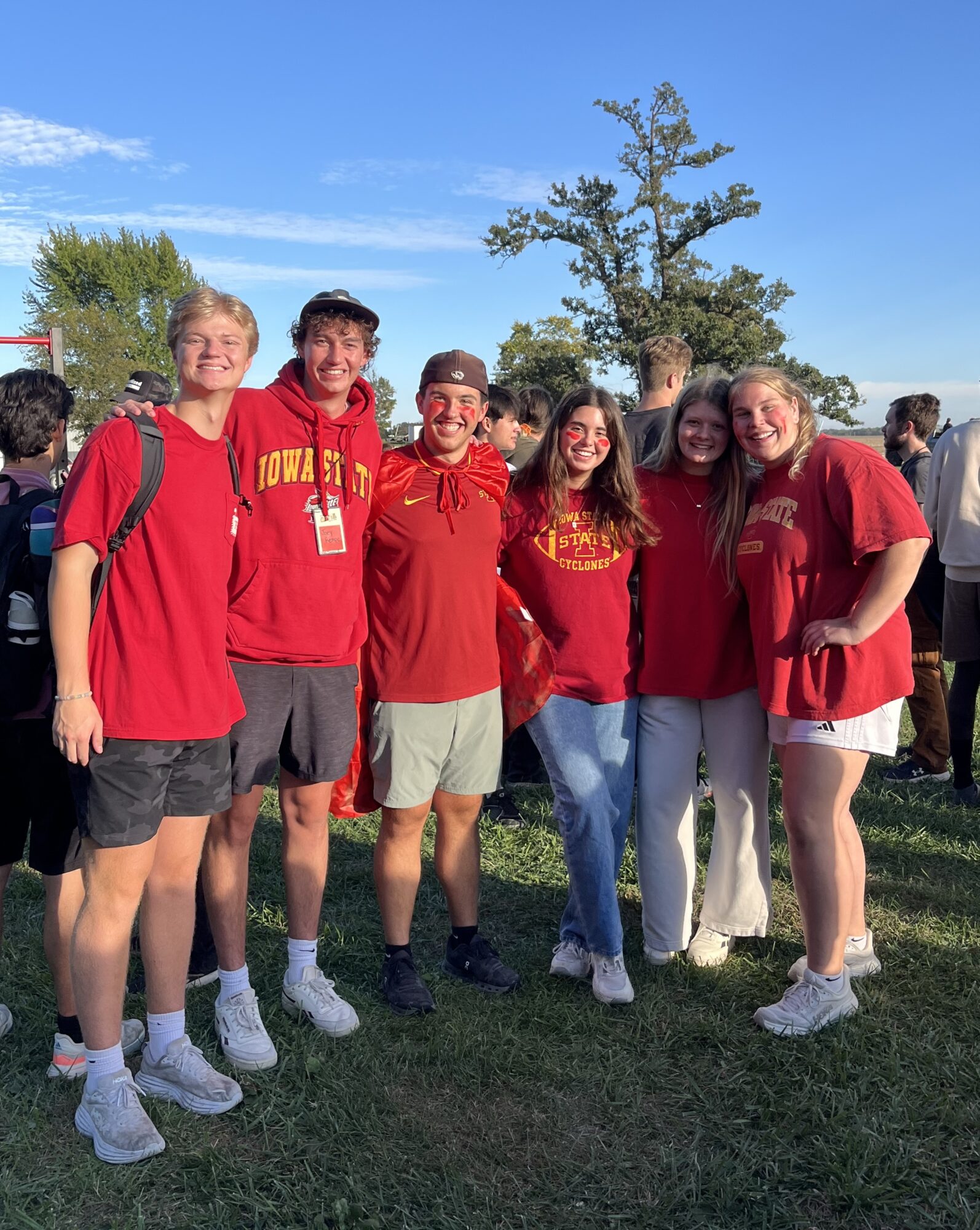
He still didn’t see the need for it when he got to college, joined a fraternity, and started going to class. Neither did Mike Chavez, who grew up Catholic in Chicago. He went to mass with his family, but that was about it.
“I really didn’t know a lot,” he said. “I was brought up on good morals and the Ten Commandments, but I couldn’t even name one commandment.”
He knew Jesus died on the cross but had no idea why. So he wasn’t looking for a faith community when he arrived at the University of Illinois Chicago (UIC).
“I walked in and was like, You know what? I’m gonna get all my work done. I’m gonna be that dude that just is on top of all his stuff,” he said. “And that’s how it went for me for the first six weeks of freshman year. I was getting my work done on time and even early, and it was beautiful. But then I got drained out so fast. I was tired. I didn’t want to do the schoolwork anymore. And I was like, Man, this college life is gonna be hard for the next four years.
“I was struggling through that when one of my advisors was like, ‘Hey, you need to join a group or a club or something, so that you can get back into it, have more fun, and have a balance in your life. Because right now your whole life is school, and it’s getting unhealthy.’”
Mike’s attempt to work himself into an identity—the dude that is on top of all his stuff—was failing. His predicament is typical for Gen Z.
“A lot of times people pick a lane, and they don’t deviate from it,” Ryan said. “You have guys that are so into schoolwork, to the point where they don’t have many friends because they’re so focused on trying to stick to their grades. Or you have guys that are going to parties, probably three to four times a week.
“A lot of guys feel like they have to pick their identity super fast. They have to find their lane. And then once they find their lane, they get comfortable in it. And then they don’t feel like they need to deviate.”
That sounds familiar to me, because I’ve done research on girls using social media, and they tell me the same thing. Social media—which Gen Z starts younger and uses more often than any other generation—is framed around creating your own identity, or brand, and then filling your life with content that matches it. Kya’s identity was a popular party girl. Ryan’s was a busy overachiever. And Mike’s, for a while, was a single-minded academic.
Firstfruit: Mike
After Mike’s advisor told him to join a club, he started looking around.
“My friend said, ‘I joined this group called CODE, maybe you should be a part of it.’ And I was like, ‘OK, let’s go. I’m down,’” he said. “That’s how I ended up getting plugged into CODE and Campus Outreach ministry. And I didn’t think anything of it. They told me it was a leadership program, and they said it was faith-based. But that just went over my head.”
Perhaps Mike missed the faith angle because so few university programs in Chicago are faith-based. Though the city has half a million college students, even its largest institutions have only a handful of Christian campus ministries. Some of the city colleges don’t have any.
CODE is the leadership program of Campus Outreach, a student ministry largely based in the South. The only reason there’s a chapter in Chicago is that, eight years ago, the wife of Campus Outreach staffer Tony Dentman got a job in Chicago. He started a chapter at UIC, then started CODE to better serve and connect with students.
Mike’s CODE mentor was Andrew Martinez, who is on staff with both Campus Outreach and Holy Trinity Church. Andrew kicked off the relationship by asking Mike about his life, his experiences, and his personality.
“And then he starts slowly mentioning Jesus and the gospel,” Mike said. “And I’m like, What is this? Like, what are you talking about? I was like, I’m gonna shrug it off. Maybe it’s something that he brought up by accident.
“And one day, he ends up having a Bible study at his house. And I really liked Andrew. He’s really, really cool. I was like, I want to go check it out. What is this Bible study thing like? Because I just really like hanging out with him.”
Mike went to the Bible study, and there it dawned on him: These CODE guys are serious about their faith. I asked if that turned him off.
“It actually fascinated me, because I’ve always been a curious person,” he said. “It opened my mind—I wanted to know who this Jesus guy was, because I heard about him in church here and there. But I never really knew who he was or what this gospel thing was. And I’d been going to church my whole life. I wanted to know. I was very curious.
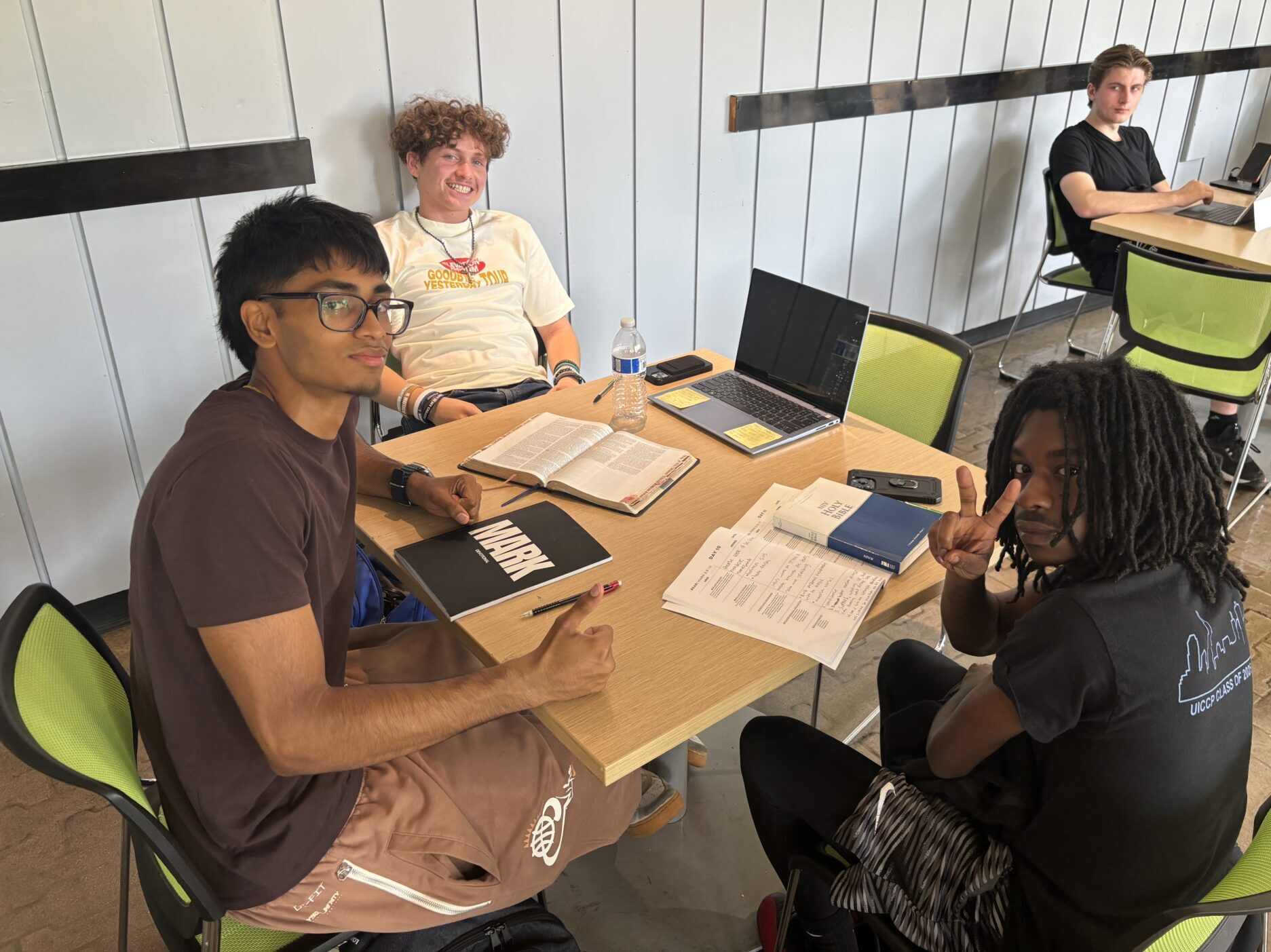
“One thing that fascinated me was the way Andrew was able to pick out verses. I’m like, Whoa. What are you doing here? I didn’t even know what a verse was. So when he started connecting dots and showing me diagrams—that’s when I felt like my eyes were beginning to open.
“He showed me Romans 6:23 and the bridge diagram. That really caught my eye. I was like, Dang, I’m really separated from God, and this Jesus dude is my way to him. That’s when my eyes were opening, and I was like, Man, I’ve been learning about Bible stories, but I didn’t know they were actually real. I thought they were just like stories, like fairy tales.”
Mike had, by his own estimation, about a million questions: How do you know the Bible is reliable? If God is so good, why is there so much sin in the world? Do kids who die go to heaven? Do all people get to hear the gospel, or only people in church? Does everybody get a fair chance?
These are hard questions, but Mike wasn’t looking for perfect answers.
“What I loved about Andrew was he would tell me, ‘Look, I don’t know all the answers. But the Bible has the answers, and maybe God will speak to you and comfort you,’” Mike said. “Andrew told me he wasn’t the main source. The Bible was. And that gave me a lot of comfort.”
Mike kept asking questions, and Andrew kept directing him to Bible verses.
“I was like, ‘This guy really knows his stuff. Wow,’” Mike said. “It started to make sense to me. I was like, ‘This is crazy.’”
All of this was happening in Mike’s freshman year. But it wasn’t until his sophomore year—about a year ago—that he gave his life to Christ.
“My first year, Andrew had been telling me all about the gospel, and it was cool, but I was still in a worldly relationship,” he said. “I was still doing my thing, I was still living my life, doing what I wanted to do. It wasn’t until sophomore year, when everything started spiraling down and I was confused, that I started speaking to God like, ‘Lord, what’s going on? I thought we were cool.’”
Nothing major happened. But Mike was increasingly uncomfortable about a lot of things—his identity in high school had been athletics, but in college he wasn’t playing a sport. He thought he wanted to be a teacher, but now he wasn’t sure. He was arguing more and more with his girlfriend.
“Andrew kept teaching me about God, and I felt like I was lying to him, like living a double life,” he said. “When we’d meet, I’d be like, ‘Oh yeah. I love God. And you’ve been teaching me all these things, and I’m learning.’ And then behind the scenes, I’m doing whatever I want, not letting God intervene, and staying in control. That’s when I came to the realization: I cannot continue to live this double life, because it’s not harming God, it’s just harming me. And it just didn’t feel healthy at all.”
Mike prayed, for real this time: Lord, take this relationship away from me. Let me start living for you. Let me start truly abiding in you.
“And he started transforming my life and letting me live for him, and answering me,” he said. “I was like, ‘This is crazy. I need to start really living for God.’”
Mike loved getting his identity and purpose from the Lord. His story of salvation is beautiful. But at first glance, it doesn’t seem to fit our timeline. He already came to faith last year, and the revival we’re talking about seems to have primarily started this past fall.
Hang with me a minute, because here’s what Mike’s Campus Outreach director, Tony Dentman, said about the timing of increased spiritual engagement.
“People have been saying this for the last three years: ‘I just feel like a revival is happening. Revival is happening,’” he said. “Even this summer, I was at a church planting network event, and they gave the numbers from Barna. They were like, ‘Man, look at this. The men are starting to turn to Jesus.’ And I’m like, ‘I have no clue what y’all talking about. I guess that it hasn’t made it to the north.’
“But starting in August—I think it made it to Chicago! The spiritual hunger, the spiritual desire, is higher than we have ever seen before.”
When I asked Tony and other campus ministers if it was this year’s freshmen who were driving the change, they said no. While there’s a high level of freshman engagement, the interest is no lower in the older grades. In fact, they said it’s the juniors and seniors leading the Bible studies that are bringing so many of the underclassmen to faith.
“I’ve been leading Bible study this year with a ton of freshmen, even sophomores as well,” Mike said. “And it’s been really fulfilling and really fun to do—talking about God and leading them into Scriptures and seeing those moments of realization that ‘I need to start surrendering this to God. And wow, God is so good, and God is so merciful.’ And I am like, ‘Yes, he is.’ Being able to see those moments really does bring me joy.”
Firstfruit: Kya
If Mike is a firstfruit of this increase in spiritual engagement, Kya is another. Like Mike, she’s studying at UIC.
“I did a lot of stupid stuff before Christ, but one thing I knew was I did not want to follow down the path of my mother or stay in the path of poverty,” she said. “So I was like, OK, I’m going to get higher education. I’m going to do something. So I decided to go to college.”
I asked if her party lifestyle shifted at all.
“Oh, it got worse when I was in college, because now I had all this freedom,” she said. “I had nobody watching me. I definitely did more partying, drinking, and smoking. It definitely hit an all-time high. And the boys—it wasn’t like boys, I was just indulging myself in one boy, but overindulging unhelpfully. That got worse because I could be at his dorm. Nobody’s expecting me home.”
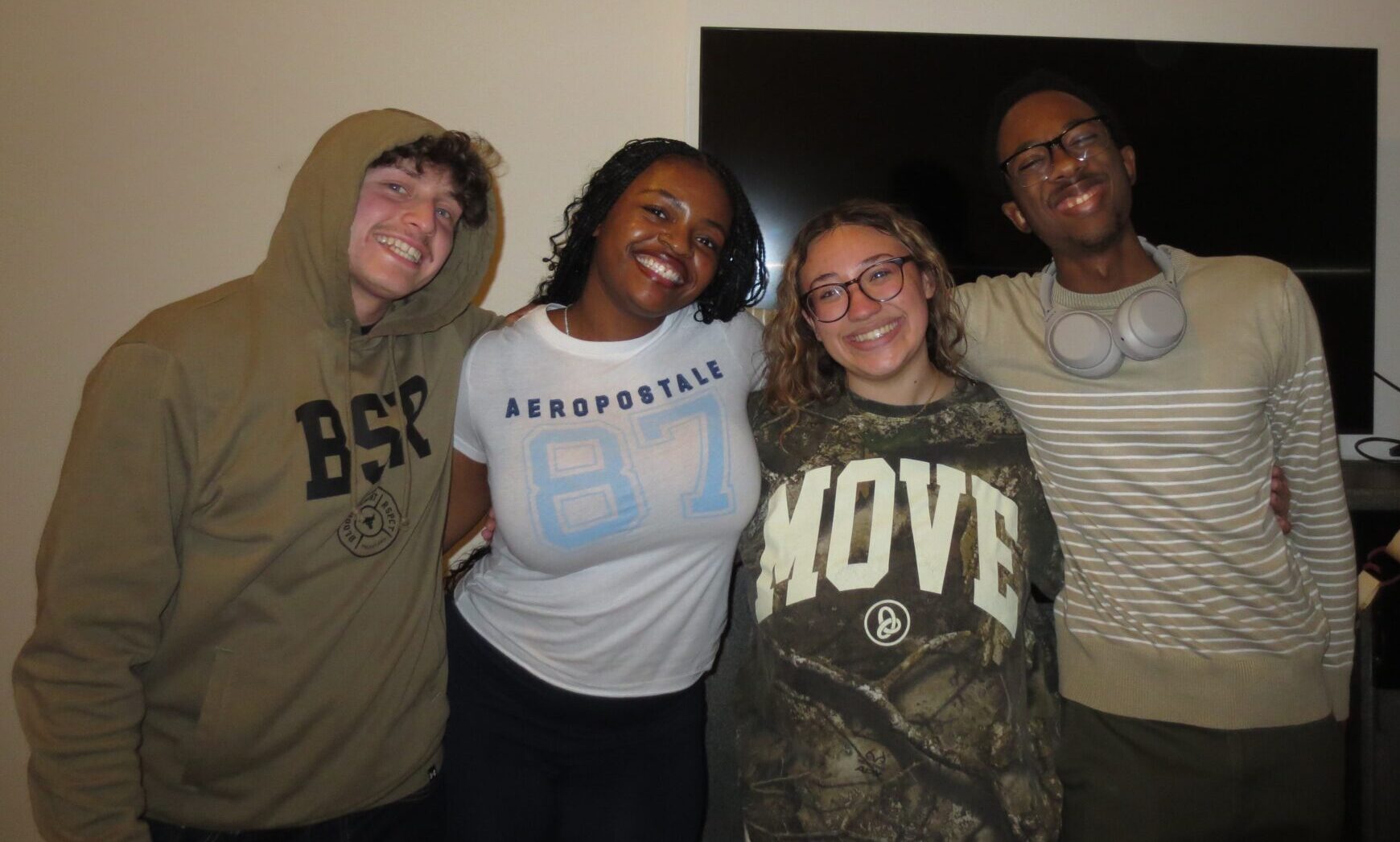
One of Kya’s friends invited her to CODE. And since Kya had a crush on a boy in CODE, she agreed to go. Kya’s CODE mentor was Liza, who is married to Andrew and, like him, on staff with both Campus Outreach and Holy Trinity.
“She was asking questions: ‘What’s your spiritual life—your religious life—like? Have you ever heard of Jesus? How do you feel about the Bible?’” Kya said. “And I’m like, ‘No, girl, no. Keep that Bible away from me.’ I started running away from her.”
I asked why.
“I did not know the gospel,” she said. “I did not know the importance of it. I also had misleading information. You know how the Israelites were brought out of a bad situation? In my community, that is always thrown around—why didn’t God bring black people out of slavery?
“And they think Christianity kept people enslaved, when really it was not Christianity. It was how people portrayed Christianity. So that really pushed me away from it. I thought it was a white person’s religion.”
Kya quit going to CODE. But later, when her friend invited her to a Campus Outreach New Year’s conference, Kya said yes.
“I was thinking, It’s a conference. I’m going to meet friends, I’m going to experience college on a different level,” she said. “[Then] I get there, and it clicks, because everybody starts talking about Jesus, and their relationship with him, and how good he is. And I’m like, Hold up . . . What am I doing here?”
Kya was surprised and confused. How was it all these people, hundreds of them, were talking about the goodness of a God she didn’t know?
“We met this preacher, and he was saying, ‘You only call on God when you need something,’” she said. “I was like, Oh. I’d never felt something in my heart hurt so bad. I literally felt something grab at my heart, like my heart skipped a beat. I was like, You’re not lying. Actually, I do call on him when I need something.
“It was always, ‘Hey, God, can you fix this?’ Or when my grandmother passed away, I was like, ‘God, why?’ But that was the norm in society.”
Kya kept listening. She listened to the speakers, her leaders, and Liza. When she heard the gospel story—that Jesus, the Son of God, came to die for her sins and make her right with her Creator—Kya thought it sounded like a Disney story.
“I was honestly shocked, because you’re telling me this man who did not know me died on the cross for my future sins,” she said. “He paid the price before I was even alive. It was very shocking. I was really amazed. . . . I was like, You know what? You all sound like you’re living a beautiful life, and actually, I want to try it.
“I had a friend—the friend I went to the conference with. She knew something about religion—she wasn’t full-blown religious, but she knew something about Christ. So she kind of led me in prayer to giving my life to Christ. Because we came to an agreement—‘Yeah, let’s give our life to Christ.’ So that night we prayed together and gave our life to Christ.”
Maybe you’re wondering, like I was, if two basically non-Christian girls can lead each other to the Savior. Is that even legit?
Here’s what happened when Kya got back from the conference and one of her other friends called her up.
“You got liquor?” the friend asked.
“Yeah,” Kya said.
“You still got weed?”
“Yeah.”
“OK, come over.”
Kya did.
“In the middle of doing it, I’m like, Something does not feel right,” she said. “I felt uncomfortable. I felt icky. I felt like I wasn’t supposed to be there, like I wasn’t supposed to be doing this. It was conviction—that was the first time I felt conviction. And I was like, I never want to feel that ever again in my life. And from that day forward, I stopped doing drugs. That conviction felt so terrible that it just knocked some sense into me right then and there.”
That wasn’t the only thing to change for Kya over the next few months. I asked her to compare her life today with her life a year ago.
“Drastically different,” she said. “I was periodically reading my Bible. I went to Bible study. I thought I was living the way of Christ, but you would always catch me at Chili’s for happy hour. And I’m justifying it with, It’s just one drink. It’s OK. The Bible says don’t get drunk. I’m not getting drunk, so it’s OK.”
The drinking had become a habit, and Kya could tell it was affecting her walk with the Lord.
“I had my talks with God, and I felt his presence, but during that time, I was like, ‘Yeah, God, I’m not really feeling [you.] What’s the issue? Am I doing something? What am I doing?’ And it was just like something was on my spirit, like, That drinking. What do you mean, ‘What are you doing?’ It’s right in front of your face! That’s leading you away from Christ. Why are you doing it?”
But unlike before, the conviction alone wasn’t enough to stop her.
“I did not have the desire to stop drinking at all,” she said. “If I could do it today, I would still be doing it. I had to sit down, and I had to pray for the Lord to give me the desire to stop. . . . I was like, Honestly, God, I don’t have the desire to stop, but I know it’s bad, and I know it’s leading me away from you. So Lord, I pray that you give me the desire to stop. Lord, I invite you into the situation, and I pray that you just put your hands over me and stop me. Stop me yourself, because I can’t do this. And it stopped. The desire died down.”
Witnessing to Gen Z
Kya was baptized in August, at Holy Trinity Church in Chicago. She’s been doing a Bible study with two other girls, both new Christians. Along the way, she’s had some of the same questions Mike had.
“A couple months ago, one of my brothers in Christ had to give me reassurance,” she said. “I was questioning, ‘How do I know that Christ is the way?’ Because many other people say Buddhism—I have a friend and she’s Buddhist. So I was conflicted and confused. I’m like, ‘Is Christ the way? Like, is he? Because you got all these other religions, and who’s to say that their religion isn’t the way?’”
Her brother in Christ reassured her, which was enough for her to begin sharing her faith with her friend.
“Last week I was talking to my friend who is into Buddhism, and I told her something, and she was like, ‘Oh, my God,’” Kya said.
“Hey, don’t say that,” Kya told her friend.
“What do you mean?” the friend asked.
“No, don’t say that,” Kya said. “You don’t put that in the same sentence.”
“But God has different meanings,” the friend said.
“I looked at her like, ‘No, he does not. I’ve never heard somebody say that,’” Kya said.
Another time, a friend told her about a man on TikTok who said he was a Christian but also practiced voodoo.
“I hate to be the one to tell you, but it doesn’t work like that,” Kya told her friend.
“How I deal with it is I try to get my point across,” she told me later. “It’s starting to be more apparent to me there’s so many false prophecies and false leaders out there.”
There are also false ideas of what Christianity is like, probably also gleaned from social media. When Kya stopped drinking, she tried to share her reasons with her friend.
“She seemed like she was going for it, but then, months later, she was like, ‘Well, I hope you don’t become one of those white politicians who’s just against abortion and homosexuality,’” Kya said. “And I looked at her, and I was like, Oh, that’s what she thinks we are.”
Kya’s reaction is interesting, first because she has shifted her views on both abortion and homosexuality since meeting Jesus. But second, because a year ago, that was more or less Kya’s view of Christians. She thought they were a little weird. And judgmental. And harsh. And honestly, a little foolish, because why were they following someone they couldn’t see?
And that’s what makes her a perfect witness to the transforming power of the Spirit. I asked her what it was like to be involved in a campus ministry this past fall.
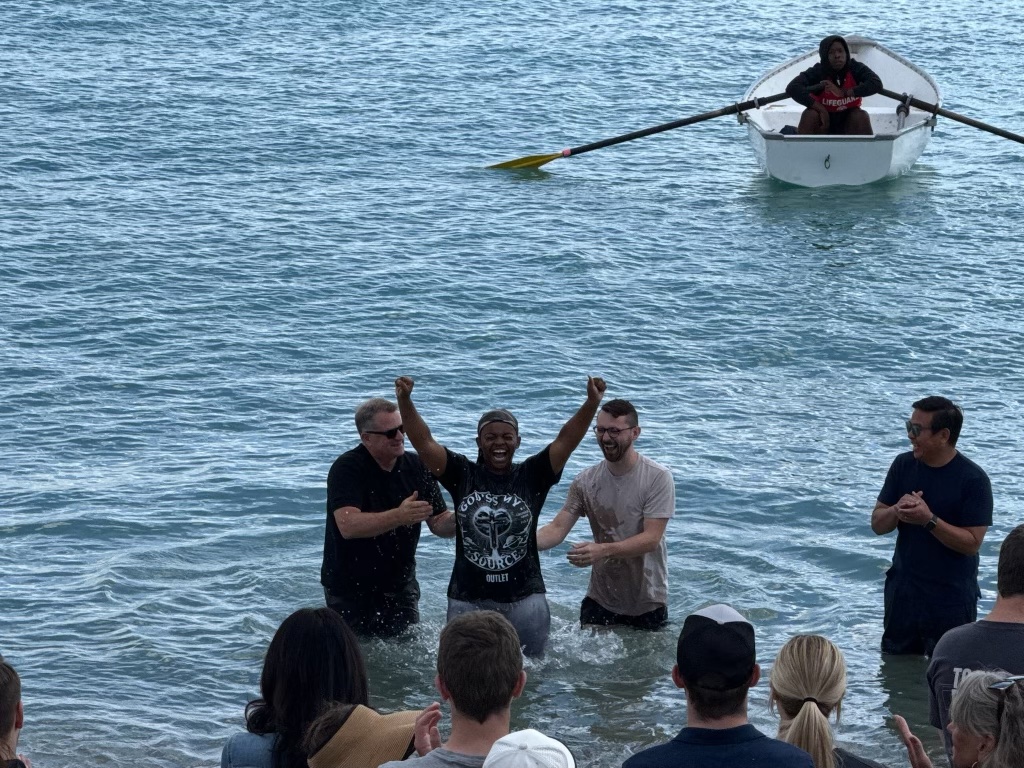
“It’s something that can’t even be explained—only a work that God can do,” she said. “Being surrounded by so many students with the same questions and struggles I have is such a beautiful thing. Being able to build relationships and talk to them—I would never replace it with anything else. It’s something so beautiful.”
She loves meeting with her Christian mentors, but she also loves meeting with the students on this journey with her.
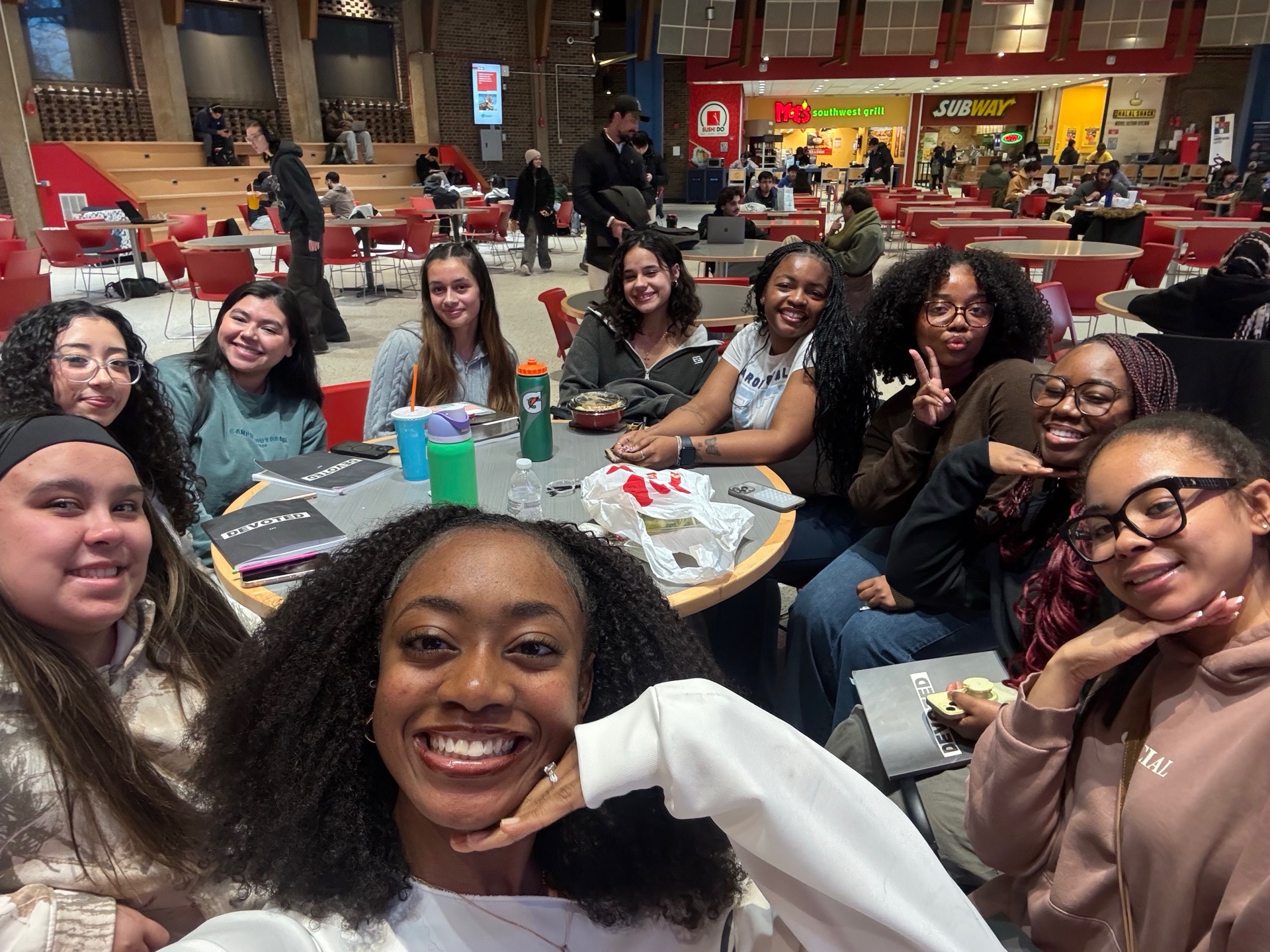
“There’s a difference when you’re being led in Christ and when you’re sitting with people your age and just conversing about Christ,” she said. “[There have been] different times where different brothers and sisters in Christ will be sitting in the cafeteria of our campus, and I’ll just walk by and be like, ‘Hey guys,’ and then we’ll sit down and we’ll start talking. And somehow that conversation always leads its way to Christ—how good he is, what we’ve experienced, what we just read in the Bible. It’s not even forced. That’s the best thing about it. We don’t even have to be having Bible study that day. But he led us to talking about him and glorifying his name and learning more about him. It’s something unexplainable.”
Growing Harvest
“In October, there was a day we had seven people profess faith in one day,” said 23-year-old Sean Zerkle. He’s also a firstfruit, drawn to the Lord a few years ago by a young campus staffer in his fraternity at the University of Alabama. When he graduated in 2025, he started his first job as a Campus Outreach staffer with Dentman in Chicago.
“I was expecting a lack of spiritual interest,” he said. “I feel like in the South everybody kind of grows up with it, so if you ask them if they’re Christian, they’re most likely going to say yes, whether they are or aren’t. In Chicago, my expectation was, They’re not going to want any part of it. And that’s where I was wrong. That’s where I was completely wrong because they’re spiritually interested. They just don’t even know what to be interested in.”
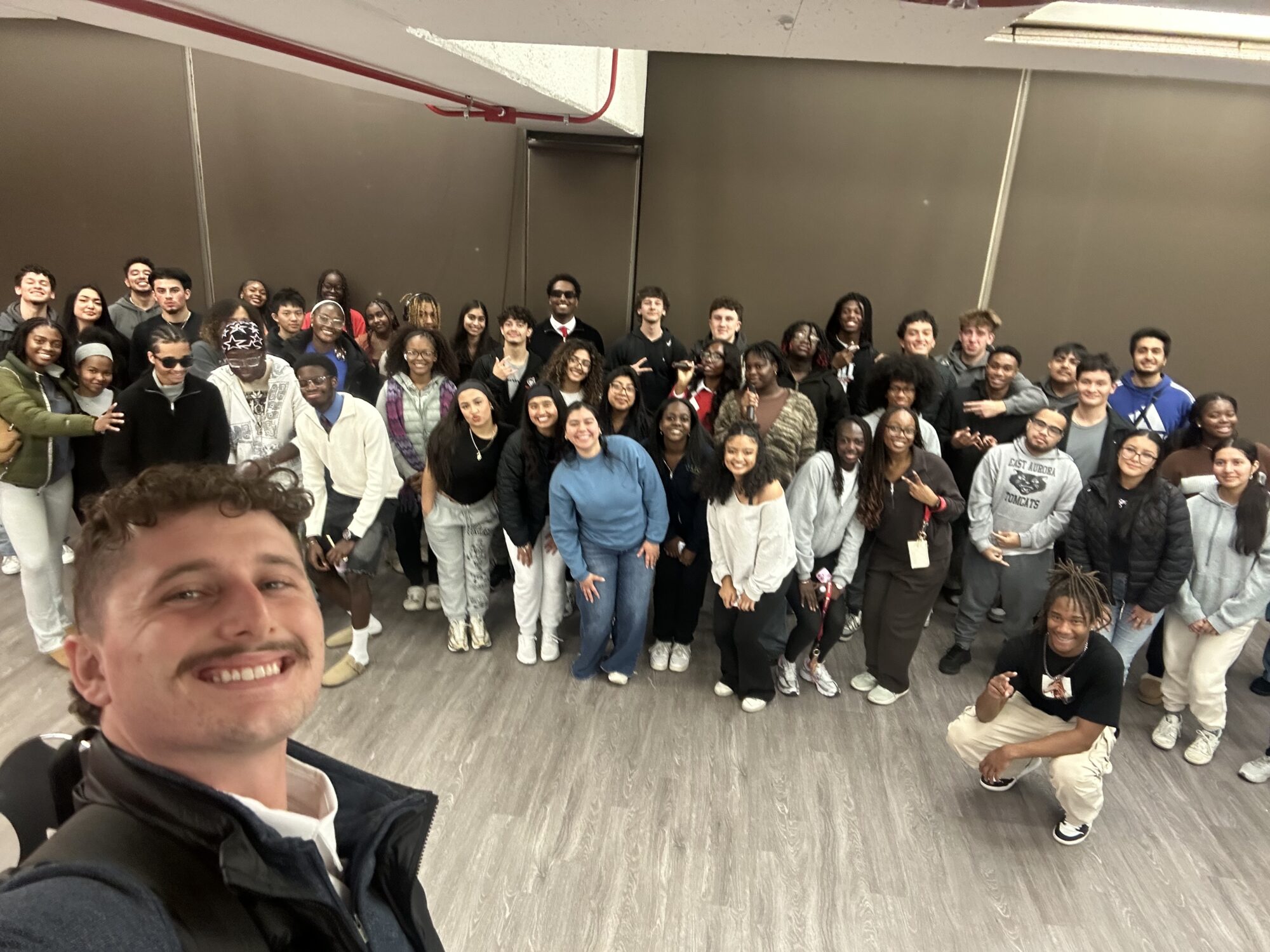
Sean’s been having spiritual conversations all over the place. He told me about that day in October: “I sat down with a student, and right before I sat down, Liza, who’s on our staff team, she’s like, ‘These two girls just professed faith.’ And I was like, ‘This is crazy.’ And then the student I’m meeting with, he professes faith. And then Josiah, he met with three people and they were all like, ‘We want to give our life to Jesus.’”
Sean told me about his conversation.
“I was blown away, honestly,” he said. “His name’s Linus, and he’s from Ecuador. It was just different. I had shared [the gospel] at this point probably 25 times with other students. I could just tell something was different about this conversation. He’s there smiling, his eyes are big. And he’s like, ‘I want this.’ He has experienced a lot of brokenness, and he felt the weight of it. He was like, ‘I just want to be free from it.’”
Campus Outreach staff in Chicago saw 16 students come to Christ this past fall. Ten have been baptized. Dozens more have asked questions, shown up at Bible studies and larger worship gatherings, and asked if they could have a ride to church. A few years ago, all the Christian campus ministries at UIC—from Athletes in Action to Campus Outreach, Chi Alpha, InterVarsity, and the Navigators—came together for a joint event. They were excited to get 100 students, total.
This past November, Campus Outreach had its own conference and drew 120 people by itself. They’re seeing double, and sometimes triple, the number of attendees at each event or Bible study they host. The weekly gathering, which Dentman hadn’t been able to get off the ground until a few months ago, now regularly attracts 80 students each week.
This level of engagement isn’t just happening in Chicago. I’m hearing the same stories from campus pastors from California to Oregon to North Carolina—they’re seeing higher levels of attendance, questions, hunger, and conversions.
Fields of Fruit
A few weeks ago, I stood with thousands of Gen Zers in a conference center in Louisville, Kentucky. CrossCon was launched in 2013. That first year, about 3,500 students were there. The next year, attendance dropped to about 2,000.
Organizers wondered how much longer they should keep pouring money into it, whether anybody even wanted to go to Christian conferences anymore, and if this was a colossal waste of time and energy.
Then, slowly, things began to turn around. In 2024, for the first time, Cross sold out. Speakers like John Piper, Kevin DeYoung, and David Platt told more than 10,000 18 to-25-year-olds that though sin and enemies oppose them, they serve an undefeated God.
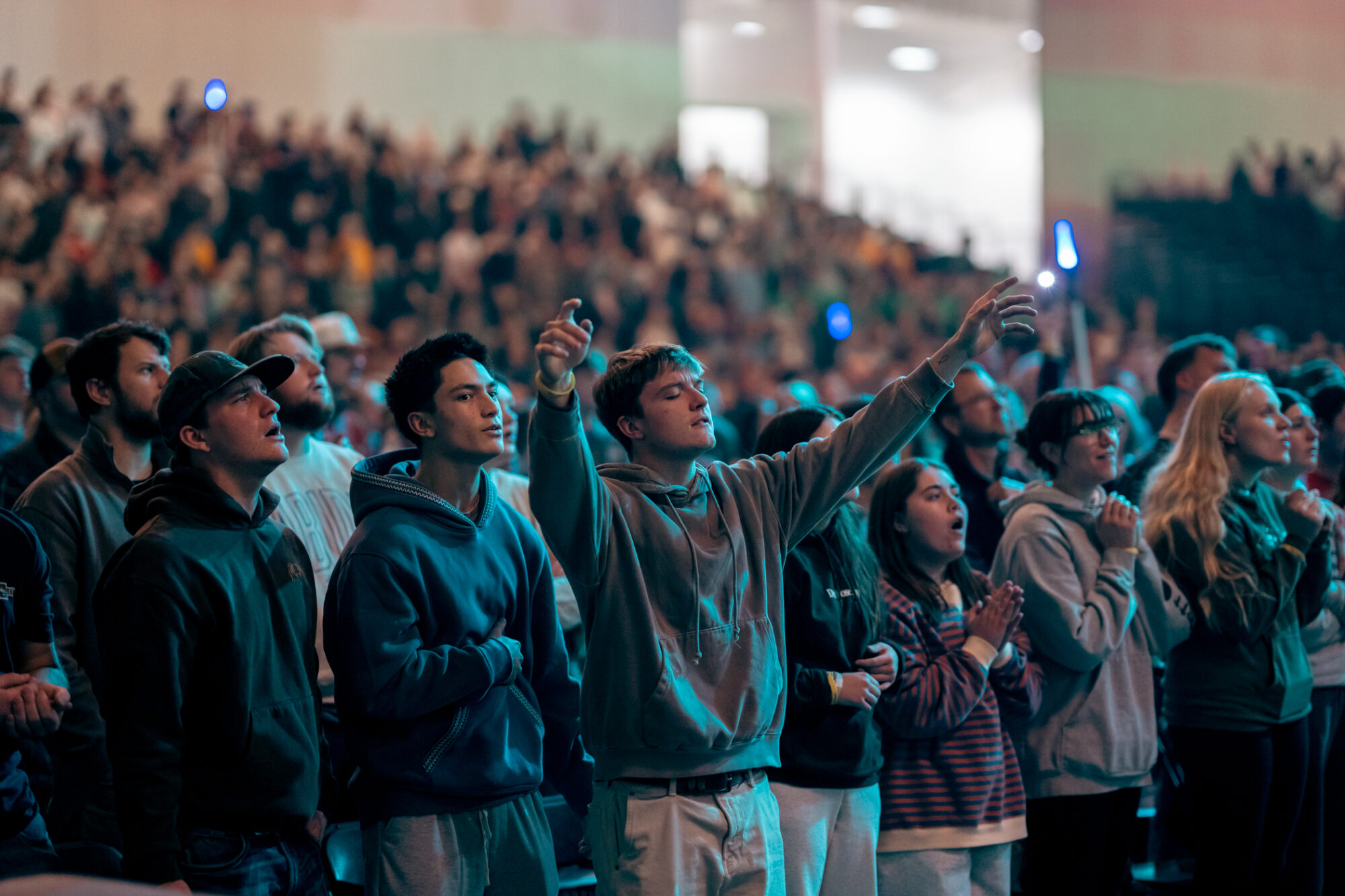
This year, organizers ran the conference twice—back to back. Around 18,000 Gen Zers packed into the convention center in Louisville to hear Piper, Platt, Shai Linne, and Carl Trueman challenge them to make their lives count. But conference organizer Matt Schmucker told me that what surprised him most wasn’t the record attendance. It was the breakout sessions they chose to attend.
“In the past, you would have expected to see maybe something on dating or courtship, which we did offer, or something on God’s take on exercise, which we did offer,” Matt said. But those weren’t the two that filled up first.
“The first one was on friendship with God,” he said. “That was Mike McKinley, who wrote the book Friendship with God. It’s based on John Owen talking about communion with God. So Mike takes this Puritan pastor from the 1650s and distills his message and makes it understandable. And that’s what these kids wanted to hear.”
The second session to fill up was even more surprising.
“The second one, much to our surprise, was Andy Davis on Scripture memory,” Matt said. “Andy Davis has been memorizing verses for 40 years. He does three every day, and he reviews 300 every day. He has 42 books of the Bible memorized. As Spurgeon said of Bunyan, you know, his blood is Bibline. Andy’s blood is Bibline. And I heard people rave about that. I had thought, If we can get 100 kids memorizing Scripture, that would be brilliant. Instead, there were 1,000 or more kids there.”
I love this. But know what makes it even sweeter? At the same time as those kids were learning at Cross, more than 4,000 college students and staff were gathering in Chattanooga, Tennessee, listening to J. D. Greear and Derwin Gray at the Campus Outreach New Year’s conference. A few weeks later in North Carolina, Greear spoke to another 1,800 at Summit Church’s WinCon—they couldn’t fit another person in that space.
Over in Iowa, 7,500 were at the Salt Company conference, hearing from speakers like Sam Allberry, Laura Wifler, and Mark Vance. In fact, Salt had so many in attendance that they outgrew their facilities in Des Moines and are looking for a bigger space for next year. Cross, too, has outgrown its space and will be in a stadium in St. Louis next time around.
Please hear me: I’m not saying this level of spiritual activity is everywhere—not every campus minister I talked to noticed an uptick in interest. I’m not even saying this should be called a revival. There’s a Barna study often cited as showing that Gen Z has more churchgoers than other generations—it doesn’t. But the Gen Zers who go to church do show up more often than churchgoers in other generations. Sociologist Ryan Burge notes that large-scale surveys are showing a pause in the decline of Christianity, but not an upswing. He tells me that a better way to describe it is “growing pockets of spiritual hunger.”
Wes Smith, who leads the college ministry for Summit Church in North Carolina, is in one of those pockets.

“I would say, for us here, it started a little bit last school year, and then this year just accelerated,” he said. “We’ve seen more students coming, which I know a lot of college ministries are experiencing. A lot more students are showing up, a lot more are spiritually interested. We saw a lot of decisions already in the first two months, definitely more than we would normally.”
In the fall, over the course of three evenings, Summit gave gospel presentations to large groups at North Carolina State, the University of North Carolina, and North Carolina Central.
“The amount of people who checked the box to say, ‘Hey, I made a decision for Christ’ was pretty large,” Wes said. “I think the first week it was around 80 people. It’s amazing. And I don’t know if I’d say all 80 of them made authentic decisions—we do a lot of follow-up to figure out exactly what’s going on. But still, at the end of the day, a lot more are making decisions and staying committed to the ministry.
“What’s also interesting is we’re at a couple of major public universities, an HBCU, a private school, and an all-girls school—and we’re seeing it at all of them. I think we were all pretty surprised by the response, because we did three services, three different nights, three different schools, all different preachers, all different things, and every one of them is having this kind of overwhelming response.”
In its annual report last year, InterVarsity Christian Fellowship reported an increase in the number of people meeting regularly to study the Bible together, and four straight years of increased first-time decisions for Christ. Seven thousand people attended its Urbana conference in December, up from 6,000 in 2022.
Cru saw more than 7,000 students at its 12 regional winter conferences, up from around 5,000 two years ago.
“It’s national,” said Mark Vance, the lead pastor at Cornerstone Church in Ames, Iowa, which oversees the Salt Company ministries on 33 campuses across the country. He rattled off a list of increases:
- Ann Arbor, Michigan: 2024 kickoff—320 students. 2025 kickoff—575 students; an 80 percent year-over-year increase.
- Bloomington, Indiana: 400 to 880—a 120 percent increase.
- Denver, Colorado: 586 to 915—a 56 percent increase.
- Tallahassee, Florida: 700 to 1,003—a 43 percent increase.
- West Lafayette, Indiana: 800 to just shy of 1,500—an 88 percent increase.
- Eugene, Oregon: 325 to just shy of 550—a 69 percent increase.
- Syracuse, New York: 80 to 130—a 62 percent increase.
“Here’s the point,” Vance said. “There are no exceptions. Every single place, we’re seeing increased numbers and increased openness.”
Just as remarkable to him is the invitation he received to deliver a lecture at Iowa State in February.
“I was invited by the university’s lecture panels to talk about civility in public discourse and the need for conservative voices that disagree in the public square,” he said. “They invited me, and they’re paying me to do it. I’m going to come and make a common-sense, Christianity-in-the-public-sphere case. I was invited to do so at a major public university as the evangelical pastor in town. . . . Post-COVID, that is utterly unthinkable. It’s much, much more plausible that 5 to 10 years ago, the university would have worked to revoke our student work.”
At their first gatherings this past fall, the Salt Companies collectively saw about 23,500 students. One of them was Maya Gooneratne, a student leader at the University of Oregon. I asked how their kick-off event went.
“It was emotional, because we had been in the Bushnell Chapel originally,” she said. “That’s where I went to Salt my freshman year—at the small chapel of the college next to the University of Oregon. That filled up really quickly. And so when we moved to Straub, the biggest lecture hall on campus, we only took up the bottom level.
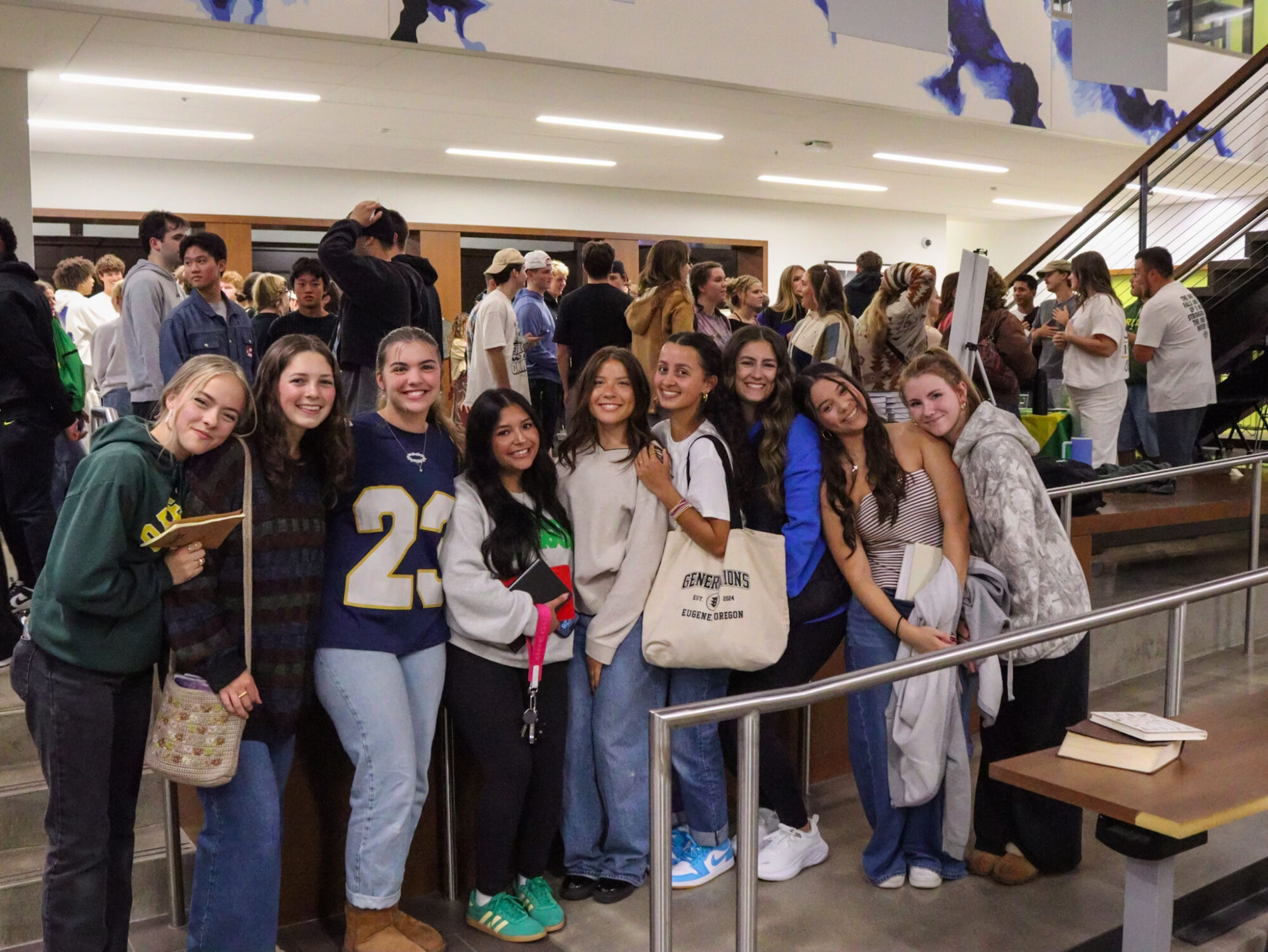
“There’s a balcony too, and last year we [just wanted] to fill that balcony. That was the goal—fill the balcony. And then we walked in [this past fall] and the balcony and more was full. It was just so cool. Sometimes it feels like we’re too big for Straub.”
Maya and her friends wondered if the attendance would dip after the first day. But it didn’t—the balcony is still consistently full. Jack Bertilson is the college director of Salt there.
“There’s something about the messages that Jack has been giving each week that are so convicting, in the best way,” Maya said. “Something about them is really bold—and maybe it’s just because my heart’s more open to it. We’ve been talking about, ‘Wow, this year, for some reason, something feels different.’ The audience seems ready for it. Every time we get to [our small groups], everyone’s like, ‘Wow, that message was so good.’”
I asked Jack if he’d been practicing his speaking over the summer. He said he has spent more time preparing messages this past fall—but not in researching the latest memes or TikTok references in order to relate to a younger crowd.
Here’s what he said: “I hear more and more from students saying that they want me to tell it how it is, to not disguise the truth or make it a little easier to digest. They want me to preach in a way that gives them the most clarity on what the Bible says about how they live their lives.”
So Jack has been working on changing his voice and tone so it’s less distracting. He’s trying to be easier to understand. And he’s trying to be more unapologetically clear and truthful.
“It just seems that the simple, timeless gospel truths are falling fresh on people who have never heard them,” he told me.
Why?
By this point in my reporting, it seemed clear that God’s Spirit was doing something unexpected in Gen Z.
And I was asking the obvious—and almost impossible—next question: Why? Why now? Why these young people?
The first and best answer is that the Lord’s timing is perfect, and his ways are inscrutable. The fullness of time for this movement, however large or long-lasting it turns out to be, has come.
But there are also some interesting storylines we can see playing out.
Broadly speaking, Gen Z are the children of Gen X, who were coming of age and graduating from college in the late 1980s and 1990s. This is the exact time when American church attendance and affiliation began to slip, led primarily by the young adults.
This generation didn’t go quietly. With access to the internet and then social media, they deconstructed their faith in videos, into microphones, and on Instagram.
While exvangelicals are statistically a small group, they were moving in the same direction as Americans nationally—away from submission to God’s authority and toward a celebration of individual rights and a variety of sexual expressions. This was so widespread that by the 2010s, some universities were kicking out student ministries or disinviting speakers who stuck to a biblical view of sexuality.
But throwing off the restrictions of religion didn’t usher in widespread peace and joy. Even with screens that offered almost infinite ways to distract, entertain, identify, and express yourself, all generations—but especially Gen Z—sank further and further into depression, anxiety, and loneliness.
Throwing off the restrictions of religion didn’t usher in widespread peace and joy.
At the same time, Gen Z grew up less familiar with the stereotypes of church and Christianity than their parents. They didn’t carry the same hostility toward it. Over the last couple of years, especially after Donald Trump’s election and the waning of the woke era, campus pastors told me students were no longer protesting Christian speakers, campaigning to remove campus ministries, or telling stories of how Christianity had hurt them.
The latest surveys tell us only 18 percent of Gen Z attend church weekly. Fewer still read their Bibles or go to Bible studies. A whopping 43 percent say they’re nonreligious. They aren’t deconstructing something they feel is restrictive; instead, they’re shrugging at something they think is irrelevant.
And that makes a difference.
Gen Z Explains Why
“I think everyone’s looking for fulfillment,” Maya said. “That’s always been true. But for some reason, I feel that a lot more now when talking to people who haven’t been open to faith but have been stuck in this cycle of looking for different things to ‘complete’ them. Everyone’s just like, ‘This is not working. I promise, like, I’ve tried everything.’”
“Some people that I talk to are definitely overwhelmed,” Ryan said. “A lot of people feel like they’re dealing with too much. And it takes away a lot of that joy.”
Remember, when Ryan was a freshman, he thought he was too busy to add church or Christianity to his life. But when a senior in his fraternity invited him to church, he said sure. Surprised by how many people were there, and curious about why, he kept going, learning about the weight of his sin, the beauty of salvation, and the joy of Jesus. He’s been saved for almost two years, and now he’s the senior inviting freshmen to church. I asked how they respond.
“They say, ‘Yeah, 100 percent,’” he said. “They’re just like, ‘Sure, I’ll go. Yeah. Why not?’”
Gen X rebelled against the idea of being given an identity, purpose, and truth. They wanted to write their own story, and they wanted to give that freedom to their children.
But what sounds like freedom in an Instagram post can be a mess in real life. I asked Kya if it felt unstable to be in control of yourself.
“Very much, very much,” she said. “And knowing that God knows your story, knows what you did in private, knows what you’re going to do—why would I not follow him? He’s [the] all-knowing God.”
She loves feeling accepted, which “is not really shown in this generation,” she said. “Someone is always going to find something about you that they don’t like or that they deem unfit. [It’s good to] know that you have a higher identity and someone who accepts you, who knows it all.”
Mike said Gen Z is confused about love.
“Sometimes we think love is lust,” he said. “Sometimes we think love is fill-in-the-blank. We’ve been confused with thinking social media is the way to find fulfillment, or relationships are the way to find fulfillment, or drugs or alcohol. And so when we hear the gospel, when we hear that somebody loved us even when we were wretched and sinful—that’s what really draws our attention. I know that drew my attention. Even when I did all these horrific things, I was still loved. I can be fully fulfilled with God’s love and mercy. That’s what really drew me in. And I feel like that’s what’s going on with Gen Z as well.”
The generational shift was perhaps most clear in a story Maya told me. While cleaning up after a Salt event, she also grabbed a few beer cans that had been abandoned by another party nearby. A classmate walked by.
“Hey, I know you’re in Salt,” he said. “How come you’re holding a beer can?”
I can imagine the reaction of my Gen X: maybe embarrassment at being thought a prude, or frustration that Christianity was equated with rules about drinking, or a desire to distance ourselves from the legalistic restrictions of the Bible.
That wasn’t Maya’s reaction.
“I was thinking, People are starting to realize what Salt is, even if they’re not religious,” she said. “If you say you’re from Salt, they hold you to a certain standard, which is honestly such a compliment, because it means there’s an example out there of Salt Company people that try to stray from culture like that and focus on each other and faith.”
Abundance: Salvation and Friendship
Last year, Maya brought a friend with her to Salt.
“I feel like I’ve never seen a group of people so happy to be with each other, so enjoying each other’s company,” her friend told her.
Maya was thrilled: “That’s how it feels, so it’s so cool that other people notice it.”
She knows it’s the joy of knowing Jesus. But there’s a secondary joy the students are telling me about—a delight in being with other Christians.
“A lot of our students love to fellowship, especially since they’re new to the faith,” Mike said. “And so the more that they see us—the leaders—gather and have fun and have Bible studies, the more it encourages them, like, Man, I want to hang out as well with them, and I want to fellowship. And so I see our relationships building a lot more. Like, really, really fast.”
What a generous God, who is giving to Gen Z not only salvation for their souls but also restored purpose, identity, and relationships!
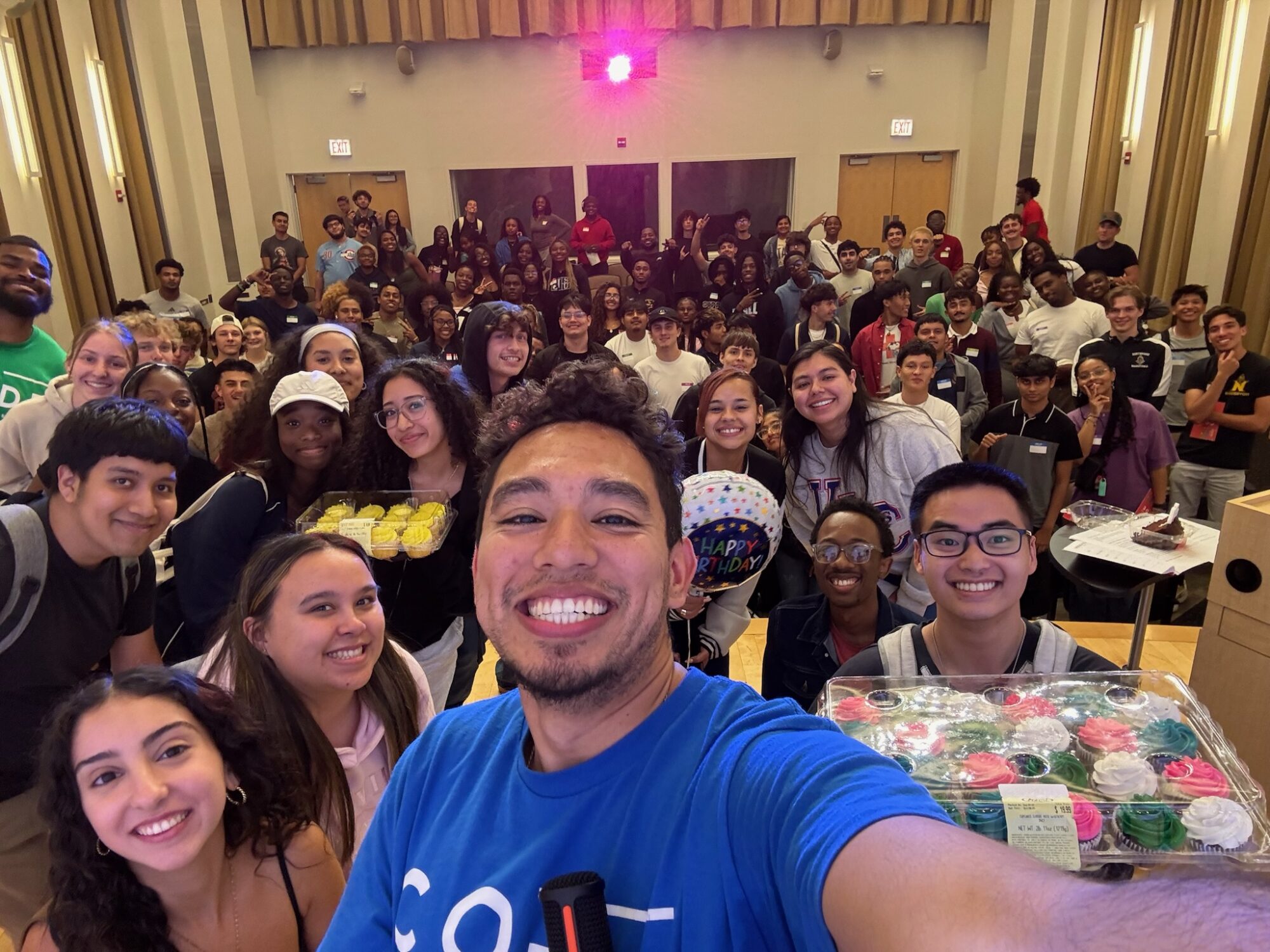
This joy is spilling out all over the place. For example, at UIC, Campus Outreach students are playing a long-running game of tag between classes. They make and eat food together. They head over to their leaders’ home to play games.
“That’s why I love being in this group so much—we can help people that are of this world, that still don’t know who God is, but are hungry for something that the Lord can provide for them, which is full satisfaction,” Mike said. “When they see us having fun, they’re like, Man, I want to know what that group’s like. I want to be friends with them and have fun with them. Maybe that will fulfill me. And little do they know that we provide them with the Lord’s love and we show them that we may not fully satisfy them, but God will. Being able to share that with them is the biggest joy for us. I feel like that’s why we continue to grow.”
At the University of Oregon, Maya’s friend was noticing the same thing.
“She was just like, ‘There’s just a glow about people there,’” Maya said. “It’s just the joy that is really hard to find in other areas. I think then people put it together, like, They all talk about this person called Jesus. That must have something to do with it.”
Maya could tell them: “It does. Totally does.”
This delight in Jesus, in the Word of God, and in each other, is such a contrast to Gen Z’s sad isolation that even a little bit is obvious.
“You don’t even have to verbally share about it,” Ryan said. “Honestly, you can be a little bit of a role model and lead by example, showing how fruitful it can be and how positive it can make your life, showing how joyful you can be in Jesus.”
That invites questions and opens up conversations.
“Most people are very open,” he said. “I don’t think people are closed off. I always like to try to make a connection with the person first—really get to know them. Once you really understand them and connect to them with a little bit from your story, it’s really powerful to share, ‘Hey, this is how I was similar. This is how Jesus affected me. What are your thoughts about it?’ Everybody, I would say, is pretty open.”
That’s a good thing, otherwise Iowa State students might be starting to get annoyed at the evangelistic zeal of the Salt students.
“Honestly, it’s hard to find a student sometimes at Iowa State that hasn’t been approached by another student,” Ryan said. “It’s kind of cool.”
“So many of us feel like we’re so lucky to know God and have that joy,” Maya said. “We want that for everyone else that we see on campus. So that’s the biggest incentive: I know how good it can be. And I want that for you. Cause I know that no one’s told you that before.”
Revival?
Tim Keller defined revival as “the intensification of the ordinary operations of the Holy Spirit,” which are “conviction, conversion, assurance, and sanctification.”
“When those operations are intensified across a church, denomination, city, or country, you’ve got revival,” he said. “And when you’ve got revival, three things usually happen”: sleepy Christians wake up, nominal Christians are converted, and non-Christians come to faith.
I don’t know if what we’re seeing is intense enough to be officially labeled a revival yet, or at all. The number of lives changed this past fall is still in the range of hundreds, not hundreds of thousands.
But I do feel confident saying that Gen Z has been given more wealth, education, technology, and freedom than any other in the history of the world—and they aren’t thriving. And I do know that some of them—more than before, more than expected—have been drawn to the Lord in the last six months.
They’re telling stories of sleepy Christians waking up, nominal Christians being converted, and non-Christians coming to faith on college campuses. They’re telling stories of conviction of sin, changed lives, and an almost glowing joy.
Whatever we want to call this, it’s certainly an occasion to rejoice and give glory to the only One who causes, sustains, or closes a generational or geographic revival.
But that’s not all this is.
International
After I wrote a story about what was happening in college ministries for The Gospel Coalition this past fall, I saw an email from Tim Savage, TGC’s international director:
Yesterday, we finished a three day conference in Stockholm, Sweden. Two decades ago young Swedish adults were skeptical of Christianity and scoffed at Christ. Calvary Stockholm church had 6 or 7 attending on Sunday morning and was close to shutting down. This Sunday every seat at Calvary Stockholm, on the floor and in the balcony, was filled, with many young Swedish men attending, some traveling over an hour by train, because “this church preaches the word of God!” . . . It’s remarkable what the Lord is doing in the “secular” European north.
Hmm. Well, you know what I did. I sent out another round of questions, this time to pastors overseas: “Is there increased spiritual engagement among the youth by you?”
No, said pastors in the Middle East, China, and India.
But I got yeses from Norway and Sweden, from Canada and Australia and Brazil. I heard this story from Jairo Namnún, a pastor in the Dominican Republic:
“We had a man come in, and he was selling us toys for our nursery,” Jairo said. “He came two Sundays ago. And when he came in, he saw so many people under 20, he started crying. And we were like, ‘What happened?’
“He said, ‘I need to meet the pastors.’
“Because we have two services, I’m usually in a small green room between the services. But I went and talked to him, and he was really crying and saying, ‘I am an agnostic’—which isn’t common in our culture—‘I’m an agnostic, but I need to come in and see what’s happening here, because I see all these youth, and I can’t believe these people are coming to church.’
“And he said, ‘I’m not selling you the toys—I’m giving them to you now. Just take them and I’m gonna keep coming.’ And we thought, Well, he’s probably just emotional.
“But he kept coming. He was sitting next to us this Sunday. So it’s not a usual thing. It’s something very unique and fresh that the Lord is doing.”
I love this story, because not only is the Lord pulling Gen Z to himself, and not only is he doing that around the world, but he’s also using them to draw others to himself. The students I talked to are sharing the gospel with their brothers and sisters, their parents, their aunts and uncles and grandparents. Multiple pastors told me they’re also seeing higher levels of engagement from those in their 30s and 40s. If it pleases the Lord, maybe this longing for him could spread—not only passed down from one generation to another but also passed back up, from the children to their parents.
And wouldn’t it be just like Lord—who chose the stuttering Moses, the youngest son of Jesse, and the little town of Bethlehem—to use the youngest, saddest, most lonely generation to light up the world?