



Revelation 11 depicts “two witnesses” who minister for “1,260 days.” These witnesses possess authority to “[consume] their foes” with “fire” that comes from “their mouth.” They also “have the power to shut the sky, that no rain may fall” and “to turn [waters] into blood” and “strike the earth with every kind of plague” (11:3, 5–6).
The identity of the two witnesses is one of the most contested parts of Revelation. Some commentators think they are two individuals who minister during a seven-year period known as the great tribulation that precedes the millennium. Some even argue they are none other than Moses and Elijah in the flesh, returned to earth from heaven. These two individuals adorn themselves in sackcloth and perform astounding miracles by invoking literal fire, withholding rain, and turning water into blood.
Such a reading, though attractive, cuts against the grain of Revelation. The key to interpreting this (or any other) passage in Revelation is to read the text in its immediate context and against the background of the Old Testament. In 1:1, John informs his audience that the contents of Revelation were symbolically communicated to him.
Futurists generally interpret Revelation “literally” or physically, whereas those who view the book as a recapitulation of visions (redemptive-historical idealists) mostly interpret it symbolically. The identity of the two witnesses of Revelation 11 is a wonderful test case for the two approaches.
Everyone agrees that Revelation 11 contains symbols; the disagreement lies in the degree. Just how symbolic is Revelation 11? Let’s consider the identity of the two witnesses and see why we should understand them symbolically as a reference to the church.
Two Witnesses as Lampstands
John describes the two witnesses as “two olive trees” and “two lampstands” (11:4). Obviously, they aren’t literal olive trees or literal lampstands. John uses these symbols to unpack the witnesses’ identity.
Fortunately for us, John has already interpreted the meaning of the lampstand. Listen to what Jesus tells John in the book’s first vision: “The seven lampstands are the seven churches” (1:20). Here we have Jesus clearly explaining the meaning of a symbol. Lampstands symbolize the churches.
The connection between the church and lampstand is natural. Remember that lampstands were found in the temple (Ex. 37:17–24). The priests kept the lampstand lit at all times (Lev. 24:4). The lampstand itself possessed symbolic value. The lampstands weren’t simply in the temple to add to the decor or to keep the priest from tripping in the Holy Place.
The lampstand possessed symbolic value: God’s glory dwelling among his people (Zech. 4:1–10). The Old Testament often depicted God’s presence as a fire or a bright light, so it makes sense that the seven lamps on the lampstand symbolize God’s glory.
The two witnesses in Revelation 11 are, then, the church. We know this because Jesus explains the meaning of this symbol to John in 1:20 and because of the Old Testament background of the lampstands.
The two witnesses aren’t two literal individuals. They represent the church’s identity as the voice of God on the earth. That’s why there are two. Remember what Deuteronomy 19:15 says: “A fact must be established by the testimony of two or three witnesses” (CSB).
The two witnesses aren’t two literal individuals. They represent the church’s identity as the voice of God on the earth.
Let’s put all the pieces together: The two lampstands in Revelation 11 symbolize the prophetic dimension of the church. It may not be a coincidence that only two of the seven churches in Asia Minor were spiritually healthy—Smyrna and Philadelphia (2:8–11; 3:7–13).
Literal vs. Symbolic
We are now in a better place to appreciate John’s use of other images in 11:3–13 to describe the church as the two witnesses. Here are two tables that illustrate the differences between the recapitulation and futurist perspectives.
The first is the recapitulation perspective, an approach that views the whole of Revelation as generally cycling through the same event from various vantage points. This view largely interprets the book as symbolic in nature.
Redemptive-Historical Idealist
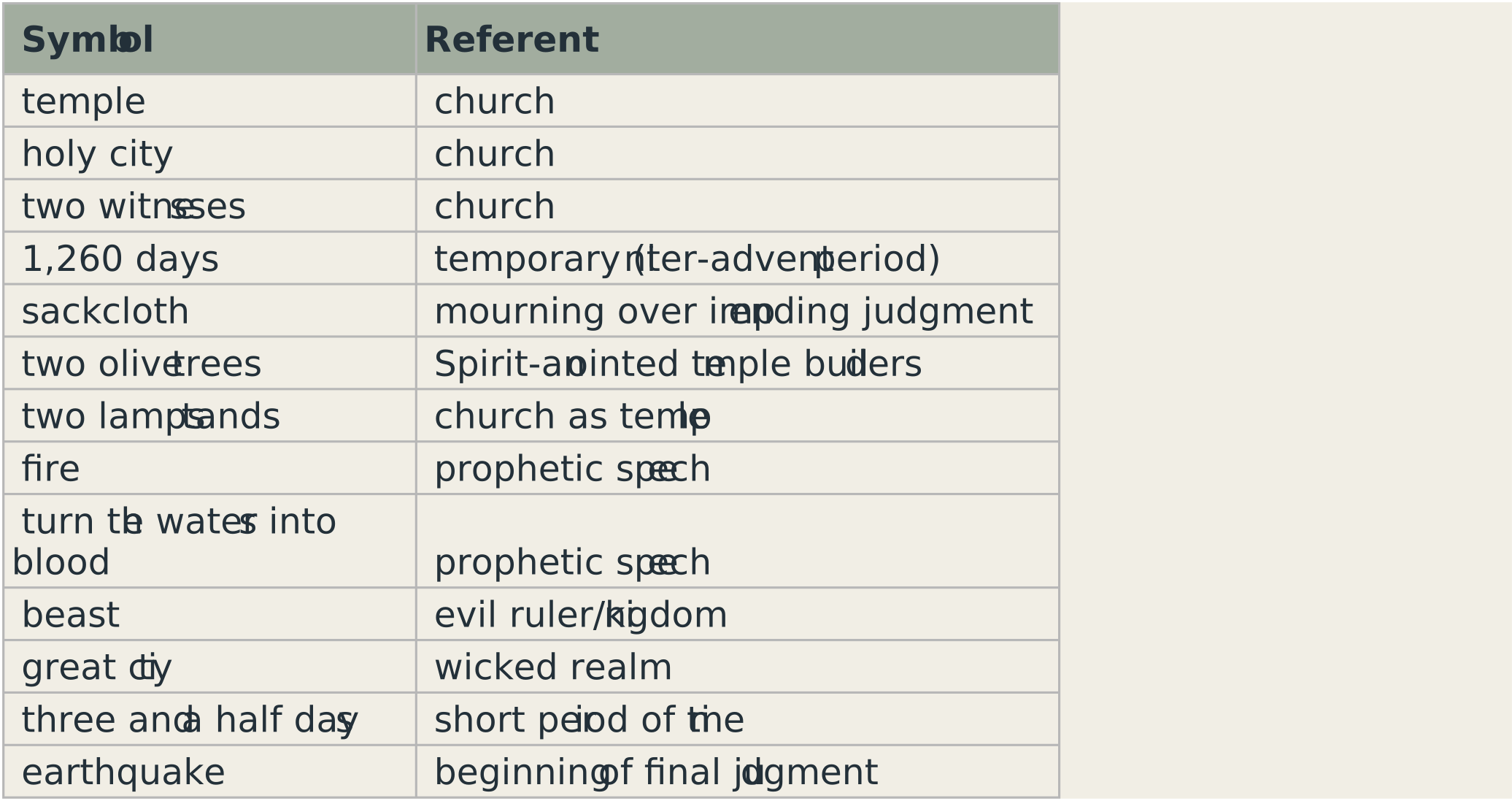
You’ll see that the recapitulation approach interprets 11:3–13 as trenchantly symbolic. Notice, too, how each symbol contains a historical referent that occurs in the flow of redemptive history between Christ’s two advents. Simply because John invokes a symbol doesn’t mean it lacks a genuine reality behind the figure of speech. I’ve tried my best to capture the referent of each symbol.
Contrasting a symbolic reading of Revelation 11 stands a “literal” or physical interpretation. Here I use three categories: symbol, literal description, and referent. Even a futurist admits the presence of symbols in 11:3–13. The literal description category is just that: a physical description. When John says “fire,” he means physical fire, as Robert Thomas argues: “God will once again use literal fire to protect His messengers.”
Futurist
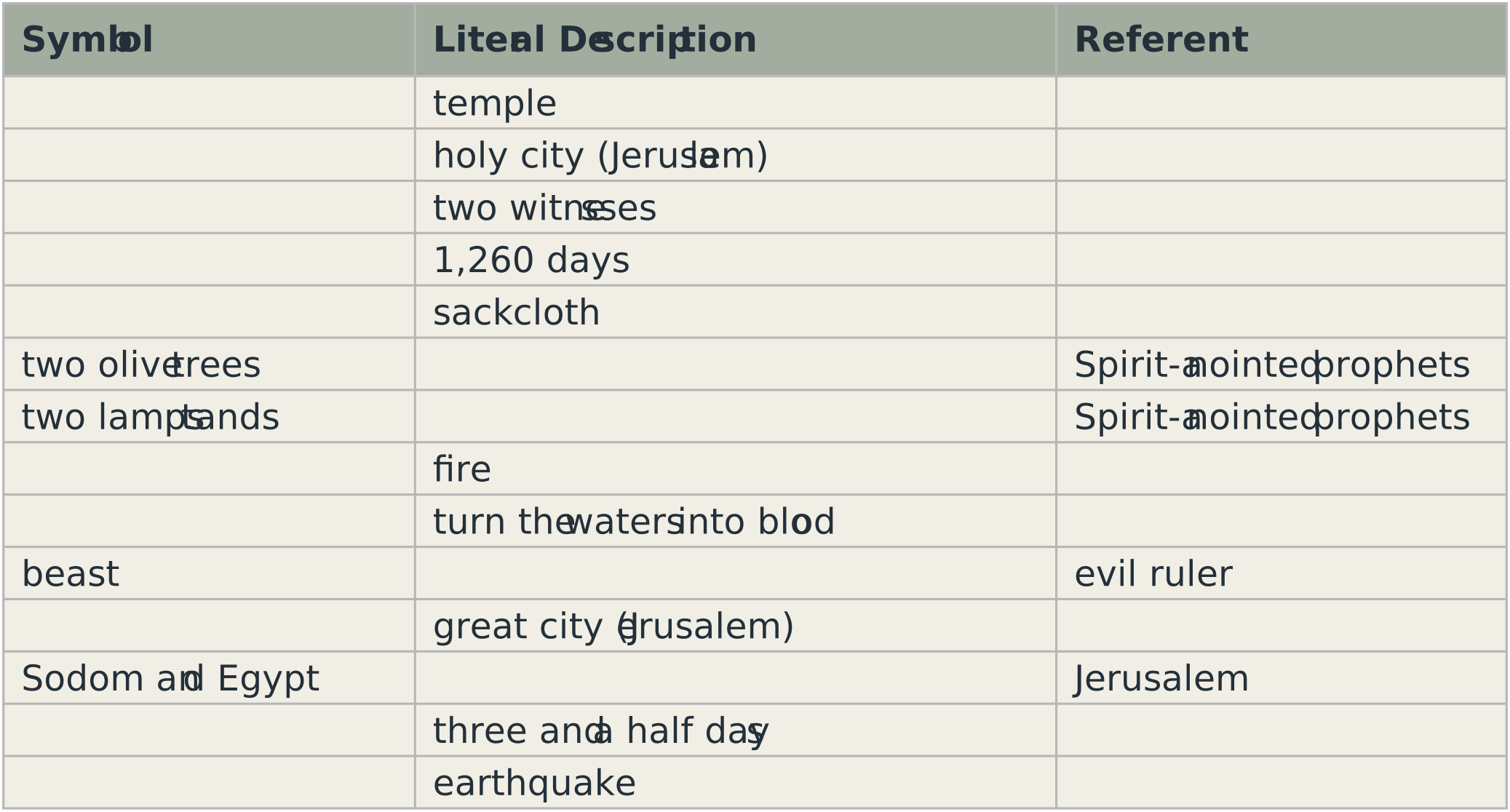
According to futurists, John oscillates between physical and symbolic descriptions. When John says that the two witnesses are “olive trees” and “lampstands,” he’s not describing a physical reality but a symbolic one.
So in this case, the futurist and the redemptive-historical idealist share common ground. Even the “beast” that emerges from the Abyss isn’t a physical beast but a symbolic one—an evil ruler. Nevertheless, futurists generally argue that the two witnesses are two individuals who minister during the seven-year tribulation that precedes the millennial kingdom.
Revelation 11 Applied
Both approaches have strengths and weaknesses, and both can share a high view of Scripture. Disagreement lies in the apocalyptic nature of Revelation, how the book talks about itself, and how the Old Testament informs Revelation’s meaning. I think a symbolic reading does the most justice to all three.
Revelation 11:3–13 doesn’t describe a literal appearance of Moses and Elijah wielding supernatural powers during the seven-year tribulation. This is a passage far more relevant to the churches in Asia Minor and the church today.
This is a passage far more relevant to the churches in Asia Minor and the church today.
Revelation 11 is about God’s people proclaiming the gospel to a rebellious world between the two comings of Christ. Thomas Schreiner rightly summarizes this passage: “The church will be persecuted but is also protected and ultimately vindicated.”
Though the world will do its worst to the church, we can be confident that God will preserve us and raise us up at the end of time and usher us into his glorious presence.
Join The Carson Center mailing list
The Carson Center for Theological Renewal seeks to bring about spiritual renewal around the world by providing excellent theological resources for the whole church—for anyone called to teach and anyone who wants to study the Bible. The Center helps Bible study leaders and small-group facilitators teach God’s Word, so they can answer tough questions on the spot with a quick search on their smartphone.
Click the button below to sign up for updates and announcements from The Carson Center.
Join the mailing list »