

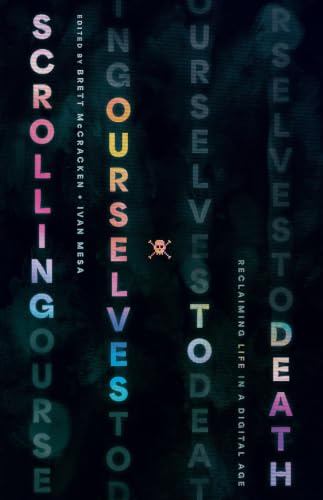
Scrolling Ourselves to Death: Reclaiming Life in a Digital Age
Written by Brett McCracken and Ivan Mesa, eds Reviewed By Matthew WiremanAs a homage and contemporary appropriation of Neil Postman’s key work, Amusing Ourselves to Death, on technology’s effects on the life of the mind in 1985, Scrolling Ourselves to Death is a contemporary read with fourteen engaging essays. These diverse essays divide into three parts: key insights from Postman’s work, practical challenges for contemporary communication, and the answer the church can offer to the milieu. The book provides insights into how Christians can effectively share the good news of Christ, even while the culture has its figurative and literal heads down in their phones. This volume proves to be a timely and welcome guide forward for the church and those looking to tread a different path.
Brett McCracken introduces the series of essays with a dismal situation: “Heads down. Phones out. Fingers scrolling. This is the humanoid posture of our age…. From the rising of the sun to its going down, we scroll our way through the day. We scroll our way through life. And we are scrolling ourselves to death.” (pp. 1–2). From distracted-driving car accidents to the increasing prevalence of loneliness and depression linked to smartphone use, this book will serve as a sobering and remedial aid if you seek to evaluate your own practices and help others enjoy silence, solitude, meditation, and obedience to Christ. Much of our problem is that we are so distracted by digital entertainment that we are unable to enjoy the physicality of the immediate world. McCracken keenly shows a simple way forward out of the morass: “Once we recognize this fact—that television is fundamentally oriented around commandeering your attention so it can be monetized—we can begin to resist its pull” (p. 9).
Each essay in this helpful volume is a reminder that technology is not neutral but has a telos it seeks to move us toward, with sometimes suspect foundations that can be antithetical to biblical teachings. Patrick Miller’s fine essay warns us of the ever-so-subtle movement from amusement to addiction, as app developers and engineers have worked together with psychologists to understand human behavior and mastermind devices that keep you enraptured and coming back for more. The move toward addiction has been rather sudden as a society, shortening attention, short-circuiting the beauty of deep thinking, and fostering impatience in consideration of others’ opinions. He warns, “Your phone is a digital syringe. It’s a gateway to lifelong, brain-altering, relationship-destroying addiction” (p. 21).
Joe Carter follows up by tracing the history of various technologies and how they have influenced our plausibility structures and theological methodology. Jen Pollock Michel issues a fateful warning of the siren calls of social media, justifying our intimate lives so much so that we commoditize our relationships and prostitute ourselves, where “self is a commodity” and “reality is entertainment” (p. 48). Hans Madueme insightfully outlines our current cultural moment of conspiracy theory and relativity. Samuel James aptly argues that “media is powerful because it directs our attention” (p. 78). In other words, instead of being active observers and agents in the world, media creates habits of passive engagement with the world. Additionally, the nature of 60-second and 5-minute videos touting health claims, anecdotal evidence, and personal (non-professional) remedies does not lend itself to the research necessary to verify that the snake oil remedies actually work.
The essays then shift to the practical implications for today’s communicators of the gospel. Collin Hansen surmises that, if unchecked and unmonitored, social media will become the primary tool for spiritual formation rather than the local church. In fact, the local church has become another option or commodity to be judged and tentatively accepted. Even then, the offerings of the church are valuable insofar as they “amuse and please” us (p. 97). Thaddeus Williams’s essay offers a way forward to cut through the incoherence of today’s discourse by providing clarity, sharp lines, and integration of mind, body, and soul. Nathan Finn offers a harrowing warning about the dangers of adopting trendy, pragmatic approaches to spiritual formation by forgetting our history as believers. We must repent of our spiritual amnesia that assumes “we know more than everyone who came before us because of our constant access to nearly limitless content” (p. 135). Finn then offers a path forward through practical steps and the appropriation of the old paths of wisdom, which will prove a boon for the storm-tossed soul.
The third part of the book offers a promising way forward for the church. Shane Morris encourages us not to be Luddites but to “use media creatively but cautiously” (p. 147). Further, McCracken’s essay urges us not to be mere consumers of content but doers as well. He says, “We are overstimulated but underactivated” (pp. 163–64). As much of the book proposes, the antidote to the present sickness is to be intentionally engaged in the immediate world around us. Or as Jay Kim’s essay suggests, we must reaffirm and “cling to embodiment” (p. 191). The church must embrace the fact that “meaningful connection is always inconvenient and demands high commitment” (p. 193). Finally, Andrew Spencer admonishes us to heed Aldous Huxley’s warning in Brave New World, not by becoming “technologically backward to correct course” but to “become aware of how technology shapes culture” and the church (p. 216).
Ivan Mesa ends the book with a medicine that is bitter at first but ultimately sweet to the soul. The church must reclaim its historical identity to offer a clear north star to the swirling ideologies and dizzying pixels. So many in our day have adopted technology without understanding its ramifications for our souls. From shorter attention spans to discontentment with life in general, it will be the brave who do something about it. It begins in their own consumption and in helping move people toward an integrated life. A helpful resource for churches, each essay also provides excellent discussion questions for local congregations to warn, rebuke, and guide those who desire to heed the warning signs.
Matthew Wireman
North Greenville University andChrist the Redeemer Church, Greenville, South Carolina, USA
Other Reviews in this Issue