
Honor, Patronage, Kinship, and Purity: Unlocking New Testament Culture
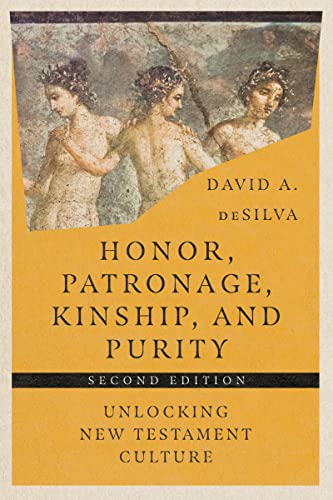
Written by David A. deSilva Reviewed By Chungyeol LimDavid A. deSilva, Trustees’ Distinguished Professor of New Testament and Greek at Ashland Theological Seminary, is a leading voice in cultural and anthropological approaches to Scripture. Among his more than twenty-five books, Honor, Patronage, Kinship, and Purity (Downers Grove, IL: InterVarsity Press, 2000) has been his most influential and widely used work, shaping both scholarly and pastoral engagement with the cultural world of the New Testament. The appearance of this substantially revised second edition—twenty-two years after the first—invites fresh attention to a book that has already formed readers across several languages, including Armenian and Korean.
DeSilva describes this volume as his “signature book” (p. ix), and for good reason. Alongside Bruce J. Malina’s The New Testament World (3rd ed. [Louisville: Westminster John Knox, 2001]), it has served as a foundational introduction to cultural-anthropological interpretation. What distinguishes deSilva is his ability to pair cultural description with sustained exegetical application, allowing readers not only to learn the cultural model but to see it work within the biblical text.
The book’s structure remains unchanged in the second edition: four cultural constructs—honor (chs. 1–2), patronage (chs. 3–4), kinship (chs. 5–6), and purity (chs. 7–8)—are each introduced through Greco-Roman and Jewish sources and then applied to New Testament passages. This paired approach continues to be one of the book’s chief strengths, as it trains readers to integrate background study with actual interpretation. deSilva also preserves the original purpose of the book: “to equip readers to become better readers of Scripture so that they may become better shapers of disciples and faith communities” (pp. 8–9). The pedagogical intention that shaped the first edition continues to guide this one.
What justifies calling this a “completely revised edition,” as deSilva himself does (p. x)? The revision is not cosmetic nor limited to the addition of a closing chapter. Rather, the entire work has been read through twice and reshaped “to reflect precisely the book [he] would have written had [he] first attempted it in 2021 rather than 1999” (p. x). The result is not a new structure but a thoroughly refreshed content. DeSilva reports a twenty percent increase in total volume; however, the significance of the revision lies not in quantity but in the integration of two decades of scholarship and of his own deepened engagement with ancient sources.
The revisions take two major forms. First, the book incorporates more recent developments in New Testament studies. DeSilva interacts with works such as John M. G. Barclay’s Paul and the Gift (Grand Rapids: Eerdmans, 2015) and Te-Li Lau’s Defending Shame (Grand Rapids: Baker, 2020), integrating insights that were not available at the time of the first edition. Second, he enriches his treatment of ancient sources. For example, in the discussion of honor and shame, he strengthens the argument that honor is not merely externally bestowed but internally validated. To this end, he supplements the earlier use of Epictetus with additional references to Seneca, drawing on Stoic notions of self-approval (p. 34 n. 41). These enhancements demonstrate a more comprehensive and nuanced command of the cultural dynamics under discussion.
Is this revised edition worth reading for those familiar with the first? Absolutely. Readers of the original edition will notice a more mature voice, deeper engagement with ancient evidence, and updated scholarly conversation. In many respects, this is the book deSilva would have written had he possessed today’s resources and perspectives. Given the frequency with which the first edition is cited, instructors who have used the book in the classroom will welcome the refreshed material and updated bibliographic resources (pp. 357–64), which have been carefully curated and expanded.
For new readers, the book remains one of the clearest and most engaging introductions to cultural approaches to the New Testament. DeSilva’s balanced use of ancient sources, sociological insights, and exegetical illustrations makes this volume an especially accessible starting point. His explanations are lucid and pastorally sensitive, enabling students, pastors, and lay readers to see how cultural dynamics illuminate the biblical text. This revised edition continues to serve as an invaluable bridge between historical-cultural study and the interpretive practice of Christian communities.
If there is a limitation, it is one inherent to cultural-anthropological models more broadly: the risk of over-systematizing cultural constructs that were often fluid, contested, or varied across regions and social strata. While deSilva is careful and generally avoids this pitfall, readers should remain aware that cultural models, though illuminating, cannot account for every textual nuance. Yet even here, the book functions well, offering not an inflexible template but a set of tools to be used judiciously.
In sum, this thoroughly revised edition retains its place as deSilva’s signature contribution and offers a richer, more comprehensive gateway into the cultural world of the New Testament. By integrating two decades of scholarship and deepening its engagement with ancient materials, this edition will serve both first-time readers and long-time users exceptionally well.
Chungyeol Lim
Anyang University, Anyang, Gyeonggi-do, South Korea
Other Reviews in this Issue