
When it comes to commentaries on Genesis—for scholars and students alike, whether “critical” or “confessional” in nature—there is no shortage of options. David L. Petersen’s contribution to the Old Testament Library series is a recent addition to the embarrassment of riches surrounding this formative, foundational book. Petersen maintains from the outset: “Genesis is a book. That claim might seem odd, but Genesis has rarely been examined and interpreted as a book” (p. 1).
To be clear, however, Petersen remains persuaded that both the Supplementary and Fragmentary Hypotheses (as opposed to the traditional Documentary Hypothesis) may be effectively combined. That is, Petersen unabashedly asserts that the “pre-Priestly material” within Primeval history (Gen 1–11) developed independently from the “pre-Priestly” literature in Genesis 12–36 and that much the same may be said of the “Joseph novella” (p. 10). In fact, Petersen explicitly states (cf. pp. 9–12, esp. p. 10) that he follows Rolf Rendtorff’s lead, particularly as laid out in The Problem of the Process of Transmission in the Pentateuch, trans. John J. Scullion, JSOTSup 89 (Sheffield: Sheffield Academic Press, 1990).
Thus, by way of example, while Petersen treats Genesis 6:1–8:22 in a single chapter (the commentary itself contains over fifty chapters), there are two distinct units which are noted therein, namely, the “Pre-Priestly Version of the Flood” (pp. 74–77) and the “Priestly Version of the Flood” (pp. 77–81). That said, Petersen argues that Genesis 6:5—not Genesis 6:1–4, i.e., the story of the so-called nephilim—is the proper beginning of the Noachian Flood Narrative (p. 69).
Aside from a relatively thorough, albeit somewhat brief, introduction (pp. 1–37) which covers topics like Text, Method, and Historical Background (noting Petersen’s special emphasis on Geography, i.e., Ortsgebundenheit, pp. 22–25) the book rounds off with two indices: (1) Scripture/Ancient Sources, and (2) Subjects/Authors. Regrettably, the Author Index fails to provide every instance of every individual noted in the commentary.
Petersen’s translations are frequently distinctive. For instance, he renders the opening verses of Scripture as, “When God began to create the heavens and the earth—the earth was empty wilderness, the watery deep was dark, and a wind from God swept over the water—God said, ‘Let there be light!’ And there was light” (Gen 1:1–3; p. 30).
Petersen translates Genesis 1:27 as, “So God created the earth creature in his image. In the image of God he created him, male and female he created them” (p. 31), noting within the commentary that, though it may sound “prosaic,” Genesis 1:27 may be restated as, “So God created the earth creature, … but God really created the earth creature as something more than an individual: they are male and female” (p. 36).
Petersen often includes “literal” translations, including wordplay/pun explanations and some alternate renderings, in his footnotes. For example, concerning Genesis 3:20 Petersen renders the verse as, “The man named his wife ‘Eve’ because she was the mother of all (human) life,” with a note indicating that “Hebrew ḥawwâ (Eve) is a wordplay on ‘life,’ ḥay” (pp. 47–48). Elsewhere, Petersen renders Genesis 6:6 as, “YHWH regretted that he had made humanity on the earth. He was terribly sad” (literally, “It was sad to his heart”; pp. 69–70).
To critique, there is a somewhat disturbing paucity of references to academia at large. For instance, from Genesis 37 to 52 (pp. 304–81) I could find only two references to other scholars. This is particularly surprising given the (deserved) reputation of this series for rigorous engagement with current scholarship; a commentary of this stature should be expected not only to interpret the text but also to situate that interpretation within ongoing academic discourse, enabling readers to assess competing views and developments in the field at large.
Text-critically, Petersen is right to affirm: “Though there are occasional scribal errors in the MT of Genesis, instances in which textual criticism must weigh the evidence from both ancient texts and versions, the MT provides an excellent basis for the translation and comments provided here” (p. 27). Even so, his commentary offers little to no sustained engagement with the Masoretic accentual system and its potential implications for exegesis and/or interpretation. In addition, the notes themselves are often rather workmanlike—solid, but occasionally lacking the nuance, texture, and sensitivity that one might expect from someone seemingly well-acquainted (cf. pp. 25–27) with Ron Hendel’s magisterial work, namely The Text of Genesis 1–11: Textual Studies and Critical Edition (New York: Oxford University Press, 1998). Genesis 6:14a provides an excellent test case. Petersen renders this clause (without further comment) merely as, “Make for yourself an ark out of wood; make compartments in the ark.” Aside from disputes concerning the Hebrew term “gopher,” which (as mentioned) Petersen simply ignores, it has long been recognized that “reeds” is not only an acceptable textual alternative to “compartments” but superior. For more details, see Dustin G. Burlet, Judgment and Salvation: A Rhetorical-Critical Reading of Noah’s Flood in Genesis (Eugene, OR: Pickwick, 2022) and Burlet, “Antiquity and Arithmetic: Hyperbole and a Rhetorical-Critical Reading of Noah’s Ark,” Canon & Culture 18 (2024): 131–71. Lastly, I am baffled why Petersen chose BHS and not BHQ as his basis (p. 25).
Lexically, Petersen effectively differentiates between each of the various Hebrew stems (Qal, Piel, Niphal, etc.) thus mitigating many possibilities of “exegetical fallacies.” Unfortunately, while HALOT and ThWAT (the German counterpart to TDOT) both appear in the abbreviations list (notably, though, DCH, Gesenius [18th ed.], and BDB do not) Petersen makes scant references to them (cf. p. 375). The same holds true for grammar. To be clear, while IBHS is listed among Petersen’s reference tools (but not GKC or others, such as DG, BHRG, Joüon/Muraoka, or Brockelmann’s Hebräische Syntax), I was unable to find very many points where Petersen meaningfully engages its insights (pp. 151, 214, 223). In addition, since each of these instances are explicitly used within IBHS as examples, it would have behooved Petersen to have leveraged its index more. For instance, I am sure that readers would have appreciated clarifying the full (grammatical/syntactical) import of Genesis 9:6 by referring to IBHS sections 11.2.5d, 23.2.2f, and 37.5a. In a similar manner, citing IBHS section 35.3.2c could have, perhaps, potentially benefited certain aspects of Petersen’s exegesis of Genesis 8:3 and 8:7.
Despite these occasionally perplexing limitations, any new commentary on Genesis is welcome, especially from a scholar as seasoned and uniquely qualified as David L. Petersen. Genesis is sure to earn its place alongside Gerhard von Rad’s 1972 work in the self-same Old Testament Library series as a “go-to” resource for scholars, students, and ministry leaders alike.
Dustin Burlet
Millar College of the Bible
Winnipeg, Manitoba, Canada
Other Articles in this Issue
This essay develops a distinctly Christian theology of free speech in response to mounting threats of censorship across Western societies...
In every generation and in every place, there is a need to identify, equip, and encourage new leaders for Christ’s church...
Missio Trinitatis: Theological Reflections on the Origin, Plan, and Purpose of God’s Mission
by Brian A. DeVriesTrinitarian theology provides the basis for understanding missio Dei...
This essay argues that monogamous sexually-differentiated marriage (MSDM) is uniquely revealed through Christ’s relationship with the church in Ephesians 5:30–32...
Other Reviews in this Issue
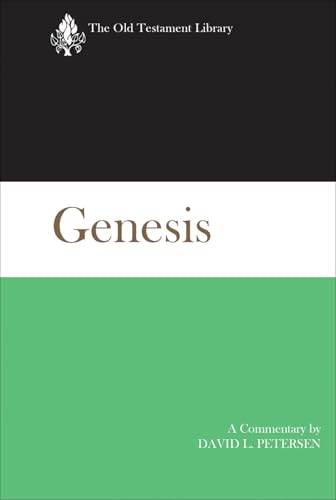
Genesis
Reviewed by Dustin Burlet