
Volume 50 - Issue 3
Achan and Annihilation? Hyperbolic Language and the Justice of Yahweh in Joshua 7
By Jared August & Jonathan LoughAbstract
The conquest language of Joshua is often taken as hyperbolic, particularly in chapters 6–10. This essay attempts to apply a hyperbolic reading to Joshua 7 and the Achan account, proposing that such a reading deals best with the larger context as well as the textual details. This interpretation suggests that by making himself an enemy of Yahweh, Achan suffered the same fate as the pagan Canaanite nations: Achan, as the enemy combatant, was executed, his livestock killed, his possessions destroyed, and his family dispossessed from their inheritance in the land.
In recent years, a number of scholars have suggested that the dramatic language regarding complete annihilation in Joshua should be understood as hyperbolic or as intentionally exaggerated. Although often differing in the details, scholars such as Wolterstorff,1Nicholas Wolterstorff, “Reading Joshua,” in Divine Evil? The Moral Character of the God of Abraham, ed. Michael Bergmann, Michael J. Murray, and Michael C. Rea (New York: Oxford University Press, 2010). Walton,2John H. Walton and J. Harvey Walton, The Lost World of the Israelite Conquest (Downers Grove, IL: IVP Academic, 2017); John H. Walton, Ancient Near Eastern Thought and the Old Testament: Introducing the Conceptual World of the Hebrew Bible, 2nd ed. (Grand Rapids: Baker Academic, 2018). Zehnder,3Markus Zehnder, “The Annihilation of the Canaanites: Reassessing the Brutality of the Biblical Witness,” in Encountering Violence in the Bible, ed. Markus Zehnder and Hallvard Hagelia (Sheffield: Sheffield Phoenix, 2011), 263–91. Copan and Flannagan,4Paul Copan, Is God a Moral Monster? Making Sense of the Old Testament God (Grand Rapids: Baker, 2011); Paul Copan and Matthew Flannagan, Did God Really Command Genocide? (Grand Rapids: Baker, 2014). Among other works by Copan and Flannagan, see “The Ethics of ‘Holy War’ for Christian Morality and Theology,” in Holy War in the Bible: Christian Morality and an Old Testament Problem, ed. Jeremy Evans, Heath Thomas, and Paul Copan (Downers Grove, IL: IVP Academic, 2013). Howard,5David M. Howard, Jr., “Destruction and Dispossession of the Canaanites in the Book of Joshua,” Themelios 49.3 (2024): 589–605. Kitchen,6K. A. Kitchen, On the Reliability of the Old Testament (Grand Rapids: Eerdmans, 2003), especially chapter 5, “Humble Beginnings—Around and in Canaan,” 159–239. Hoffmeier,7James Hoffmeier, Israel in Egypt (New York: Oxford University Press, 1996), 33–43. and others have argued that the focus of Joshua’s conquest is on the displacement of Yahweh’s enemies rather than their extermination.8For a helpful resource that presents differing perspectives on the conquest, see Show Them No Mercy: Four Views on God and Canaanite Genocide, ed. Stanley N. Gundry, Counterpoints (Grand Rapids: Zondervan, 2003) and Charlie Trimm, The Destruction of the Canaanites: God, Genocide, and Biblical Interpretation (Grand Rapids: Eerdmans, 2022). This essay builds upon this suggestion by proposing that a similar interpretive approach be applied to the supposed slaughter of Achan’s family in Joshua 7:22–26. In this view, Achan’s judgment is intentionally hyperbolic: Achan himself is executed, his livestock killed, his possessions destroyed, and his family dispossessed.9The contention that Joshua 7:22–26 is hyperbolic should not be understood as a theodicy but as an attempt to consider the textual particulars of the passage.
This essay considers the evidence in three sections: (1) annihilation language in Joshua is best taken as hyperbolic to indicate discriminate killing as well as exile and mass displacements; (2) Joshua 7 describes the judgment of Achan—who makes himself an enemy of Yahweh, much like the Canaanites—with annihilation language, resulting in the displacement of Achan’s family; and (3) this aligns well with the Korah account in Numbers 16. If the annihilation of Israel’s enemies is described with hyperbolic rhetoric, then perhaps the annihilation of Achan—an Israelite turned enemy of Yahweh—should likewise be taken as hyperbolic.10By hyperbolic, we do not mean entirely symbolic or figurative. In both cases, with the Canaanites and with Achan, people are literally killed. The hyperbolic reading relates to who is killed. In this understanding, enemy combatants are slaughtered; Achan is executed. The point is that some—non-combatants, women and children, etc.—survive.
1. Annihilation Language as Hyperbolic
The main premise of the argument for hyperbolic language in Joshua (particularly chapters 6–11) is quite straightforward. It essentially goes as follows:
- The commands of Deuteronomy and Joshua appear to demand complete extermination of Israel’s enemies (“You shall save nothing that breathes,” Deut 20:16).
- These commands are not literally fulfilled. (A comparison of passages between Joshua and Judges indicates that complete extermination did not occur.)
- Israel is presented as honoring these commands. (“The Lord gave them rest on every side.… Not one of all their enemies had withstood them,” Josh 21:44.)
As Copan and Flannagan summarize, “On the surface Joshua appears to affirm that all the land was conquered, yet Judges proceeds on the assumption that it has not been and still needs to be.”11Copan and Flannagan, Did God Really Command Genocide?, 85. Copan and Flannagan continue, “Joshua as we have it today, then, occurs in a literary context in which the language of ‘killing all who breathed,’ ‘putting all inhabitants to the sword,’ and ‘leaving no survivors’ is followed up by a narrative that affirms straight-forwardly that the Canaanites were not literally wiped out or exterminated in this manner” (p. 90). This is especially evident when passages are compared, such as Joshua 10 and Judges 1.
Table 1: Complete Extermination and Survivors
| Appearance of Complete Extermination | Description of Survivors |
|---|---|
|
“They fought against [Hebron] and captured it and struck it with the edge of the sword, and its king and its towns, and every person in it. He left none remaining … and devoted it to destruction and every person in it.” (Josh 10:36) |
“And Judah went against the Canaanites who lived in Hebron.” (Judg 1:10) |
|
“He captured [Debir] with its king and all its towns. And they struck them with the edge of the sword and devoted to destruction every person in it; he left none remaining.” (Josh 10:39) |
“From there they went against the inhabitants of Debir…. And Othniel the son of Kenaz, Caleb’s younger brother, captured it.” (Judg 1:11, 13) |
|
“Joshua struck the whole land, the hill country and the Negeb and the lowland and the slopes, and all their kings. He left none remaining, but devoted to destruction all that breathed, just as the LORD God of Israel commanded.” (Josh 10:40) |
“Afterward the men of Judah went down to fight against the Canaanites who lived in the hill country, in the Negeb, and in the lowland.” (Judg 1:9) |
On the one hand, Joshua seems to indicate complete extermination: “he left none remaining,” they struck “every person in it,” “all that breathed.” Yet on the other hand, Judges indicates that these specific cities and regions were unconquered. K. A. Kitchen suggests that Joshua presents “disabling raids,”12Kitchen, On the Reliability of the Old Testament, 162. Kitchen comments, “This is not the sweeping, instant conquest-with-occupation that some hasty scholars would foist upon the text of Joshua, without any factual justification” (p. 163). not complete conquest. Kitchen comments that this “upbeat, rhetorical element present in Joshua” is “a persistent feature of most war reports in ancient Near Eastern sources.”13Kitchen, On the Reliability of the Old Testament, 163, 174. For a number of examples, see K. Lawson Younger, Ancient Conquest Accounts, JSOTSup 98 (Sheffield: Sheffield Academic, 1990), 242–66.
About the conquest, Wolterstorff asserts, “A careful reading of the text in its literary context makes it implausible to interpret it as claiming that Yahweh ordered extermination.”14Wolterstorff, “Reading Joshua,” 249. John H. Walton and J. Harvey Walton argue that the focus of the conquest is on toppling the leadership and defeating the defenders of the various cities, not on the general population.15Walton and Walton, Israelite Conquest, 171–72. They provide the helpful illustration regarding the concept of ḥerem, “After World War II, when the Allies destroyed the Third Reich, they did not kill every individual German soldier and citizen; they killed the leaders specifically and deliberately (compare to the litany of kings put to the sword in Josh 10–13) and also burned the flags, topped the monuments, dismantled the government and chain of command, disarmed the military, occupied the cities, banned the symbols, vilified the ideology, and persecuted any attempt to resurrect it—but most of the people were left alone, and most of those who weren’t were casualties of war” (p. 176). They summarize, “These accounts tend to exaggerate the magnitude of the victory and the scale of the slaughter inflicted on the enemies.… Both author and audience understand the genre, so there is no intention to deceive.”16Walton and Walton, Israelite Conquest, 178. Although the hyperbolic view is not without its detractors,17This view is certainly not without its detractors, both from a confessional and non-confessional perspective. From a confessional view, see G. K. Beale, The Morality of the God of the Old Testament, Christian Answers (Phillipsburg, NJ: P&R, 2013). From a non-confessional view, see Joshua Bowen, “‘Your Eye Shall Have No Pity’: Old Testament Violence and Modern Evangelical Morality,” in Misusing Scripture: What Are Evangelicals Doing with the Bible?, ed. M. Elliott, K. Atkinson, and R. Rezetko, Routledge New Critical Thinking (London: Routledge, 2023), 177–99. we suggest it is the most viable interpretation for Joshua, particularly chapters 6–11.18A frequently used illustration for English speakers is when one sports team, basketball for instance, “destroyed,” “slaughtered,” or even “annihilated” another team. This, of course, is not to be taken literally. It is hyperbole used to indicate that one team won by a significant point advantage.
In this approach, when annihilation or extermination language is employed, the original audience would have understood it in warfare terms to indicate a significant victory. This is evident, for example, in Joshua 10:20, where the armies of the five kings of the Amorites “were wiped out” (תמם), yet the text continues by noting that “the remnant” that survived entered fortified cities. Another example is Exodus 23:23, where Yahweh informs Moses that he will “blot out” (כחד) the foreign nations yet, a few verses later, describes an incremental dispossession: “Little by little I will drive them out from before you” (23:30). This juxtaposition of annihilation language with national displacement occurs quite frequently (Num 21:31–35; Deut 12:29–30; Josh 13:1–6).
The focus throughout Joshua is, as Howard notes, “displacing the Canaanites, not annihilating them.”19Howard, “Destruction and Dispossession,” 591. The goal of these “mass displacements”20Howard, “Destruction and Dispossession,” 605. is that Israel might dwell in the land without the enemies of Yahweh instigating pagan worship (e.g., Exod 34:11–13; Num 18:1–5; 20:22–24; Deut 12:29–31). As Howard summarizes, those “not committed to Yahweh [were] driven out, so as to render the land ‘clean’ for Israelite religion to take root.”21Howard, “Destruction and Dispossession,” 594.
Following this approach, the formulaic statements regarding “devote to destruction” (Josh 10:29–40) are perhaps best taken as describing general military victory, as in “disabling raids.” In this view, annihilation language indicates the discriminate killing of foreign kings and enemy combatants, the exile and mass displacement of pagan civilians, as well as the eradication of idolatry and worship of foreign gods.
2. Annihilation Language in Joshua 7
Joshua 7:1–26 recounts the transgression of Achan and the resultant consequence on corporate Israel: Achan “took some of the devoted things. And the anger of the Lord burned against the people of Israel” (7:1). In response, the Lord does not fight against Israel’s enemies, as has been expected.22When Israel was to fight, she was always to do so as the weaker party, giving credit to Yahweh for victory. In cases where Israel was the superior fighting force, the army was to handicap itself and thereby demonstrate that Yahweh alone achieved victory. A few examples will suffice. Pharaoh’s army is destroyed by the returning waters (Exod 14:28–31). Jericho falls as Israel marches around the wall (Josh 6:1–27). Under Gideon, an army of thirty-two thousand is limited to three hundred fighting men (Judg 7:1–25) “lest Israel boast” (7:2). Sennacherib’s Assyrian army is repelled, and 185,000 are struck down by the angel of the Lord (2 Kgs 19:32–37). Israel’s king was not to develop a standing army, at least not in the traditional sense (Deut 17:15–17). In all these cases, the point is that “the Lord will fight for you, and you have only to be silent” (Exod 14:14; cf. Josh 3:5; 4:24; 6:2, 27). Israel experiences defeat as thirty-six Israelites fall to the men of Ai (7:5). The Lord confronts Joshua (7:10), lots are cast (7:14, 18), Achan confesses his guilt (7:20–21), and Achan—along with all his family and possessions—is judged (7:24–26).
It is almost unanimously accepted that Achan’s family is killed along with Achan. For example, when writing of Achan’s sons and daughters, Richard S. Hess notes, “the victims were stoned to death.”23Richard S. Hess, Joshua, TOTC 6 (Downers Grove, IL: IVP Academic, 1996), 171. Leonard J. Greenspoon states, “Achan’s family … suffered the same punishment as their leader.”24Leonard J. Greenspoon, “Achan,” in ABD 1:54. Trent C. Butler agrees, “The Lord instructed that all which belonged to the guilty party must be destroyed. This is now interpreted as meaning his family and possessions.”25Trent C. Butler, Joshua, WBC 7 (Waco, TX: Word, 1983), 86. J. Alberto Soggin states that the “stoning [or] execution of the guilty person by the community” included “the whole clan of the condemned man, even if it was not considered directly responsible.”26J. Alberto Soggin, Joshua, trans. R. A. Wilson, OTL (Philadelphia: Westminster, 1972), 105. E. John Hamlin notes that, according to Joshua, “It was necessary that Achan and his family should die.”27E. John Hamlin, Joshua: Inheriting the Land, ITC (Grand Rapids: Eerdmans, 1983), 64. This interpretation is also found in the church fathers, for instance, where Jerome comments, “Achan, and his sons and daughters … are killed; his tent and all his possessions are destroyed by fire.”28Jerome, “Defense Against the Pelagians” 1.37, in John R. Franke, ed. Ancient Christian Commentary on Scripture: Old Testament IV (Downers Grove: IVP, 2005), 44
Given the difficult nature of the text—and its implications for Yahweh’s justice—Adolph L. Harstad poses an unanswered question, “Were Achan’s ‘sons’ and ‘daughters’ (Josh 7:24) executed along with Achan and his livestock?”29Adolph L. Harstad, Joshua, ConC, ed. Dean O. Wenthe (St. Louis: Concordia, 2004), 328. Donald H. Madvig attempts to provide an answer to remedy the theological difficulties: “The punishment of children for the sin of their father is an offense to our sense of justice. Achan’s family was implicated in his crime because he could not have hidden his loot in the ground under his tent without their knowing it.”30Donald M. Madvig, “Joshua,” in The Expositor’s Bible Commentary, ed. Frank E. Gaebelein (Grand Rapids: Zondervan, 1992), 288. Here, Madvig presupposes the death of Achan’s children and assumes their guilt even though the text is silent on this point.
Although Achan’s account is located in the middle of Joshua, conclusions regarding the hyperbolic language of the book have not yet been applied to this account. One example is Howard, who as above, argues extensively for a hyperbolic reading of the conquest in Joshua. Howard comments, “Because he had violated God’s command concerning the loot from Jericho, Achan found himself in the position of the inhabitants of Jericho: he himself was set apart for destruction.”31Howard, “Destruction and Dispossession,” 600. Yet, ironically, Howard assumes that when Achan was found out, “he and his family were stoned and burned (7:16–26).”32Howard, “Destruction and Dispossession,” 600. Emphasis added. Also by David M. Howard, Jr., see Joshua, NAC 5 (Nashville: Broadman & Holman, 1998). Howard writes, “Achan was brought out to be stoned … with all his possessions and his entire household, including his children” (p. 198). And again, “The punishment for Achan and his household was stoning and burning” (p. 198). If the Canaanites are described with annihilation language when the focus is on killing enemy combatants and displacing the general populace, could this not also be the case with Achan and his “sons and daughters” (7:24)?
If we were to apply the concept of hyperbolic annihilation language to Achan’s account, we would suggest that, as an enemy of Yahweh, Achan is treated much like the Canaanites: (a) Achan himself, as the offending leader/enemy combatant is executed, (b) his livestock are killed and his possessions destroyed, and (c) his family is dispossessed from the land. Each point is discussed below.
2.1. Achan Was Executed
Yahweh had commanded the people of Israel to keep themselves from coveting anything in the city of Jericho since all of it was under the ban (Josh 6:17, חֵרֶם). Anyone who coveted and took the devoted things would bring trouble upon the whole camp of Israel (6:18). In direct disobedience to Yahweh’s command, Achan covets and takes some of the devoted things (7:1) and thereby brings trouble to all Israel (7:2–12). Yahweh then commands, “It shall be that the one who is taken with the things under the ban shall be burned with fire, he and all that belongs to him, because he has transgressed the covenant of Yahweh, and because he has committed a disgraceful thing in Israel” (7:15). Eventually, Joshua discovers Achan’s sin (7:19), and messengers retrieve the stolen items from Achan’s tent and pour them out before Yahweh (7:22–23).33Most likely, before the ark of Yahweh. See Harstad, Joshua, 322. Achan, along with “all that belonged to him” (וְאֶת־כָּל־אֲשֶׁר־לֹ֔ו), is brought to the Valley of Achor, where all Israel stones him (7:25).
This account raises an important reminder for Israel, namely, that Yahweh brings trouble upon those who trouble Israel, a reality consistent with much of the OT. For example, Genesis 12:3, “whoever curses you I will curse” (cf. Gen 27:29; Deut 30:7; Jer 30:20).34This comes primarily from 7:25, where Joshua says, “Why have you brought trouble [עכר] on us? Yahweh will bring trouble [עכר] upon you this day.” The text focuses on Achan to draw the audience’s attention to the serious consequence of failing to heed Yahweh’s commands. Achan’s example therefore articulates with clarity: Those who make themselves enemies of Yahweh will be treated just as the Canaanites.
Contrary to the confident remarks of many commentators, we would suggest that a careful reading of Joshua 7 allows the reader to be certain only of Achan’s death and not of the death of his sons and daughters. Of the commentators mentioned in this article, only Harstad appropriately points out the ambiguity of the text.35Harstad, Joshua, 323–24. The primary cause of this ambiguity is the alternating suffixes in 7:25–26. Initially, the text states that all of Israel stoned “him,” that is, Achan with stones (7:25). The direct object of the verb וַיִּרְגְּמוּ (“they stoned”) is masculine singular in Hebrew, אֹתוֹ (“him”), suggesting the referent is Achan alone, not his family.36The NASB95 does a disservice here when it replaces the masculine singular suffix of 7:25 with “them.” The ESV, NET, NIV, NRSV, and KJV, however, all keep the masculine singular suffix, as seen in the Masoretic Text. The direct object of וַיִּסְקְלוּ (“they stoned”) in the final clause of 7:25 is masculine plural, אֹתָם (“them”), yet it is ambiguous to whom this refers. Does it refer to Achan’s “sons and daughters”? To his “oxen and donkeys and sheep”? To “all that he had”? If he is treated as the Canaanites had been, we would suggest that, again, (a) Achan himself, as the offending leader/enemy combatant is executed, (b) his livestock are killed and his possessions destroyed, and (c) his family is dispossessed from the land. Joshua 7:25 does not preclude such a reading.
Further, subsequent to the plural “stoning them,” the text switches back to a masculine singular pronoun when it describes the people of Israel raising a heap of stones “over him” (עָלָיו),
that is, over Achan’s body (7:26). Harstad appropriately concludes, “The author’s focus is on Achan, whether or not other members of his family were executed.”37Harstad, Joshua, 324.
It is striking that the LXX omits this clause in its entirety: Joshua 7:25 reads as follows: καὶ εἶπεν Ἰησοῦς τῷ Αχαρ Τί ὠλέθρευσας ἡμᾶς; ἐξολεθρεύσαι σε κύριος καθὰ καὶ σήμερον. καὶ ἐλιθοβόλησαν αὐτὸν λίθοις πᾶς Ισραηλ.38Translation: “And Joshua said to Achan, ‘Why have you destroyed us? May the Lord utterly destroy you even today in the same way.’ And they stoned him with stones, all Israel” (7:25). This raises the possibility that the final statement, “stoned them,” was a later scribal addition. At the very least, it adds to the ambiguity of the passage.
Based on the ambiguity of the text—perhaps even the intentional ambiguity—the reader should question the hasty assumption that Achan was executed along with the rest of his family.39A few in church history, except for Jerome, mention the stoning of Achan and concur with the above conclusion. Unlike Jerome, Athanasius and John Cassian understood that the narrative focuses on Achan, so neither mentions anything about Achan’s family being stoned. Based on the ambiguity of the text, such a focus is correct. See Athanasius, Epistle to the Bishops of Egypt 11, and John Cassian, The Conferences 1.1.20. It should not be automatically presupposed that “the whole family and the relevant possessions are included” in the execution.40Pekka M. A. Pitkänen, Joshua, ApOTC (Downers Grove, IL: IVP, 2010), 178.
2.2. Achan’s Livestock Were Killed and Possessions Destroyed
If the final clause at the end of 7:25 containing the masculine plural suffix is original, as reflected in the Masoretic Text, then the ambiguity leads to a significant question: to who or what does “them” refer? Butler draws our attention to the clause in 7:15 (“all that belongs to him”) and claims verse 24 interprets that phrase “as meaning his family and possessions.”41Butler, Joshua, 86. While the preposition (לְ) before the masculine singular pronoun in the phrase וְאֶת־כָּל־אֲשֶׁר־לוֹ certainly shows possession, it cannot be certain what is being possessed.42For לְ functioning to demonstrate possession, see Bill T. Arnold and John H. Choi, A Guide to Biblical Hebrew and Syntax, 2nd ed. (Cambridge: Cambridge University Press, 2018), 126. Harstad suggests the phrase means “and all (possessions) that belong to him” or “and all (family members) who are his.”43Harstad, Joshua, 313, 322. The difficulty of determining the referent lies in the fact that the phrase “stands closer to the list of Achan’s possessions (‘his ox and his donkey and his flock and his tent’) than to ‘his sons and his daughters.’”44Harstad, Joshua, 322. Even if “all that belongs to him” refers to the whole list, the text says nothing about stoning them. At most, one can only be sure that Joshua and Israel brought all the items, including his sons and daughters, to the Valley of Achor.
The most significant clue to the referent of “them” is the order of events in verses 25–26: (1) Israel stoned only Achan, (2) burned them with fire, (3) stoned them with stones, and (4) erected a heap of stones over Achan. Both Soggin and Hess suggest that the second instance of stoning refers not to another execution, but rather to the act of covering the charred remains with stones after burning them, “since a double stoning is improbable.”45Soggin, Joshua, 94. See also Hess, Joshua, 171. Contra NASB95, which places the burning “after they had stoned them with stones.” A literal translation of 7:25 places the burning before the stoning. Therefore, a more likely order is as follows: (1) Israel stoned only Achan, (2) burned them with fire, (3) covered the burned remains with stones, and (4) erected a heap of stones over Achan. Based on this order, Israel stoned Achan alone and burned (not stoned) the referent of “them.” The likelihood of Israel burning the family of Achan alive without stoning them first (as they had with Achan) is improbable since the normal method of execution was stoning. Therefore, “them” most likely refers to Achan’s cattle and possessions, all of which are the closest antecedent to “and all that belongs to him” in verse 24.
To summarize, if the final phrase of 7:25 in the Hebrew is to be accepted (contra the LXX), it is reasonable to conclude that Achan and his livestock are burned and the stolen possessions found in the tent destroyed by fire. Similar to Israel’s treatment of several Canaanite cities (6:24; 8:28; 11:6, 9, 11, 13), in this view they burn Achan’s body along with all that belonged to him according to the command of Yahweh (7:15).
2.3. Achan’s Family Dispossessed
The above points reveal potentially helpful implications for what happens to Achan’s family in 7:22–26. First, the text focuses primarily (or perhaps exclusively, if we accept the LXX reading) on Achan and does not provide a clear answer about the involvement of Achan’s children.46It should also be noted that Achan’s wife is not mentioned, which may or may not be significant. See Butler, Joshua, 86. Harstad suggests Achan’s sons and daughters could have been brought up to the Valley of Achor to witness their father’s execution or be executed themselves, but “the text does not spell out which.”47Harstad, Joshua, 322. Based on the ambiguity of the text—specifically the uncertain referent of “all that belongs to him” and the alternating pronominal suffixes—the reader should avoid firm conclusions about the execution of Achan’s family.48Although this essay does suggest the particular referent is Achan’s cattle, the main thrust of the argument is to highlight the ambiguity of the text.
Common among commentators who suggest Joshua contains hyperbolic language is the assumption that “all” (כֹּל) does not always mean “all” in the literal sense, at least not when there are specific textual indicators present. The writer of Joshua writes of Israel “utterly destroying all” the inhabitants of several cities (6:21; cf. 8:26; 10:28, 30, 32, 35, 37, 39, 40; 11:11, 12, 14, 17), killing “all the inhabitants of Ai” (8:24), and killing “all the kings who were beyond the Jordan” (9:1; 10:43). Despite this language, the beginning of Judges pushes against the idea that Israel had truly wiped out all the inhabitants of the land. This suggests that like other second-millennium writings, the author of Joshua uses intentionally hyperbolic language to articulate the dispossession of the foreign nations from the land.49Jeffrey J. Niehaus, “Joshua and Ancient Near Eastern Warfare,” JETS 31, no.1 (1988): 37–50. The relationship between the destruction of the Canaanites and the destruction of Achan suggests hyperbole may be at play in Joshua 7:22–26, particularly when it says, “Then Joshua and all Israel with him, took Achan the son of Zerah … and all that belonged to him.” This is not to say that every individual Israelite participates, but that the group consensus is unanimous. Due to the ambiguity of the referent of the statement “and all that belonged to him,” and the frequent hyperbolic use of “all” in Joshua, perhaps the statement “and all that belonged to him” should be taken hyperbolically.
Further, a probable case can be made for the hyperbolic use of the verb “to take” (לקח) as seen in 7:24. In Joshua 11, the verb is used three times (11:16, 19, 23) in combination with “all” (כֹּל), which is similar to what we see in 7:24, “Then Joshua and all Israel with him took [וַיִּקַּח] Achan … and all (כֹּל) that belonged to him.” In Joshua 11, each of the usages of לקח with “all” appear to be hyperbolic, especially considering comparable passages in Judges. Perhaps this is the same with Joshua 7:25.
The ambiguity of the text, the focus on Achan, the similarity between Israel’s treatment of Achan and their treatment of the Canaanites, as well as the usage of hyperbolic language lend support to the possibility that Achan’s sons and daughters are not stoned along with him in the Valley of Achor. Rather, like the Canaanites elsewhere in Joshua, Achan’s family is dispossessed from the land. To summarize, through his disobedience, Achan becomes an enemy of Yahweh and is treated as such by Israel.
3. Comparable Biblical Passage
Comparable to Joshua 7 is Numbers 16, which recounts Korah’s rebellion and the subsequent consequence. Korah, evidently out of greed and pride, complained about the special place of Aaron and his sons as priests (16:3). According to Korah, since all Israel is holy, Moses, Aaron, and Aaron’s sons have wrongfully exalted themselves above the rest of Israel.50Timothy Ashley rightly notes that, in some sense, Korah is correct. According to Exod 19:6 and 29:45, the whole congregation is set apart, and God is in their midst. However, based on Moses’s response (16:4–11), Korah pridefully wanted the privileges of the Aaronic priesthood for the other Levites. See Timothy R. Ashley, The Book of Numbers, NICOT (Grand Rapids: Eerdmans, 1993), 305. In response to his complaint, Moses challenges Korah, Dathan, and Abiram to present an incense offering before Yahweh so he can choose who is priest: Aaron (and his sons) or Korah (along with Dathan and Abiram). Yahweh’s anger is kindled against Korah and the others, and he causes the ground to open up and swallow “all that is theirs” (16:30, 32, 33). Notice the language similarity to Joshua 7:15, 25. Just as in Joshua 7 with Achan, a strictly literal reading would suggest the total and complete annihilation of Korah, Dathan, and Abiram. Yet that does not happen. In both cases, hyperbolic language appears to be used.
Commentators are in agreement that according to Numbers 26:11 and several Psalms (Pss 42–49; 84; 85; 87; 88), God does not completely cut off the line of Korah.51Ashley, Numbers, 535; Philip J. Budd, Numbers, WBC 5 (Waco, TX: Word, 1984), 292; David L. Stubbs, Numbers, Brazos Theological Commentary on the Bible (Grand Rapids: Brazos, 2009), 206. Although Numbers 16:32–33 indicates that the earth opened up and swallowed “all that belonged” (16:30, 32, 33) to Korah, Numbers 26:11 succinctly states, “The sons of Korah, however, did not die.” The text notes that the 250 who died along with Korah, “became a warning” (26:10). According to 1 Chronicles, sons of Korah ministered at the tabernacle (1 Chron 6:31–38; 9:19–21).
It is best to suggest that Numbers 16:30–33 includes hyperbolic phrases just as are found in Joshua 7:22–26. Nearly identical to Joshua 7:15 and 24, Numbers 16:30 uses the phrase, “and all that belongs to them” (וְאֶת־כָּל־אֲשֶׁר לָהֶם).52The phrase is nearly identical, as Num 16:30 uses a masculine plural suffix with the preposition rather than a masculine singular suffix. Num 16:32 and 33 also use a similar phrase. Due to the similarities between the two texts, it is reasonable to suggest that if the sons of Korah survive despite appearances to the contrary, then perhaps the sons and daughters of Achan also survive. It illustrates an example of discriminate killing, where the opposing leaders / enemy combatants are judged.
4. Conclusion
This essay has sought to apply a hyperbolic reading—often accepted for Joshua 6–10—to Joshua 7 and the Achan account. We propose that this hyperbolic reading best deals with the textual details of Joshua 7:22–26, located as it is in its specific context. In this view, Achan makes himself an enemy of Yahweh and therefore suffers the same fate as the pagan Canaanite nations. As the offending enemy combatant, Achan himself is executed, his livestock killed, his possessions destroyed, and his family dispossessed from their inheritance in the land.
Jared August & Jonathan Lough
Jared August is associate professor of biblical studies at the Word of Life Bible Institute in Pottersville, New York.
Jonathan Lough is assistant professor of theology and apologetics and chair of the Bible department at the Word of Life Bible Institute in Pottersville, New York.
Other Articles in this Issue
This essay develops a distinctly Christian theology of free speech in response to mounting threats of censorship across Western societies...
In every generation and in every place, there is a need to identify, equip, and encourage new leaders for Christ’s church...
Missio Trinitatis: Theological Reflections on the Origin, Plan, and Purpose of God’s Mission
by Brian A. DeVriesTrinitarian theology provides the basis for understanding missio Dei...
This essay argues that monogamous sexually-differentiated marriage (MSDM) is uniquely revealed through Christ’s relationship with the church in Ephesians 5:30–32...
Other Reviews in this Issue
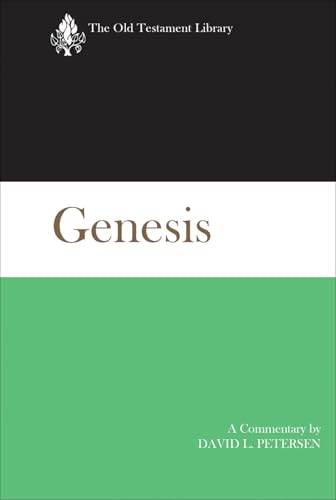
Genesis
Reviewed by Dustin Burlet