
This is certainly a timely book. It was finished not long after the 1992 Earth Summit in Rio de Janeiro and it begins with a tour of current ecological and environmental concerns which range from acid rain and greenhouse gases to population growth and the depletion of natural resources. In 1967, however, Lynn White published an often reprinted article about the historical roots of the ecological crisis, which picked out the Judaeo—Christian interpretation of Genesis 1, with its stress on mankind’s dominion over the earth, as one of the chief culprits. Osborn makes a case against White’s argument by showing that Christianity has within it a variety of traditions and that an exegesis of the passage in question does not necessarily produce anti-environmental conclusions.
This leads him to consider Green spirituality and its dalliance with poetic romanticism, pantheism, the Gaia hypothesis (that planet Earth should be conceived of as reacting like a huge living system which seeks the best conditions for living beings on it) and New Age mysticism. Christian reactions to Green issues have produced a mixed bag of philosophical and theological positions. Whitehead’s process theology, which redefines God to fit in with its own changing view of reality, and the writings of Teilhard de Chardin, who makes Christ the ‘omega point’, the end of the current phase of evolution and the beginning of the next, have given the environment a much greater role in the purposes of God than most Christians would allow. Matthew Fox’s ‘creation spirituality’ is also dealt with in this section, despite the now tenuous connection between Fox’s thinking and orthodox Christianity.
The major middle section of the book examines biblical and theological data about the natural world and comes to two main conclusions: first, the OT and the NT do not support an exploitative approach to the environment and, second, the creation itself, as a trinitarian act, involves the acceptance by God of responsibility for his work which is expressed both by a continuing divine sustenance and an eschatology in which the created order is destined to enjoy a final Sabbath. This is the heart of the book, and a good heart it is too. We have here a positive and powerful expression of theology which does not have to bend to special pleading or to defend Christianity’s track record. The scriptures themselves, and especially, the garden-city at the end of the book of Revelation, synthesize the redemptive plans of God for his stewardly and priestly people with his divine purposes for a created order. Moreover, the work of the Holy Spirit, as giver of life, ensures that these purposes are essentially trinitarian.
The final chapter, on Christian environmentalism in practice, is a bit of an anti-climax. Taking the dog for a walk and pointing out the wonders of nature to children may be sound enough but, after the exciting ideas of the preceding section, they do not exactly stir the blood. Nevertheless, this is an excellent book. Despite its immediate address to current issues, its research is solid and its judgments crisply expressed. Other books dealing with ethical issues pertaining to the environment or with the political implications of a Christian theology of creation are all crying out to be written. Osborn has given them a flying start.
William K. Kay
Mattersey Hall
Other Articles in this Issue
Other Reviews in this Issue
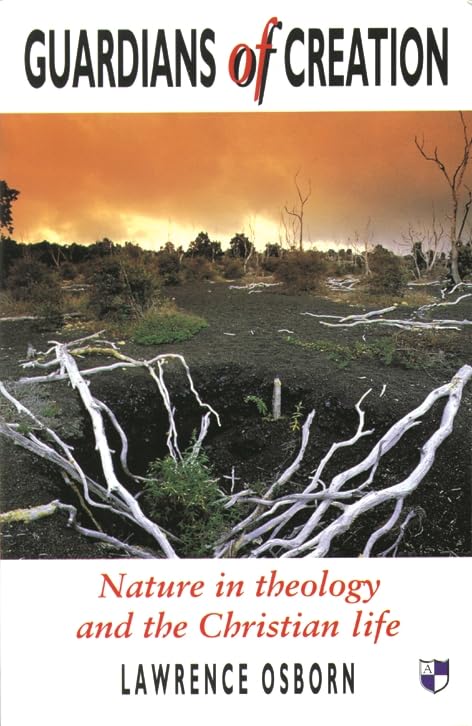
Guardians of creation
Reviewed by William K. Kay