
Reading the Psalms Theologically
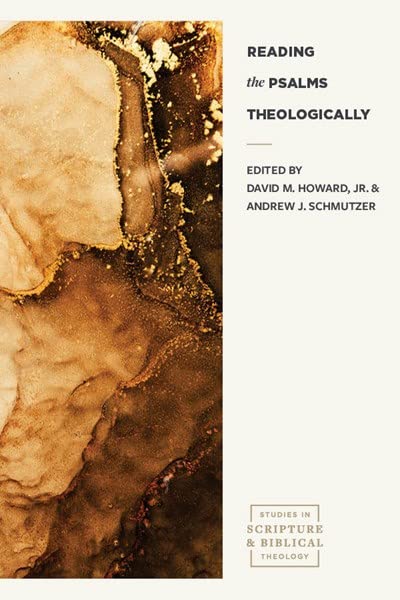
Written by David M. Howard Jr. and Andrew J. Schmutzer, eds Reviewed By Drew N. GrumblesThe Psalms, oft-called the “anatomy of the soul,” have long been a favorite portion of Scripture for many Bible readers. Individually, psalms are read, memorized, and treasured. Yet, in recent years, scholars and pastors have grown to appreciate the Psalms in a new way—as a product of collection and organization that tells a story and teaches a theological message. In other words, the Psalms appear to have been consciously organized into a “canonical shape.” They are not only ad-hoc songs providing isolated inspiration. Each psalm is, in effect, a chapter which contributes to the message of a whole book. Reading the Psalms Theologically summarizes and furthers research on reading the Psalms in this way.
Reading the Psalms Theologically consists of essays by eighteen scholars from a variety of backgrounds and academic experiences. The volume also covers a wide range of topics. The opening chapter by David Howard and Michael Snearly covers recent trends in Psalms scholarship, highlighting the issue of “canonical shaping.” The next five chapters apply in various ways the method of reading the Psalms as a shaped collection. Five more chapters address the issue of lament, the next three study the role of the nations in Psalms, and the final four essays relate to God’s sovereignty.
Like most works made up of essays, this volume has some essays that are more useful than others. May Young’s essay “The Art of Lament in Lamentations” (pp. 141–55) is only tangentially related to the Psalms. I am unsure why it was included in this work. Hassell Bullock’s essay on the verb נָשָׂא (pp. 127–40) was interesting, but may have been the least theological of the essays. The essay was more like a word study. Another essay on ecology by J. Clinton McCann Jr. (pp. 246–56) was out of place and weak in its scholarship. The argument contained unpersuasive exegesis from the Psalms and large claims with little evidence. For example, McCann states that Earth is amidst a sixth great extinction spasm after the dinosaurs were wiped out by the fifth spasm sixty-five million years ago (p. 249). He cites no evidence for this claim. The book’s most useful essays include the first six chapters as well as the final chapter on Psalm 110. The most convincing essays were chapters 2 (by Peter Ho) and 4 (by David Gundersen), which both examined the Psalter in light of the Davidic covenant and/or the Messiah. In short, they argue that the Psalms tell a story beginning with God’s Messiah (Pss 1–2), who faces enemies (Books I and II) yet still reigns (Ps 72), followed by the breakdown of the covenant beginning in Book III, which book ends with rejection (Pss 88–89). Yet as Book IV begins, the great prophet Moses “intercedes” and the covenant carries forward with YHWH reigning (e.g., Ps 93). The “seams” between books IV and V (Pss 104–107) tell of God’s regathering his people in salvation, and then book V ends with praise to YHWH as King (Pss 145–150). As Gundersen writes, “What then is the Psalter? The Psalter is a carefully crafted postexilic anthology with a narrative structure reflecting Israel’s historical hope for the restoration of the Davidic kingdom whose establishment would consummate the purposes and promises embedded in God’s covenants with Abraham, Israel, and David” (p. 95).
All of the essays come from a generally evangelical perspective, an important point when one seeks to read the Psalms theologically. One theological point that may give pause to some readers is Philip Johnston’s examination of Sheol in the Old Testament (pp. 174–77). Johnston argues that Sheol is the place of the dead for all, God’s people or otherwise. One wishes he would have used a more systematic approach to integrate the Psalms’ portrayals of Sheol with the rest of Scripture. He could also have interacted with theologians on the question. Also, Johnston draws conclusions based on select psalms (e.g., Ps 6) while dismissing others that point to redemption from Sheol (e.g., Psalms 16, 23, 73; see pp. 177–82). He may be begging the question, that is, believing that there is no redemption from Sheol in Psalms, and therefore focusing his study on those Psalms which appear to point that way. Why not attempt to show how all of these Psalms about Sheol fit together to paint a coherent picture of the afterlife?
This volume serves as a wonderful summary and introduction to recent evangelical scholarship on the Psalms. No other work will provide the state of the art in Psalms studies and advancement in the discussion of how to interpret the Psalms as a collective. The work has helped me to understand various details of the Psalms, including the importance of the superscriptions. Studying this work will bring a richness to preaching the Psalms together as Christian Scripture.
Drew N. Grumbles
Albany Baptist Church
Albany, New York, USA
Other Articles in this Issue
Early Christians had to develop and negotiate their (new) identity within a society, to which their beliefs and ethical convictions were largely alien...
Acts of the Apostles reports several uprisings and instances of mob violence that occur across Asia Minor, caused by or related to the evangelistic and missionary endeavors of Paul and his companions in the middle of the first century...
As states continue to decriminalize marijuana and usage escalates in American culture, Christians must increasingly navigate their associations with the drug...
This article seeks to retrieve from the past in order to gain perspective for the present...
The book of Ecclesiastes is essentially a speech...
Other Reviews in this Issue