

The aim of this book according to the author’s opening statement is ‘that God be prized above all things’ (his italics). In pursuit of this goal, John Piper offers us the kind of spiritual psychology the Puritans wrote so well but which has hardly been seen since. Piper intersperses between serious theological reflection eight practical chapters providing antidotes to anxiety, pride, misplaced shame (a particularly good one, I thought), impatience, covetousness, bitterness, despondency and lust. I was reminded of Manton and Flavel’s ability to move seamlessly from doctrine to experience, and at times of Bunyan’s self-humbling soul-searching in his Grace Abounding. Reformed theology in America has a long tradition of intellectualism somewhat at the expense of such experientialism. John Piper, a scholar and Baptist pastor of twenty years’ standing, has consciously sought to redress the balance by restoring the heritage of the Puritans in general and Jonathan Edwards in particular.
Future Grace is not only written in the theological tradition of the Puritans but lovingly follows their taste for division and sub-division of the subject matter. There are 31 chapters (for reading over a month) in ten sections, preceded by two introductory chapters and even then an author’s preface. The first three sections are: A Foe to Faith in Future Grace, Free and Future Grace and The Crucial Place of Bygone Grace. They comprise a trilogy which exposes what Piper calls ‘the debtor’s ethic’ in evangelicalism. His argument is that ‘gratitude for bygone grace has been pressed to serve as the power for holiness, which only faith in future grace was designed to perform’ (p. 11, his italics). This future reference centres on the promises of God which should ‘prevail over the deceptive promises of sin’ (p. 17). It is a deadly accurate pathology of evangelical experience.
Sections 4 and 5 deal with the proper relationship between faith and works. It is not duty arising from faith that inspires Christian living, but love for God’s law arising from experience of God’s sovereign grace. Section 6 takes up the enigma of grace that is both unmerited and free yet conditional. This is an especially helpful section for those who struggle to relate sovereign grace to human responsiveness. The next two sections discuss the spiritual effect of ‘faith in future grace’ and the struggle needed in the Christian life. The final section invites the reader to see suffering and death in terms of ‘The Finality of Future Grace’. The ultimate hope for Piper is ‘The Rebirth of Creation’ in which he takes up a line of reasoning from Jonathan Edwards. The purpose of creation is the self-communication of God in the manifestation of ‘the fullness of good ad extra, or without Himself’. The final and perfect fulfilment of that purpose is the last act of future grace. Although the book is written primarily to address the faith/works debate, it impinges here on the more popular preoccupation with future-now ideas of faith.
Some evangelicals will wince at Piper’s expose of our current triviality, though probably not the ones who should. Many more will probably fail to understand how this book bears any relation to modern evangelicalism. It is neither trivial, nor humorous, nor academic in the normal sense. Yet Dr Piper puts his finger on a key issue with this quotation from Alister McGrath: ‘many start the life of faith with great enthusiasm, only to discover themselves in difficulty shortly afterward. Their high hopes and good intentions seem to fade away.’ It is this enduring weakness in popular piety that Piper seeks to answer by a return to the Puritan balance between Word and Spirit, truth and experience, faith and obedience.
Philip D. Hill
Linslade, Beds.
Other Articles in this Issue
Other Reviews in this Issue
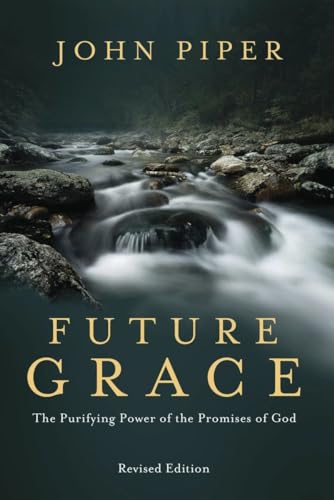
Future Grace
Reviewed by Philip D. Hill