
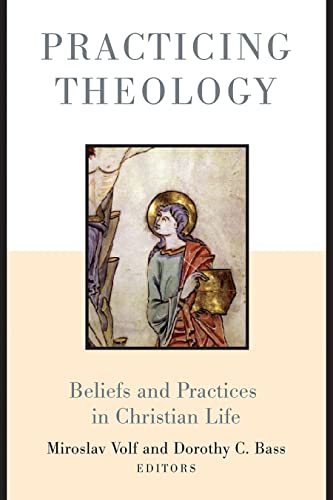
PRACTICING THEOLOGY. BELIEFS AND PRACTICES IN CHRISTIAN LIFE
Written by Miroslav Volf and Dorothy C. Bass (eds) Reviewed By Andy DraycottVolf’s concluding essay opens with the question that may cross the minds of readers of this journal every so often (not only when reading Themelios although we are perhaps not excused!): ‘But what does that have to do with real life?’. This book is, in a sense, a companion volume to the earlier publication: Practicing our Faith: a Way of Life for a Searching People. Bass, in her introduction fleshes out the idea of practices: ‘Christian practices are patterns of co-operative human activity in and through which life together takes shape over time in response to and in the light of God as known in Jesus Christ’.
This volume of essays seeks to show where Christian theological reflection on belief and practices forms and is formed by Christian living. The essays are divided into four sections. ‘Embracing a Way of Life’ gives us two essays that look at the area as a whole. ‘Engaging in Ministry’ reflects variously on church decision making, ascetical theology, healing, hospitality, liturgy and discernment.
‘Becoming Theologians’ includes an essay that is worth highlighting in this setting. Particularly of interest to students, teachers and pastors alike, L. Gregory Jones’s essay on theological education considers the fragmentation in Christian labour that sees churches and colleges holding a ‘relay race’ view of their roles and subsequently find themselves in mutual recrimination about the formation that each sectors hands on to the other. He turns to Augustine’s practice of baptismal catechesis as a model that could inform present expectations and provision of integrated Christian formation. I would suggest also that this sort of reflection might give us a persuasive model for ‘follow up’ from evangelism, where this is a weakness or non-existent. I was glad to see hospitality featuring again in an essay by Richard Hütter where we read that although ‘it can seem that hospitality and truth are opposed to each other: to be concerned for truth is to be inhospitable, and to be hospitable means being “mushy” on matters of truth’ they should be understood as ‘mutually dependent’.
Volf’s essay gives us a fitting conclusion in a section entitled, Theology for a Way of Life’. Always a pleasure to read, he reflects on the model that his parents gave him in following the hosting of the Lord’s supper in church with Sunday lunch at home.
Although an academically rigorous read this book is recommended not just for its value to students but perhaps as a medium for those church leaders who feel distanced from their theological studies to be encouraged in their workplace and ministry.
Andy Draycott
Andy Draycott
Biola University
La Mirada, California, USA
Other Articles in this Issue
Other Reviews in this Issue
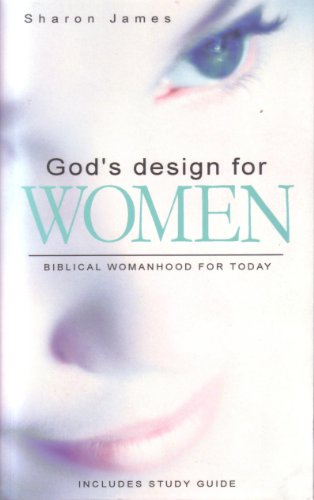
GOD’S DESIGN FOR WOMEN
Reviewed by Laura Jervis