
Is the ‘Blessing’ Biblical? Thinking through the Toronto Phenomenon
Written by David Pawson Reviewed By R. N. CarwellThis is a cautionary book by a famous Bible teacher, giving us the amber light, not the green or red. Proceed with caution. Not ‘Is it of God?’, but ‘How much is, and how much is not of God?’ The Bible is his touchstone.
Toronto proof-texts, Pawson says, can be pretexts. And, for some insiders, even questioning the teaching is not comfortable. Yes, tired believers are being reinvigorated, tensions released, prayer deepened. But how? That is the question. By manifestations, and ‘ministry’. Many Christians, however, have a gut feeling that there is something wrong (animal noises?!), but is this feeling simply an offended traditionalism? Pawson asks whether it is possible that real manifestations of the Spirit are being obscured? He argues that the word ‘ministry’ has been hijacked for the activity that follows the teaching. But is constant ‘ministry’ merely a part of our dependency culture? Is the exclusive use of trained personnel a new sacerdotalism? Where have private and personal devotions gone? Should we always need these ‘pit-stops’?
Pawson exposes the sloppy exegesis of ‘drunk in the Spirit’. Acts 2 mentions ‘tongues’, not staggering. He wisely points out that, in worship, freedom should not mean chaos, if 1 Corinthians 14 means anything. His interpretation of revival is singular. It was confined to the OT (I was reminded of the old saying that he is a good theologian indeed who can differentiate rightly between the two Testaments). Wry comments on the current ‘end-time’ teaching are good, though he adds a summary of ‘The Revelation’ that will make many wince.
He hopes that leaders will be made to think by his book—and make changes. Public meetings should be different, manifestations such as raucous laughter during preaching, controlled. No clearing away chairs, encouraging falling, providing catchers, or other manipulative procedures should be found. Don’t judge the success of a meeting by the number of manifestations. Look for real signs (Rom. 15:18 ff.)!
Pawson does not, I think, altogether avoid quibbling. He allows Jesus to make humorous sermon-points, but not to laugh. Only deadpan? Jesus did ‘snort’ (in Greek anyway!—p. 39). But was that an animal noise? Does Pawson not miss the point of John 7:38? Is the never-ending stream not flowing from Jesus—the stricken Rock—for us to drink (p. 62)?
There are many good things in this book. One of the best is that Pawson admits it may not be the last word!
R. N. Carwell
Holywood. N. Ireland
Other Articles in this Issue
Other Reviews in this Issue


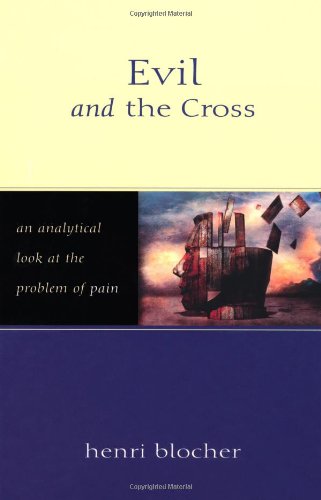
Evil and the Cross
Reviewed by D. Densil Morgan